 EN



B2B Sourcing: Premium Custom Fit MMA Mouthguards at Competitive Factory Prices
For a wholesale buyer, sourcing custom fit MMA mouthguards is not mainly about choosing the lowest unit quote. It is about confirming whether the supplier can support the fit method, protection brief, packaging, documentation, and repeat ordering process your channel needs. A low quote can become expensive when samples are unclear, artwork is not approved before production, or the delivered product does not match the listing information your team prepared.
This is especially relevant for distributors, e-commerce sellers, clinics, and pharmacies. Each channel sells a similar category, but each needs different evidence before it can responsibly present premium protection to an end user. The practical route is to turn a broad request for factory price into a short, comparable sourcing specification.
Start with the use case, not a generic “premium” label
At first glance, combat-sport mouthguards can seem interchangeable. More accurately, a buyer should separate the intended athlete, fit workflow, sales channel, and information obligations before comparing suppliers. A product marketed for MMA may be evaluated differently by an amateur-focused retailer, a combat gym, or a clinic-adjacent channel.
The American Dental Association recommends a properly fitted mouthguard to help reduce the incidence and severity of oral injury in sports and recreational activities that carry risk of dental trauma or orofacial injury. That is useful context for a buying brief, but it is not a factory-specific performance claim. Ask each supplier to explain how its proposed design supports retention, coverage, comfort, and the intended fit process, then assess the evidence provided.
Define the buyer’s decision path
- Wholesalers: need a repeatable specification, sellable packaging, carton information, and a clear reordering reference.
- E-commerce sellers: need verified product copy, image permissions, size or fit instructions, and variation details that can be translated into accurate listings.
- Clinics and pharmacy channels: need cautious, evidence-led wording and clear boundaries between a sports mouthguard and professional dental advice.
- Gym or team programs: need a process for collecting design requirements, grouping orders, and approving samples before a larger run.
In other words, do not ask only, “What is your premium protection option?” Ask, “What exact version can you make, how is fit achieved, which evidence can you provide, and what changes when we add branding or retail packaging?”
Build an RFQ for custom fit MMA mouthguards
A concise request for quotation makes factory price comparisons more meaningful. It also prevents a supplier from pricing one configuration while your team assumes another. Use the following points as a starting brief and mark any unknowns as items to be confirmed rather than filling gaps with assumptions.
- Intended combat-sport use: state MMA, training, sparring, or a broader combat-sport range, along with the target customer segment.
- Fit method: ask whether the offer is stock, mouth-formed, impression-based, or another defined custom workflow. Request the customer instructions and any kit contents for review.
- Design scope: identify color, logo, name personalization, and artwork placement. Confirm the artwork file requirements and approval stage.
- Protection brief: ask the supplier to describe the design rationale and testing or quality evidence available. Do not treat a marketing phrase as proof of a particular standard or impact result.
- Packaging and channel readiness: specify individual cases, printed inserts, barcodes, retail boxes, labels, and master-carton requirements where relevant.
- Sampling and change control: request a pre-production sample path, approval record, and process for documenting changes between the approved sample and production order.
For product-care conversations, ASTM F697 is a recognized reference concerning care and use of athletic mouth protectors. It can be a useful prompt for asking what care and use information the supplier can support. It does not, by itself, establish that a quoted item meets any particular product claim, so request direct evidence for any compliance statement.
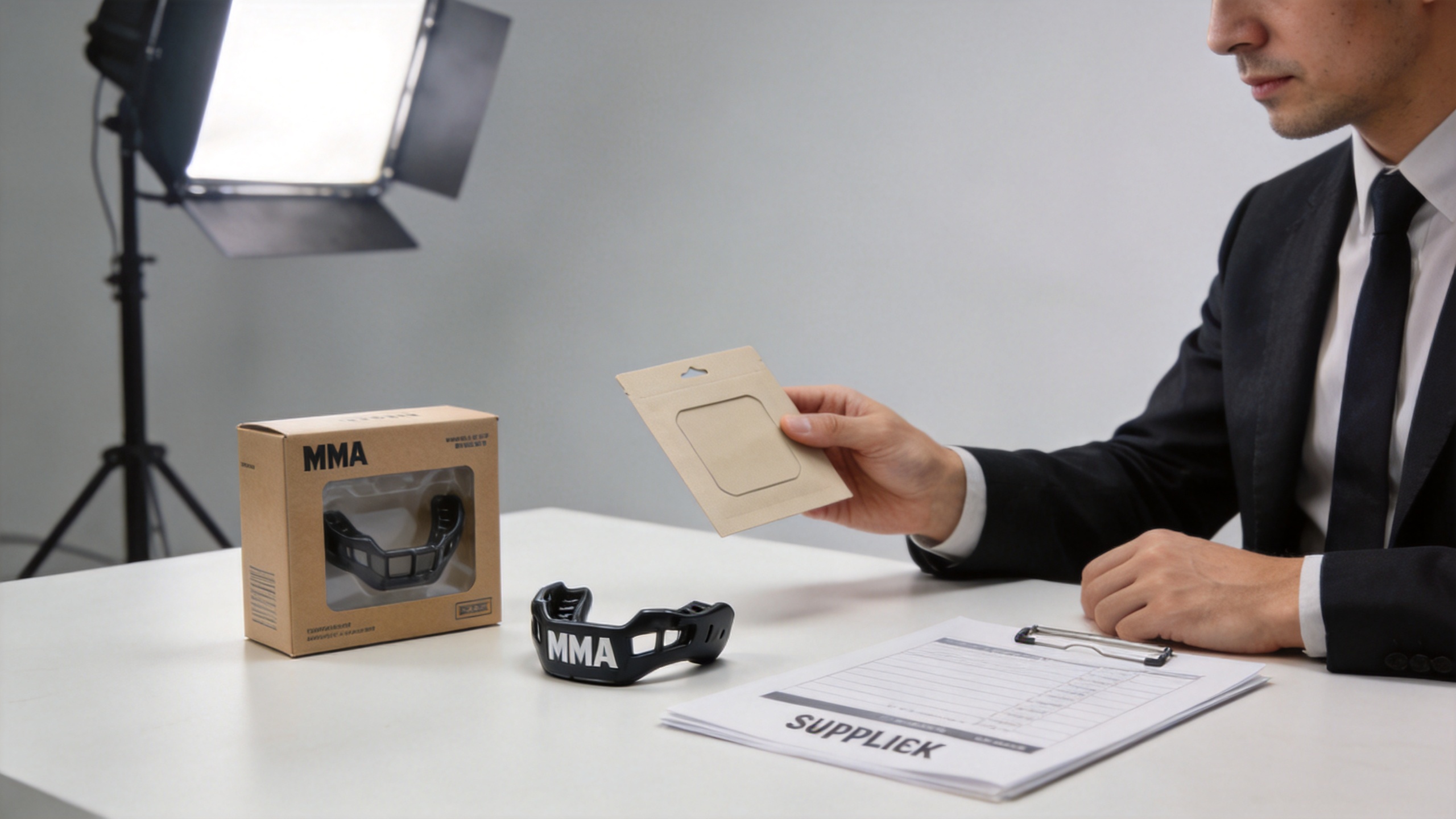
Compare factory price as total procurement cost
“Factory price” is a useful starting point, not the final decision. A competitive quote should be evaluated on the same commercial basis: the same fit workflow, design complexity, packaging, sampling process, order quantity, and shipping terms. Otherwise, two prices may describe materially different offers.
| Comparison area | What to request | Why it matters |
|---|---|---|
| Quoted configuration | A line-by-line description of the mouthguard, personalization, packaging, and included accessories | Prevents an apparently lower quote from excluding required elements. |
| Sample stage | Sample cost, lead time, approval method, and what is carried into production | Reduces ambiguity before a branded or channel-specific run. |
| Quality evidence | Available material, process, inspection, and claim-support documentation | Helps buyers decide what can be stated in product listings. |
| Order continuity | How artwork, packaging files, and approved specifications are controlled for repeat orders | Supports consistency across future batches. |
| Logistics scope | Incoterm, destination assumptions, carton details, and delivery responsibilities | Allows a like-for-like landed-cost comparison. |
This total-cost view does not promise the lowest cost. It gives your team a more defensible way to identify a supplier whose quote, evidence, and operational process fit the commercial model.
Check whether “premium protection” is supported by usable evidence
Premium protection should be treated as a buyer requirement to substantiate, not a phrase to repeat without review. Request information that is specific enough for your technical, commercial, and content teams to assess. Depending on the offer, that may include design drawings, fit instructions, sample photos, quality-control descriptions, packaging proofs, and documents supporting any material or compliance language.
A useful review question is: can the supplier explain what is confirmed, what is optional, and what still needs testing or verification? This boundary-first approach is better than assuming that a custom appearance automatically proves a particular protective outcome. It also helps e-commerce teams avoid publishing claims that the supplier has not documented.
For channels connected to clinical advice, keep product communication conditional. A sports mouthguard is not a substitute for individualized dental assessment. Buyers can ask suppliers for clear intended-use and care information while keeping health-related claims within the evidence available.
Use samples to test the commercial process, not just appearance
A sample should answer more than “Does it look good?” Use it to evaluate whether the supplier can execute the complete order path. Review fit instructions for clarity, logo placement against the approved artwork, packaging accuracy, labeling, and the availability of supporting documents. If a proposed order includes a fit kit or customization workflow, have the supplier describe every handoff and the information needed at each stage.
Before bulk production, document the approved version in a shared checklist: item description, customization details, packaging components, artwork revision, requested evidence, inspection checkpoints, and shipping assumptions. That record makes a later factory price discussion more useful because each supplier is responding to the same brief.
Choose a supplier with a verifiable next step
Xiamen Yizhou Imp. & Exp. Co., Ltd. identifies wholesalers, e-commerce platforms, clinics, and pharmacies among its target customer groups. For buyers in those channels, the most productive inquiry is one that makes the required evidence visible from the start: describe the target market, expected fit method, branding requirements, packaging needs, estimated order quantity, and any documents your channel requires.
When sourcing custom fit MMA mouthguards, a disciplined RFQ, comparable sample process, and evidence review are more valuable than an unsupported promise. They help buyers pursue a competitive factory price while keeping the premium protection message tied to what the supplier can actually verify.
Buyer FAQ
What should be included in an RFQ for custom fit MMA mouthguards?
Include the intended use, fit workflow, customization scope, packaging, sample requirements, estimated order quantity, delivery terms, and the documentation needed to support any product claims.
How can buyers compare factory prices fairly?
Compare quotes only after standardizing the configuration, branding, packaging, sampling path, order quantity, quality evidence, and shipping assumptions. This avoids treating different offers as if they were equivalent.
Can a supplier’s “premium protection” claim be used directly in marketing?
Only use claims that are supported by the supplier’s available evidence and fit your channel’s review process. Request documentation and use conditional, accurate wording where information remains to be verified.


 Hot News
