 EN



Customized FDA-Grade The Stop Snoring Mouthpiece To Prevent Snoring Comfortably
If you are comparing the stop snoring mouthpiece options, comfort is only one part of the decision. A well-made oral appliance can be a useful category to discuss with a qualified clinician, but it is not a diagnosis, a universal fit, or a substitute for an evaluation when symptoms suggest sleep-disordered breathing. As an oral-health product selection guide, I start with the same question every time: is this person looking for support with simple snoring, or are there warning signs that deserve medical attention first?
The phrase “FDA-grade” can also confuse an otherwise sensible purchase. It may be used informally to describe material expectations, but it does not by itself prove that a finished device is FDA cleared, appropriate for a particular person, or effective for every cause of snoring. For the stop snoring mouthpiece category, the practical approach is to separate material documentation, device-specific regulatory status, fit method, and clinical suitability.
Start With the Reason for Snoring, Not the Product Claim
Snoring has more than one possible cause. Nasal congestion, sleep position, alcohol use, jaw and tongue position, weight changes, and obstructive sleep apnea can all be relevant. That is why a convincing promise to “stop” snoring should not be treated as a personal guarantee. The American Academy of Sleep Medicine and the American Academy of Dental Sleep Medicine advise that primary snoring should be diagnosed by a sleep physician before treatment begins, because snoring can be a symptom of obstructive sleep apnea.
Before trying the stop snoring mouthpiece, pause and seek professional guidance if there are witnessed breathing pauses, choking or gasping during sleep, marked daytime sleepiness, morning headaches, uncontrolled high blood pressure, or concerns about jaw pain and bite changes. This is not an obstacle to a better choice; it is the boundary that makes a comfortable solution safer to explore.
What an Anti-Snoring Mouthpiece Can—and Cannot—Do
Many anti-snoring oral appliances are discussed as mandibular-advancement designs: they are intended to hold the lower jaw slightly forward, which may help maintain a clearer upper-airway space for selected users. Other designs focus on tongue retention. The mechanism matters because one format can feel acceptable to one user and unsuitable to another.
A customized approach aims to improve contact, retention, and tolerance compared with a generic shape. It cannot erase the need for a suitability check. If a supplier calls a product medical grade, ask what that phrase refers to: the material, the manufacturing record, testing documentation, or a specific regulatory listing. Those are different things. FDA guidance covers intraoral devices for snoring and/or obstructive sleep apnea, but the status of any finished device must be verified separately rather than inferred from a broad marketing label.
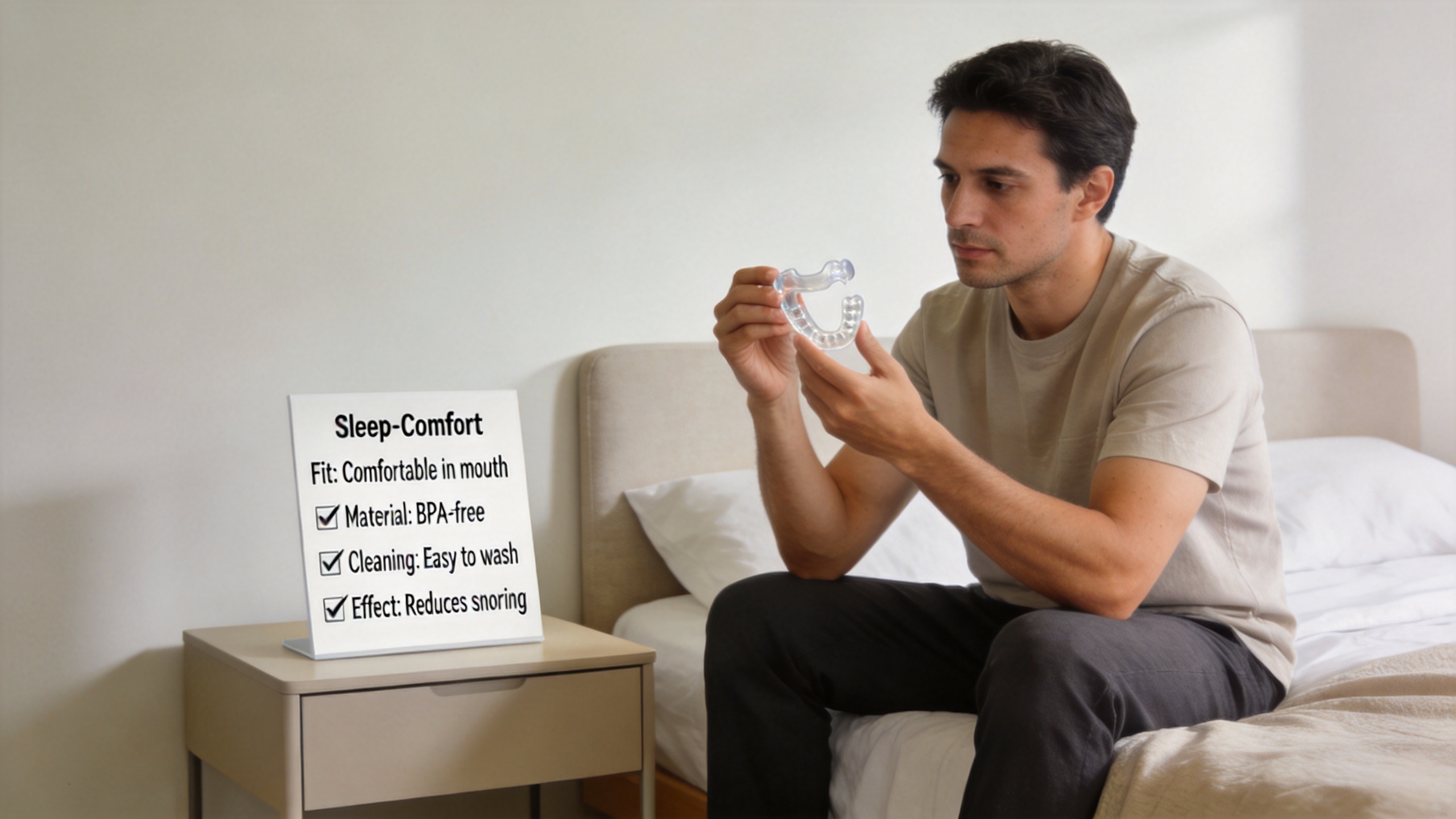
A Comfort-First Checklist for the Stop Snoring Mouthpiece
Comfort is more than softness. For the stop snoring mouthpiece to be practical, a buyer should be able to understand how the appliance is selected, fitted, cleaned, and reviewed over time.
- Fit pathway: Confirm whether the design is custom-made, boil-and-bite, adjustable, or intended for professional fitting. Ask how fit concerns are handled.
- Jaw and dental history: Share existing temporomandibular joint discomfort, loose teeth, dental work, braces, or bite concerns before use.
- Wear instructions: Request clear instructions for insertion, removal, cleaning, storage, and when to stop using the device.
- Material records: If medical grade is important to your channel or customer, request the specific material and finished-product documentation relevant to the intended market.
- Follow-up plan: Do not treat a first comfortable night as final proof. Ongoing comfort, jaw response, and sleep symptoms deserve review.
A useful distinction is this: a product can be pleasant to wear while still being the wrong choice for the user’s symptoms. Comfort supports adherence; it does not establish diagnosis or clinical suitability.
How Customization Should Be Evaluated
Customization is valuable when it creates a clearer decision path, not when it becomes a vague sales word. Ask what is actually customized: impression or scan process, upper and lower components, adjustment range, edge finishing, packaging, instructions, or private-label presentation. Then ask what evidence is available for each claim.
For wholesalers, clinics, pharmacies, and e-commerce teams, this is especially important. An OEM/ODM conversation should cover the finished product specification, labeling, intended-use language, cleaning guidance, traceability, and which statements have supporting records. It should not turn into an unsupported claim that every customized appliance prevents snoring comfortably for every adult.
Where a supplier uses the phrase FDA-grade, request precise wording and documentation before putting it on a product page. “FDA cleared,” “FDA approved,” “FDA registered,” and “made from a material commonly described as medical grade” are not interchangeable. Careful wording protects customers and makes a product listing more credible.
Questions to Ask Before You Purchase or Source
- What sleep or snoring concern is this design intended to address, and what concerns require a clinician first?
- How is the fit achieved, and who should not use this style without dental or sleep-professional input?
- What finished-device records support the stated materials, intended use, and market-specific claims?
- What cleaning, storage, replacement, and complaint-handling guidance is supplied?
- For an OEM/ODM project, which details can be customized without changing the validated claim set or required labeling?
These questions may feel less exciting than a bold promise, but they turn the selection process into something more reliable. They also make it easier for a buyer to compare the stop snoring mouthpiece options on evidence, not just on photos or slogans.
When to Pause and Talk With a Professional
Stop using an oral appliance and seek guidance if it causes persistent jaw pain, tooth pain, gum irritation, bite changes, or worsening sleep symptoms. A sleep clinician is also the right starting point if someone has possible sleep-apnea symptoms. For people who are appropriate candidates, a qualified dental professional can help assess fit, comfort, and follow-up needs.
The most responsible message is not “one mouthpiece works for everyone.” It is that a carefully selected, correctly fitted device may be part of a broader snoring-management discussion for the right person. That balanced message is more useful for readers and stronger for brands that want to communicate responsibly.
Final Takeaway
A responsible way to evaluate the stop snoring mouthpiece is to look beyond the label. Prioritize screening for warning signs, a fit method that matches the user, transparent material and device documentation, and realistic comfort expectations. If you are sourcing for a private-label or OEM/ODM program, keep claims specific, evidence-based, and appropriate to the product’s documented intended use. That is how customization can support a more comfortable, clearer buying experience without overpromising a health outcome.


 Hot News
