 EN



How Can High-Quality Nti Night Guard Prevent Sleep Bruxism Damage?
Waking with tight jaw muscles, flattened tooth edges, or a sore bite can be a sign that nighttime clenching or grinding deserves attention. As a dental-product selection adviser, I encourage readers to separate two goals that are often mixed together: protecting teeth from contact damage and choosing an appliance whose design suits the situation. A high-quality nti night guard may be discussed for sleep bruxism when an anterior-contact approach is appropriate, but it is not a universal substitute for a dentist’s assessment or for every type of full-coverage guard.
Bruxism can include clenching, grinding, or forward jaw movement. Over time, repeated force may contribute to worn enamel, chipped restorations, tooth sensitivity, muscle fatigue, or morning headaches. Oral appliances do not promise to cure the underlying habit. Their practical role is to help manage contact and reduce the chance that teeth repeatedly grind directly against one another while the wearer sleeps.
What Makes an NTI-Style Device Different?
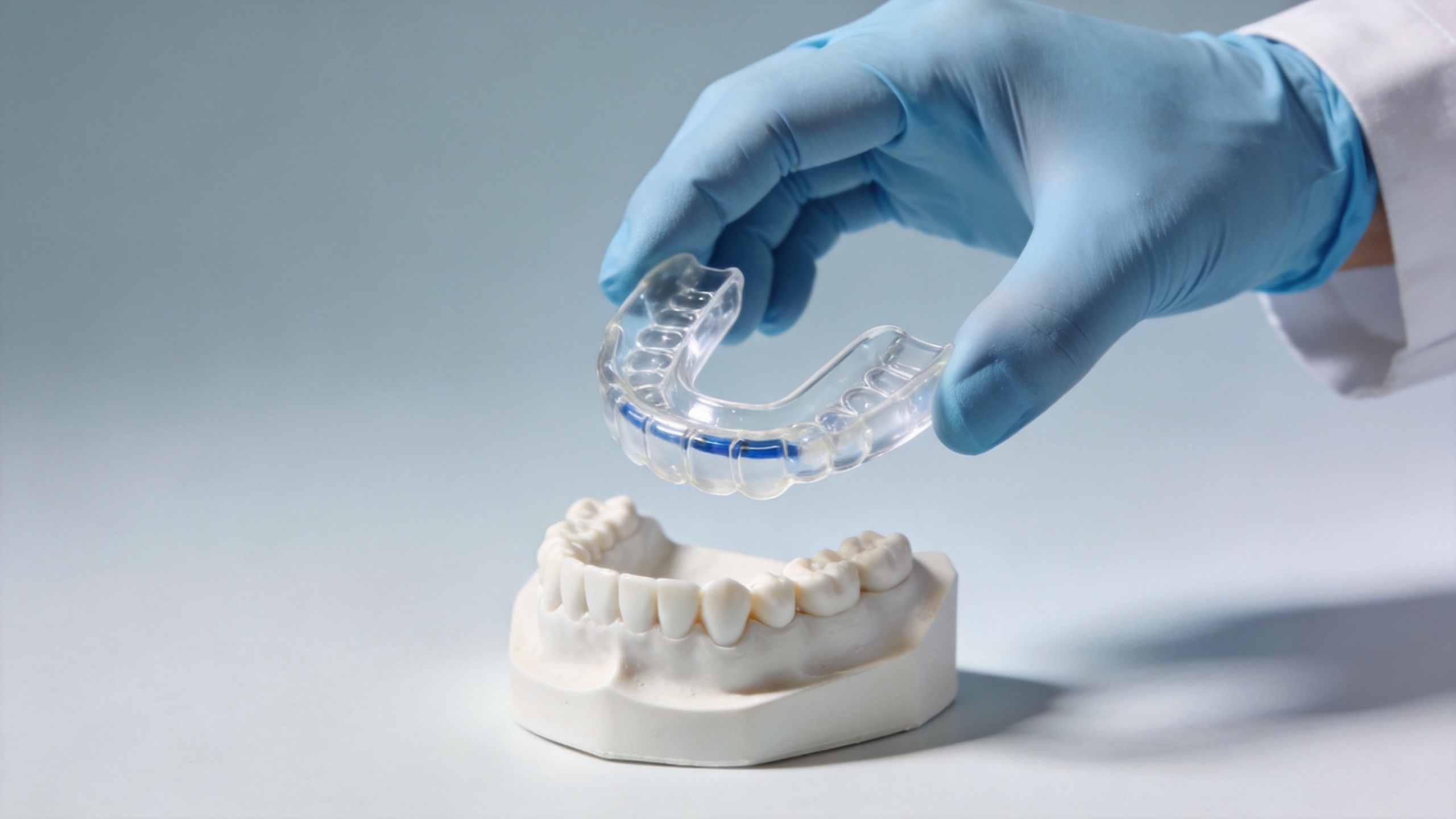
An NTI-style appliance is typically a compact device designed around the front teeth. Its purpose is different from a conventional full-coverage night guard, which generally creates a protective surface over an arch of teeth. By limiting broad back-tooth contact, an nti night guard may be intended to reduce the leverage available during forceful clenching. That design difference is important: “small” does not automatically mean “right for everyone,” and a full-coverage appliance and an anterior-contact device should not be treated as interchangeable.
Price alone is not the useful question. The more useful question is which contact pattern, symptoms, dental work, and follow-up the person needs to consider. A dentist can evaluate the bite, existing crowns or restorations, gum health, jaw symptoms, and wear patterns before recommending an appliance. That professional fit-and-follow-up step is particularly relevant for an anterior-contact design.
How an Nti Night Guard Can Help Limit Bruxism Damage
When professionally selected and properly fitted, an nti night guard can support a damage-prevention plan in several practical ways:
- It changes the contact pattern. An anterior-contact design aims to reduce broad posterior contact during clenching. Less direct grinding contact can mean less opportunity for opposing tooth surfaces to rub against each other.
- It creates a physical interface. Rather than allowing natural enamel or restorations to take every episode of contact, the appliance provides a designed surface between selected teeth.
- It makes wear easier to monitor. A clinician can inspect both the appliance and the dentition over time. Visible changes may help guide adjustments or a different approach.
- It supports bruxism relief goals without overpromising. Some wearers seek bruxism relief from the sense of jaw overload. Comfort and symptom response vary, so relief should be treated as something to review, not a promised outcome.
The American Dental Association’s patient guidance notes that dentists may recommend a night guard to help protect teeth during sleep. That is a useful boundary: a guard can be a protective tool, while the appropriate choice depends on a person’s clinical findings and habits.
Quality Features Worth Checking Before You Buy
High quality is more than a smooth-looking piece of plastic. For an nti night guard, the important checks are fit, intended contact design, material finishing, traceability, and the availability of professional guidance. A device that feels loose, rocks during closure, creates a new sharp edge, or changes the bite should be reviewed instead of forced into nightly use.
| Quality check | Why it matters | What to ask |
|---|---|---|
| Fit and retention | An appliance should stay positioned as intended during sleep. | How is fit assessed, and what is the adjustment process? |
| Contact design | NTI-style and full-coverage devices manage contact differently. | Which teeth are intended to contact, and who confirms it? |
| Edge finishing | Smooth, well-finished edges can improve comfort and reduce irritation risk. | How are edges inspected before delivery? |
| Material documentation | Clear documentation supports informed sourcing and follow-up. | What material and care information is provided? |
| Review pathway | Symptoms and bite changes may require reassessment. | What should the wearer do if discomfort or bite changes occur? |
Why Factory Price Should Not Be the Only Buying Signal
For clinics, distributors, pharmacies, and e-commerce teams, factory price is a legitimate sourcing consideration. Still, it is only one part of the decision. A lower unit quote can be misleading if the order lacks clear material information, consistent finishing, packaging instructions, batch traceability, or a reliable way to address fit questions. In oral-care products, the overall work required to verify a product can matter as much as the listed price.
For B2B buyers, ask suppliers to clarify the intended product category, manufacturing controls, packaging, care instructions, and the boundary between a consumer accessory and a clinician-directed appliance. Xiamen Yizhou Imp. & Exp. Co., Ltd. serves wholesale, e-commerce, clinic, and pharmacy channels for mouthguard-related products; channel buyers should make sure the information they present is appropriate for the product’s intended use and market.
Use and Follow-Up: The Safety Boundaries Matter
An nti night guard should not be presented as a do-it-yourself fix for persistent jaw pain, severe tooth wear, loose teeth, broken restorations, or changes in how the teeth meet. These signs warrant dental evaluation. Likewise, people with sleep-related breathing concerns, substantial bite changes, active dental treatment, or complex restorative work should ask a qualified dental professional which type of appliance is appropriate.
Follow the provider’s cleaning, wear, and review instructions. Stop and seek advice if the device causes pain, persistent soreness, new bite changes, or visible damage. The most responsible form of bruxism relief is not simply wearing something at night; it is using a well-chosen appliance within a broader plan that protects teeth and addresses contributing factors when needed.
A Practical Decision Checklist
- Document the problem: note morning symptoms, visible wear, broken dental work, and when symptoms occur.
- Get an oral and bite assessment before selecting an NTI-style appliance.
- Ask why an anterior-contact design or a full-coverage design is being considered.
- Confirm the fitting, adjustment, cleaning, and review process.
- For sourcing teams, compare documentation and quality controls alongside factory price.
- Schedule follow-up if symptoms, fit, or the bite changes.
Conclusion
A high-quality nti night guard can be part of a thoughtful approach to preventing sleep bruxism damage because it may change how teeth contact during clenching and gives a clinician a surface to monitor. The important point is to avoid assuming that one compact appliance suits every case. Choose on the basis of examination, fit, documented quality, and follow-up. That is the more reliable path to protecting teeth while keeping expectations realistic.



 Hot News
