 EN



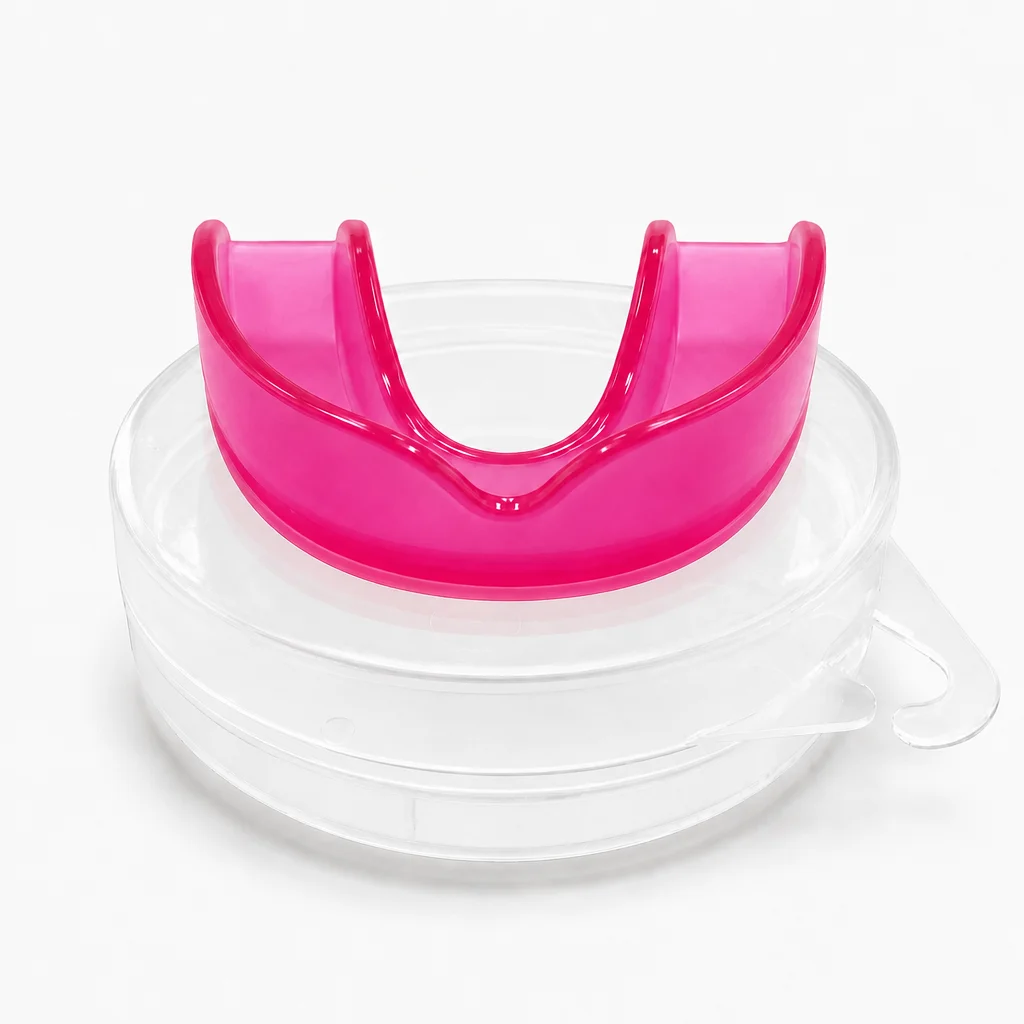
Professional Night Mouth Guard For Braces Manufacturer And B2B Wholesale Supplier
For a distributor, clinic buyer, or private-label retailer, sourcing a night mouth guard for braces is not the same as sourcing a generic dental guard. Orthodontic hardware changes the fit conversation, the information a buyer must request, and the way a product should be presented downstream. A practical purchasing process starts with a defined use case, then checks specifications and documents any open questions.
From a wholesale buyer’s perspective, a night mouth guard for braces should be evaluated as an orthodontic-related product category with clear limits. It is not appropriate to market a standard guard as universally suitable for every stage of treatment. Instead, buyers should build an assortment and supplier brief around fit review, adjustment communication, care instructions, and professional guidance where needed.
Why braces change the sourcing brief
Brackets, wires, attachments, and planned treatment changes can alter the space available around the teeth. That is why an orthodontic customer may need a different evaluation path from a customer without braces. Search results commonly focus on whether a guard can be worn during treatment; for B2B buyers, the more useful question is whether the supplier can describe the product’s intended use and the limits of its fit clearly.
A night mouth guard for braces should therefore be positioned with conditional language. The buyer’s retail copy, instructions, and customer-service scripts should tell users to follow their orthodontist’s advice, particularly after an adjustment or if a device no longer fits as expected. This protects the quality of the product information and avoids turning a sourcing article into treatment advice.
Define the intended use before comparing suppliers
At first glance, a night product and a sports mouthguard can look like neighboring categories. A more accurate approach separates their purpose. A night mouth guard for braces is discussed here for nighttime tooth-contact protection needs, while sports protection has different impact and coverage requirements. Buyers should not merge the two categories simply because both sit under oral protection.
- Target channel: confirm whether the item is for wholesale distribution, a clinic program, an online private label, or pharmacy-style retail.
- Target user communication: define how braces support questions will be handled without making diagnosis or outcome claims.
- Fit-change process: ask what guidance accompanies a product when orthodontic treatment changes.
- Evidence boundary: distinguish supplier-provided product documentation from claims that require a dental professional’s assessment.
This shift—from a broad product name to the intended use—prevents a frequent sourcing error: selecting a night mouth guard for braces based only on appearance, price, or a generic “comfortable” claim.
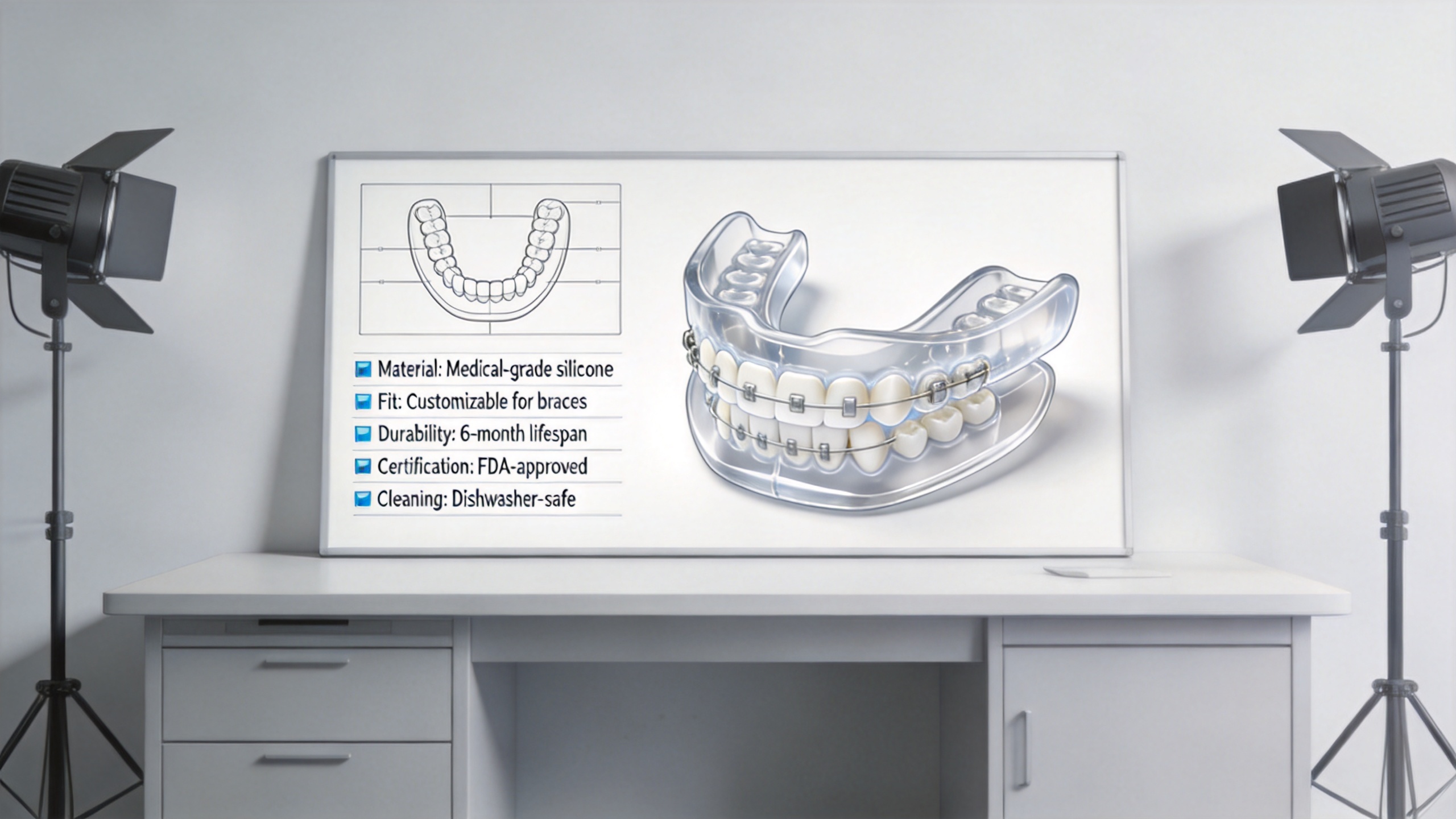
A supplier checklist for a night mouth guard for braces
A manufacturer quotation is only the start. Before a wholesale commitment, request an organized product-information package. The goal is not to assume a specification; it is to make every relevant detail reviewable by the buyer and, where appropriate, the buyer’s professional advisers.
| Review area | Questions for the manufacturer | Why it matters to a B2B buyer |
|---|---|---|
| Intended use | How is the night mouth guard for braces described in product literature? What use cases are excluded? | Creates accurate listings and reduces unsupported claims. |
| Fit and treatment changes | What instructions address braces, adjustments, discomfort, or changed fit? | Supports safer post-sale communication and returns handling. |
| Materials and construction | What material information, dimensions, and manufacturing records are available? | Lets buyers compare like-for-like offers rather than vague descriptions. |
| Quality documentation | Which inspection records, batch controls, and packaging specifications can be shared? | Helps importers and private-label teams define their own acceptance criteria. |
| Care and storage | What cleaning, drying, and heat-exposure instructions are supplied? | Improves user instructions and reduces avoidable product-care issues. |
For care language, keep the instructions aligned with the supplied product documentation. General dental guidance commonly emphasizes rinsing and regular cleaning in cool water, while heat exposure can be unsuitable for many guard materials. A buyer should ask the manufacturer to confirm the exact instructions for the offered night mouth guard for braces rather than copying a generic care statement.
Build braces support into packaging and customer service
Braces support is often a communication system rather than a single product feature. A supplier that can help a buyer organize neutral, easy-to-read instructions may be more useful than one that offers only a short catalog line. Include the following in the packaging brief and product-detail workflow:
- State the intended user and the fact that orthodontic appliances can change over time.
- Use a visible prompt to seek orthodontic guidance if fit changes, irritation occurs, or a wire or bracket issue is suspected.
- Give the approved cleaning and storage steps supplied for that exact item.
- Provide a clear route for batch, lot, packaging, or replacement questions.
These details also improve marketplace operations. They give a reseller consistent language for braces support, reduce the temptation to make unverified promises, and make it easier to train customer-service teams on escalation boundaries.
What to test before a wholesale launch
Before placing a larger order for a night mouth guard for braces, treat samples as part of a documentation review. Confirm the sample version, packaging version, instructions, and requested records all refer to the same proposed SKU. If you operate a private-label program, decide in advance which claims, diagrams, languages, and warnings require approval before production.
Useful pre-launch checks include sample traceability, packaging legibility, instruction consistency, and a review of the supplier’s response to fit-related questions. Do not infer medical suitability from a sample alone. An orthodontic buyer or end user should use professional advice for individual treatment questions; the B2B team’s role is to ensure the information pathway is accurate and complete.
Choose a manufacturer relationship, not just a unit price
For wholesalers, the strongest night mouth guard for braces supplier relationship is one that supports repeatable information control. Ask how specification revisions are communicated, whether packaging changes are versioned, how samples are identified, and what documentation can travel with a reorder. These operational details matter when a buyer sells across clinics, ecommerce channels, pharmacies, or regional distributors.
Xiamen Mouthguard’s disclosed product focus includes snoring mouth guards, sports mouth guards, and dental whitening trays, with wholesale, ecommerce, clinic, and pharmacy audiences in view. For a braces-related night category, buyers should request the current product-specific documentation and confirm the appropriate application before making consumer-facing claims. That disciplined approach keeps the procurement conversation useful, transparent, and ready for long-term B2B cooperation.
Frequently asked B2B questions
Can a night mouth guard for braces be marketed as suitable for everyone with braces?
No. Fit and suitability depend on the individual appliance and treatment situation. Use conditional product language, provide the supplier’s instructions, and direct individual treatment questions to an orthodontic professional.
What makes orthodontic sourcing different from generic mouthguard sourcing?
The sourcing brief must address changes in orthodontic hardware, fit-related communication, accurate care instructions, and documentation that helps the buyer avoid unsupported claims.
What should a wholesale buyer request first?
Request the intended-use statement, current specifications, approved care instructions, packaging details, sample identification, and available quality-control documentation for the exact SKU under review.
Conclusion
A professional night mouth guard for braces sourcing plan begins with purpose, not a broad product label. When buyers verify intended use, documentation, treatment-change communication, care instructions, and braces support processes, they can build a clearer offer for their channels. The result is a more defensible wholesale decision and a better foundation for supplier communication.


 Hot News
