 EN



Why Is A Custom-Fit Night Time Mouthguard Crucial For Nighttime Protection?
A night time mouthguard is often discussed as though it were a simple, interchangeable sleep accessory. It is more useful to start with the actual goal: creating a protective barrier that stays in place comfortably through the night. From a product-fit perspective, that means looking beyond a generic label and asking whether the guard’s shape, coverage, material information, and intended use match the wearer’s situation.
This article focuses on product information rather than diagnosis. Teeth grinding or clenching can happen during sleep, and the National Institute of Dental and Craniofacial Research notes that severe bruxism may be associated with tooth damage, jaw discomfort, tiredness, or headaches. A dentist or other qualified professional should evaluate persistent pain, damaged teeth, changes in bite, breathing concerns, or other symptoms. A guard can be part of a protection plan; it is not a substitute for individualized care.
Why fit changes the nighttime experience
The central job of a night time mouthguard is straightforward: it should sit over the intended teeth without shifting easily, creating sharp pressure points, or feeling so bulky that the wearer removes it. A closely tailored fit can help the guard remain positioned when the jaw moves during sleep. That is a practical stability issue, not a promise that every person will sleep better or stop clenching.
Fit also influences how consistently a person can use a guard. A loose edge, a high spot against the gumline, or an overly thick profile may make a product difficult to tolerate. Conversely, a very tight product may be uncomfortable or difficult to remove. The right question is not “custom or generic?” in isolation. It is whether the design, impression or scan process, and final shape have been checked for the person’s intended nighttime use.
Protection is different from treatment
Here is an important distinction: a mouthguard may help separate tooth surfaces, but it does not automatically identify why someone grinds, clench, snores, wakes frequently, or experiences jaw pain. The American Dental Association’s consumer guidance notes that a dentist may recommend a night guard to protect teeth during sleep. That conditional framing matters. Product selection should be paired with professional advice when symptoms are ongoing or severe.
What a custom-fit approach can improve
A custom-fit approach usually begins by defining the use case, then collecting accurate shape information, and finally checking the finished guard before routine use. For a night time mouthguard, those stages create opportunities to reduce obvious mismatch rather than relying on a one-size assumption.
- More predictable coverage: The guard can be designed around the teeth it is intended to cover, subject to professional guidance and the product specification.
- Better retention potential: A shape that follows the dental arch may be less likely to feel unstable than a poorly matched stock form.
- Comfort review points: Edge finishing, thickness, and bite relationship can be reviewed instead of treating discomfort as inevitable.
- Clearer communication: A custom order gives a clinic, retailer, or wholesale buyer a reason to document intended use, material details, packaging, and fitting instructions.
These are evaluation points, not universal performance claims. Material type, guard design, the user’s dentition, and the quality of the fitting workflow all affect the result. If a supplier cannot explain those basics, the word “custom” alone is not enough evidence.
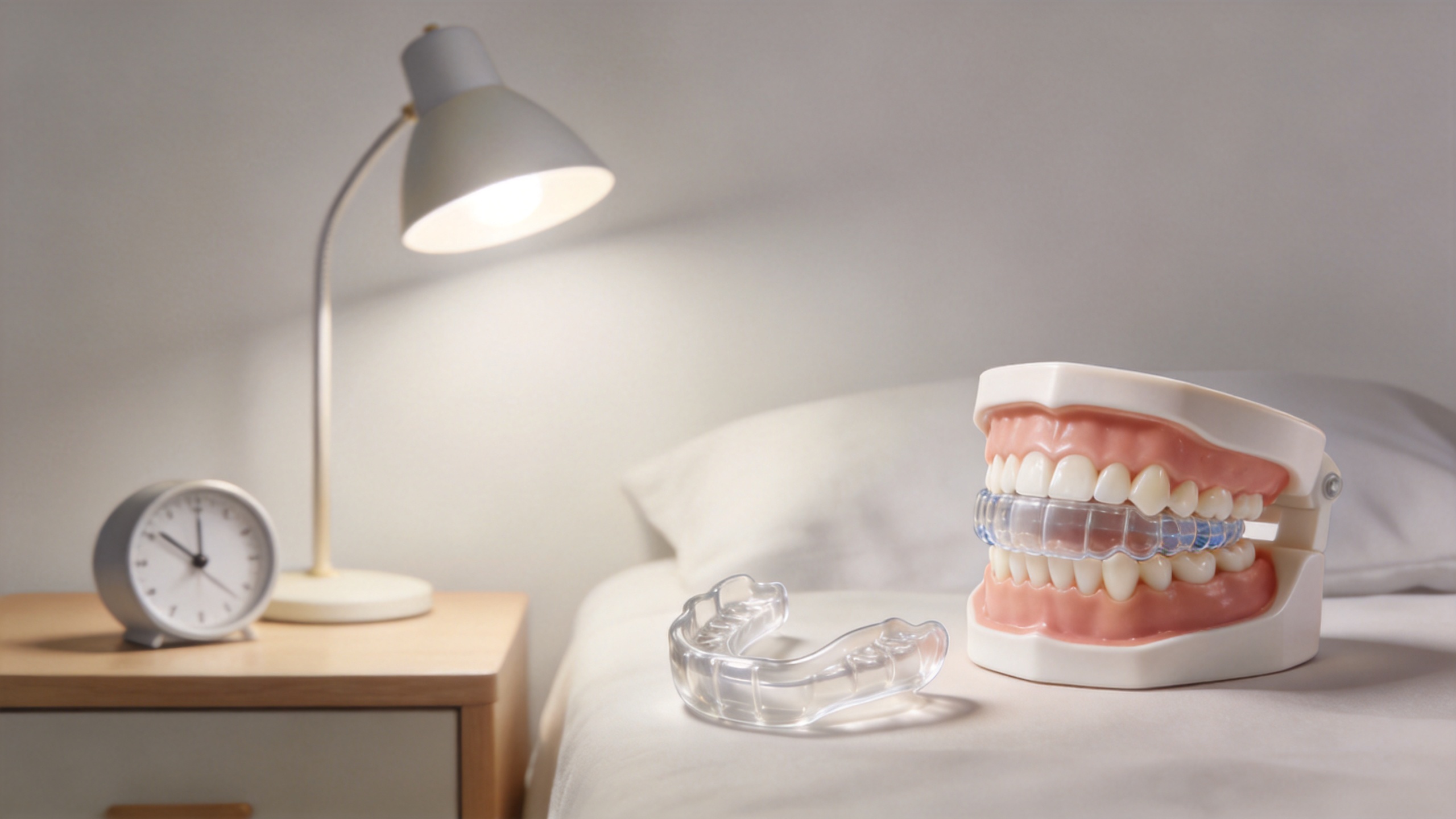
A practical selection checklist for a night guard
Whether you are choosing for personal use or reviewing options for a clinic, pharmacy, or wholesale program, use a short checklist before treating a product as ready for nighttime protection:
- Confirm the intended purpose. Is the item positioned for tooth protection during sleep, sports impact protection, or a different oral application? These uses should not be blended together.
- Ask how fit is created. Establish whether the process uses an impression, scan, remoldable form, or another method, and what happens if the fit is unsatisfactory.
- Request material information. Ask for the material description and any available documentation rather than assuming dental suitability from appearance alone.
- Review finishing and care instructions. A clear cleaning, storage, and replacement process helps users understand how to maintain a night guard.
- Define escalation guidance. Product instructions should say when discomfort, breakage, bite changes, or persistent symptoms should be reviewed by a dental professional.
Why a night guard should not be chosen only by price
It is tempting to compare a night guard by unit cost alone. In practice, an apparently low-cost option can create more work if the fit process is unclear, documentation is missing, or users receive no meaningful care guidance. For a buyer planning a wholesale range, the usable specification set can matter as much as the initial quote: product purpose, fit method, material disclosure, cleaning directions, packaging details, and a process for handling fit-related questions.
That same logic helps individual users. Before ordering a night time mouthguard, identify what information is confirmed and what still needs checking. If pain, cracked teeth, severe wear, headaches, jaw limitation, or sleep-related symptoms are involved, begin with a dental professional instead of relying only on a general product page.
How to assess comfort after fitting
Once a night time mouthguard has been fitted, comfort should be evaluated calmly and systematically. It should not have rough edges, obvious rocking, or a sensation that it is forcing the bite into an unfamiliar position. Follow the product or clinician’s instructions for the initial wearing period. If it feels painful, damages soft tissue, becomes loose, or changes how the teeth meet, stop treating that as a normal adjustment phase and seek appropriate advice.
For channel buyers, this is where product education earns its place. Clear user instructions and a defined support route reduce the chance that a normal question is confused with a health claim. The most responsible sales materials describe the guard’s intended protective role, explain the fitting and care process, and make the professional-care boundary visible.
Questions to ask a supplier or provider
| Question | Why it matters |
|---|---|
| What is the stated use of this night time mouthguard? | It prevents a night guard from being confused with a sports, whitening, or anti-snoring product. |
| How is the custom fit captured and verified? | It clarifies the path from dental shape information to a usable guard. |
| Which material details can be documented? | It supports informed evaluation rather than assumption. |
| What care, storage, and replacement information is supplied? | It helps users maintain the product and recognize when it needs review. |
| What happens if the fit is uncomfortable or symptoms persist? | It establishes a responsible support and referral boundary. |
The bottom line
A custom-fit night time mouthguard can be crucial because nighttime protection depends on more than placing a barrier over the teeth. A guard that is designed for the intended use, fitted with care, and supported by clear instructions has a better chance of being worn consistently and assessed responsibly. Still, fit is only one part of the decision. Use a night guard as product protection within its stated purpose, and involve a dental professional whenever symptoms, damage, or uncertainty call for individual assessment.



 Hot News
