 EN
EN


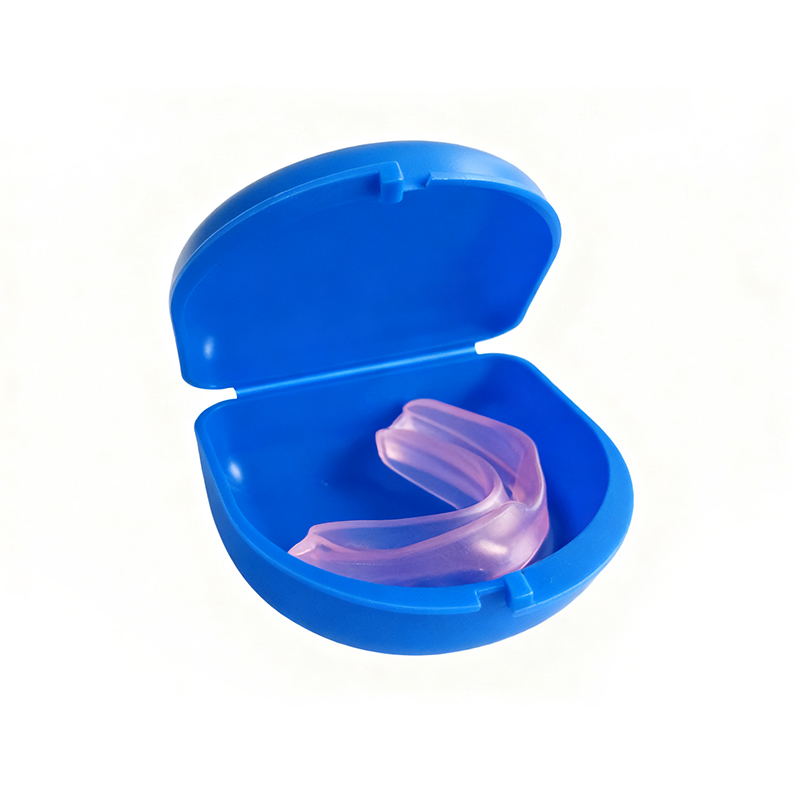
EVA Mouthguards: The Standard for Balanced Durability and Comfort
Why EVA is the go-to material for custom and boil-and-bite mouthguards
Ethylene-Vinyl Acetate (EVA) dominates the mouthguard market because its thermoplastic properties strike an ideal balance between workability and performance. It softens reliably at approximately 100°C—hot enough to avoid oral burns but low enough for safe, accessible boil-and-bite molding. This thermal responsiveness enables precise, user-guided adaptation to dental anatomy without professional equipment. Once cooled, EVA retains structural integrity while delivering resilient impact resistance. Available in densities ranging from 20–70 Shore A, it supports functional customization: higher-density variants provide enhanced protection for contact sports, while softer grades prioritize comfort for overnight bruxism management.
How EVA's shock absorption and low jaw strain support all-day and overnight comfort
EVA’s closed-cell structure delivers superior energy dissipation—absorbing up to 25% more impact force than alternatives in standardized compression testing. This significantly reduces force transmission to the temporomandibular joint (TMJ) during nocturnal clenching. Its slight flexibility prevents muscle hypercontraction, lowering the risk of morning jaw fatigue. Additionally, EVA’s low thermal conductivity minimizes temperature-related discomfort during extended wear. These attributes make it uniquely suited for both high-intensity athletic use and sustained overnight wear—offering reliable protection without compromising comfort.
Acrylic Mouthguards: Maximum Durability for Severe Bruxism
Superior abrasion resistance and structural integrity under chronic clenching forces
Acrylic mouthguards are the clinical standard for severe, long-standing bruxism due to their exceptional resistance to mechanical wear. Unlike softer materials, rigid acrylic withstands repetitive grinding forces without thinning, perforating, or deforming—preserving protective thickness over many months of nightly use. Its high compressive strength ensures dimensional stability, maintaining consistent occlusal contact and preventing uneven tooth loading. Clinical experience shows acrylic guards routinely last several times longer than EVA alternatives in high-wear scenarios, reducing replacement frequency and supporting long-term dental preservation.
Trade-offs: reduced wear comfort, thermal sensitivity, and adaptation challenges
Acrylic’s rigidity introduces meaningful trade-offs. Its inflexibility can cause localized soreness against gingival tissues, particularly during initial wear. Higher thermal conductivity makes it sensitive to ambient temperature changes—hot beverages or cold air may trigger transient discomfort. Because acrylic does not conform to the dentition like thermoformed materials, precise custom fabrication by a dental professional is essential. Even minor fit inaccuracies create pressure points that amplify discomfort. For this reason, acrylic is best reserved for patients with confirmed severe bruxism—not mild grinding or those with mucosal sensitivity.
Hybrid Mouthguards: Optimizing Both Durability and Comfort Through Layered Design
Strategic material pairing: rigid acrylic occlusal surface + resilient EVA base layer
Hybrid mouthguards resolve the durability–comfort dichotomy through purpose-driven layering. A thin, rigid acrylic occlusal surface directly contacts the teeth, resisting abrasion and preserving bite geometry under chronic clenching. Beneath it lies a thicker, resilient EVA base layer that cushions impact, absorbs shock, and conforms comfortably to the dental arch. This architecture delivers dual benefits: the acrylic layer maintains long-term structural fidelity where wear is greatest, while the EVA base distributes pressure evenly, reduces TMJ strain, and enhances all-day wearability. No single-material design achieves this functional synergy.
Clinical validation: 37% longer functional lifespan vs. EVA-only mouthguards
A 2023 clinical study tracked hybrid and EVA-only mouthguards over 12 months in patients with moderate to severe bruxism. Hybrids demonstrated a 37% longer mean functional lifespan—14.0 months versus 10.2 months for EVA-only guards. The primary factor was the acrylic occlusal layer’s resistance to surface degradation and flattening under repeated force. Patients wearing hybrids also required fewer clinical adjustments, as the rigid biting surface maintained even occlusal contact throughout the wear period. For clinicians and patients alike, this translates to improved cost-efficiency, consistent protection, and reduced disruption to long-term bruxism management.
How Mouthguard Thickness Interacts with Material to Define Performance
Thickness alone is not predictive of performance—it must be interpreted in context of material behavior. EVA’s thermoforming process inherently causes non-uniform thinning: molars lose ~46% of starting thickness, incisors up to 60%. To ensure adequate protection in these high-stress zones, manufacturers must begin with thicker stock—resulting in excess bulk elsewhere and compromised comfort and breathability. Acrylic, by contrast, maintains uniform thickness and structural integrity even at lower profiles, enabling slimmer, more precise designs. Hybrids optimize this interplay: they use a thin, wear-resistant acrylic occlusal layer paired with a thicker, shock-absorbing EVA base—leveraging each material’s strengths to achieve targeted protection and physiological comfort. Ultimately, optimal thickness distribution depends on aligning material properties—density, rigidity, and energy dissipation—with the user’s specific functional demands.
FAQs
1. What are the primary differences between EVA and acrylic mouthguards?
EVA mouthguards are flexible and comfortable, making them ideal for athletic use and overnight wear. Acrylic mouthguards are rigid, highly durable, and best suited for severe bruxism due to their superior resistance to mechanical wear but may lack comfort.
2. What makes hybrid mouthguards unique?
Hybrid mouthguards combine a rigid acrylic occlusal surface for durability with a comfortable EVA base layer for shock absorption and flexible fit. This design offers improved durability and comfort compared to single-material mouthguards.
3. How does mouthguard thickness affect performance?
Thickness influences protection and comfort, but its effectiveness depends on material properties. EVA may thin during molding, while acrylic maintains uniform thickness for precise, slimmer designs. Hybrids optimize thickness by leveraging the strengths of both materials.
4. Are EVA mouthguards suitable for severe bruxism?
While EVA mouthguards are suitable for mild to moderate bruxism and comfortable overnight wear, severe bruxism often requires the durability and structural integrity of acrylic or hybrid mouthguards.
5. Can I customize acrylic mouthguards at home?
No, acrylic mouthguards require professional dental fabrication to ensure a precise fit and avoid discomfort from pressure points.