 EN



Customized FDA-Grade Dental Mouthpiece For Snoring To Prevent Snoring Comfortably
When buyers search for a dental mouthpiece for snoring, they are often trying to solve two different problems at once: finding a product that is comfortable enough for night use and building a credible product offer for a health-sensitive category. Those are related, but they are not the same as promising a medical outcome. A practical dental mouthpiece for snoring discussion starts with intended use, fit, documentation, and the limits of what a supplier’s product information can establish.
For wholesalers, online sellers, clinics, and pharmacies, the useful question is not simply “Does this look like a mouthguard?” It is whether the dental mouthpiece for snoring is designed and documented for its intended sleep-related use, and whether the buyer can explain that distinction clearly to customers. This guide lays out a verification-first way to assess a customized option while keeping comfort and responsible communication in view.
First, define what a dental mouthpiece for snoring is—and is not
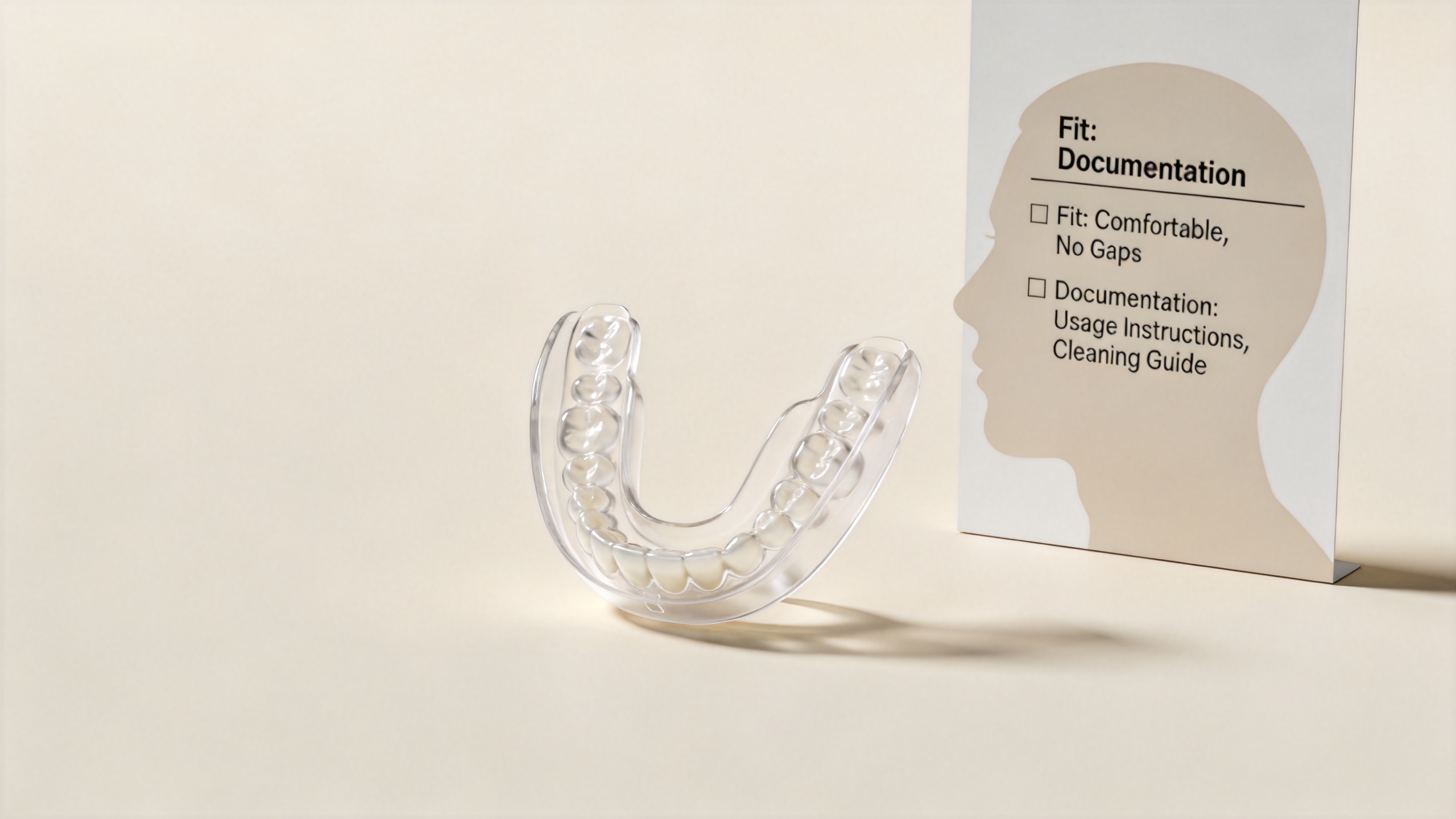
A dental mouthpiece for snoring is generally discussed as an intraoral appliance worn during sleep. It should not be confused with a sports mouthguard, a whitening tray, or a generic mouthpiece. Some sleep oral appliances are designed to support an open airway by positioning the lower jaw; others use different approaches. The right product category, intended use, and instructions must be confirmed in the product documentation rather than inferred from appearance.
This distinction matters because snoring can have different causes, and it may be associated with obstructive sleep apnea. A product page or sales conversation should not diagnose a customer, guarantee that snoring will stop, or imply suitability for every sleeper. A buyer evaluating a dental mouthpiece for snoring should encourage customers with suspected sleep-disordered breathing, jaw pain, major dental issues, or persistent symptoms to seek assessment from an appropriate healthcare professional.
What “FDA-grade” should mean in a buyer conversation
The phrase “FDA-grade” is common in market language, but it is not, by itself, a regulatory status. For a dental mouthpiece for snoring, treat it as a prompt to ask for evidence—not as a claim to repeat without verification. FDA guidance addresses intraoral devices for snoring and/or obstructive sleep apnea as a device category with special controls. That does not establish that every similar-looking product is cleared, registered, or appropriate for a particular indication.
Before using FDA-related wording in a listing, request the exact documents that support the intended claim. Depending on the product and market, this may include device classification information, applicable registration or clearance details, labeling, instructions for use, material declarations, and quality-system documentation. Keep the evidence tied to the specific SKU and market. If evidence is incomplete, use neutral wording such as “documentation available for review” only when that statement is accurate.
A comfort-first checklist for a dental mouthpiece for snoring
Comfort is not a decorative feature. If a dental mouthpiece for snoring creates pressure points, excess bulk, or an unstable fit, users may stop wearing it. A thoughtful product brief should therefore turn “comfortable” into questions that the supplier can answer.
- Fit pathway: Is the appliance custom-made, semi-custom, or boil-and-bite? State the process precisely and avoid presenting one approach as right for everyone.
- Adjustability: If a design is adjustable, ask how adjustments are intended to be performed and what instructions accompany the product.
- Material documentation: Request material specifications, traceability where applicable, and the intended-use limitations. Do not substitute broad claims such as “medical grade” for records.
- Edge finish and profile: Ask how edges, thickness, and retention are controlled. These details influence perceived comfort, but must be described only with verified specifications.
- Cleaning and storage: Clear care instructions can help buyers present a responsible night-use routine without making clinical promises.
For an anti-snore product range, it is especially important to separate comfort language from treatment language. “Designed for overnight wear” is not the same as “will prevent snoring.” The first can be used only if documented; the second is an outcome claim requiring a stronger, product-specific basis.
Why custom fit changes the selection discussion
Custom fit does not automatically make every dental mouthpiece for snoring suitable for every customer. It does, however, change the questions a buyer should ask. A custom workflow may involve impression, scan, bite-registration, or fitting information. The buyer should understand which party collects the information, who reviews it, how remakes are handled, and which restrictions apply.
For clinically prescribed oral appliance therapy, guidance from sleep-medicine and dental-sleep organizations has emphasized qualified professional involvement and custom, titratable appliances in the appropriate clinical context. That is a useful boundary for commercial content: a supplier may explain product options and documentation, while diagnosis, prescription, fitting oversight, and follow-up belong to qualified professionals where required.
How OEM/ODM buyers can build a clearer product brief
OEM/ODM work is most useful when the brief is specific. Instead of asking a factory to make a “better” dental mouthpiece for snoring, organize the request around verifiable requirements. Confirm the target market, intended positioning, preferred customization route, packaging language, instructions, labeling review process, minimum order quantity, and the documents needed before launch.
For an OEM/ODM anti-snore offer, avoid copying claims from a competing listing. Ask for the evidence behind each proposed claim and establish an approval path for artwork. The supplier’s role may include manufacturing and customization; it does not replace a buyer’s legal, regulatory, or clinical review for the markets served.
Questions to ask before purchasing or private-labeling
- What exact intended use is stated for this dental mouthpiece for snoring?
- Which product-specific documents support any FDA-related, material, or quality statements?
- How is the fit process described, and what instructions are supplied to the end user?
- What conditions, contraindications, or referral language should appear in the customer-facing copy?
- Which customization elements can be changed without affecting documentation or labeling obligations?
- What are the cleaning, storage, remake, and complaint-handling procedures?
A responsible way to position comfort
The strongest product page does not promise that a dental mouthpiece for snoring will work for every person. It explains how fit, material records, instructions, and professional review fit together. That approach is more useful to a reseller and more respectful of end users than broad “stop snoring tonight” language.
If you are developing an OEM/ODM sleep-related line, build your launch checklist around product-specific evidence. Confirm the intended use, ask for documentation before claims are drafted, and make comfort statements only when the design details support them. A carefully positioned dental mouthpiece for snoring can then be presented as a product option for informed evaluation—not as a substitute for diagnosis or individualized care.


 Hot News
