 EN



Effective And Comfortable Anti Snore Stopper For Wholesale & Distribution
Wholesale buyers often receive a short request for an anti snore stopper and little else. That is not enough information to source responsibly. An anti snore stopper can refer to different product formats, and each format needs a separate conversation about intended use, oral contact, labeling, and channel fit. From a wholesale buyer’s perspective, the useful starting point is not a broad promise; it is a documented specification that a reseller can explain accurately.
This guide gives distributors a practical way to review an anti snore stopper before adding it to a catalogue, marketplace assortment, pharmacy range, or clinic-adjacent channel. It is procurement guidance, not individual health advice. Consumers who have persistent sleep or breathing concerns should seek an appropriate qualified professional.
Why wholesale evaluation starts with intended use
Search results for an anti snore stopper are largely consumer listings and broad comparisons. That makes product claims look interchangeable when they are not. A distributor should ask the supplier to state what the anti snore stopper is intended to be, who it is intended for, and which market the proposed wording targets. A mouth-worn item, a nasal item, and an electronic accessory do not share the same product file or selling conversation.
For oral products, intended use affects far more than a product title. It shapes instructions, contraindication language, packaging review, sales training, and the evidence a buyer should request. In the United States, FDA guidance for intraoral devices associated with snoring or obstructive sleep apnea explains that market status and directions for use matter; a buyer should therefore validate the supplier’s market-specific documentation rather than assume that a familiar retail phrase settles the question.
Build a sourcing brief before comparing samples
A clear sourcing brief turns an ambiguous anti snore stopper request into a reviewable project. It should specify the intended sales channel, target geography, expected customer-support model, and the precise claims the reseller plans to use. This prevents a sales sample from becoming an unexamined production order.
- Product format: Describe whether the proposed anti snore stopper is an oral appliance, a nasal aid, or another format. Do not group unrelated formats under one generic label.
- Audience and use boundary: Ask for the intended adult user profile, instructions, exclusions, warnings, and cleaning guidance.
- Commercial configuration: Confirm retail unit, multipack logic, barcode needs, carton count, artwork workflow, and replenishment terms.
- Claims inventory: List every phrase planned for the product page, insert, advertising copy, and sales deck. Each phrase should have a document owner and evidence status.
This framework helps a distributor compare like with like. It also gives customer-service teams a way to answer questions about an anti snore stopper without extending the product description into an unsupported health statement.
What “medical grade” should mean in a buyer conversation
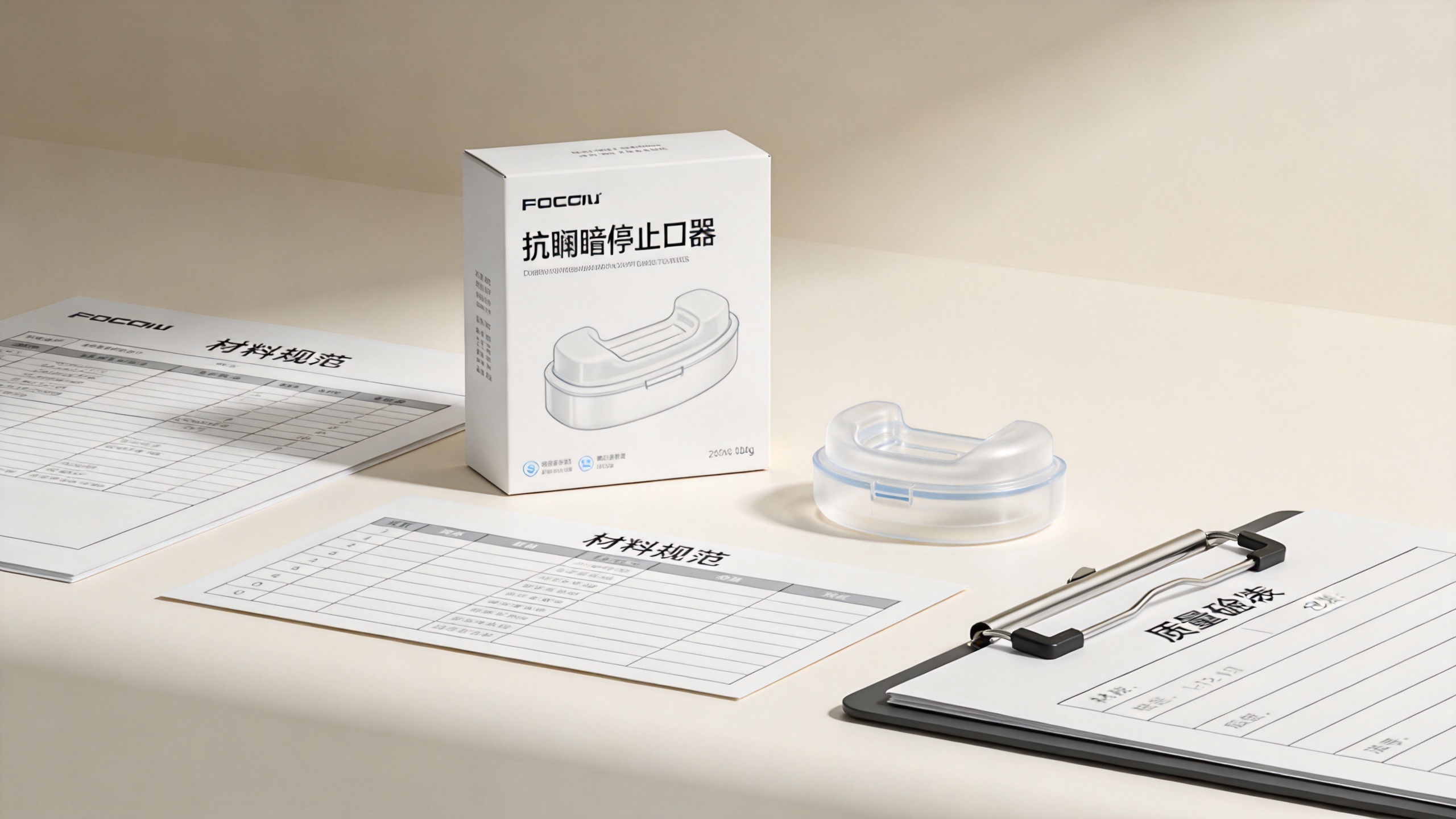
Medical grade is frequently used in product searches, yet it is not a substitute for a product-specific evidence package. When a supplier applies medical grade language to an anti snore stopper, ask what material is being described, which finished product configuration was evaluated, and what documentation is available for the target market. Material names alone do not establish how a finished item performs in real use.
For products with oral contact, an evidence review may involve composition information, manufacturing controls, colorants or additives, cleaning instructions, and the expected contact duration. FDA material-evaluation guidance that applies ISO 10993-1 emphasizes assessing the finished device and possible leachables or degradation products in relation to contact and use. That does not tell a distributor that every item has the same status. It explains why the anti snore stopper dossier should connect materials to the actual finished product and intended use.
Questions to place in the supplier file
- What is the exact material specification for this anti snore stopper, including relevant additives and colorants?
- Which documents support the stated material and intended-use description?
- Does the product file identify the finished configuration, packaging, batch traceability, and revision date?
- Which statements may the distributor use in the destination market, and which statements need local review?
- What is the process for handling customer questions, adverse-feedback escalation, and artwork changes?
Comfort is a specification, not a universal claim
The word “comfortable” in an anti snore stopper brief should lead to design questions rather than a universal outcome statement. Ask how fit is described, whether the product is adjustable, how instructions address first use, and what feedback has been documented for the relevant format. Comfort can vary with product design, user anatomy, fitting approach, and adherence to instructions.
For wholesale planning, the practical goal is to reduce avoidable returns and unclear expectations. Request sample-review criteria that sales teams can repeat: edge finish, surface condition, unit presentation, instruction readability, odor after opening, and consistency across samples. A distributor can then turn the anti snore stopper review into a controlled approval step instead of relying on subjective claims.
Prepare the distribution package
An anti snore stopper may be acceptable as a sample but still be unready for distribution. Before a purchase order, align the product file with the route to market. Marketplace operators need compliant listing content and image review. Pharmacy and clinic-adjacent channels may require more complete technical documentation and a clear escalation contact. Private-label programs need approved artwork, traceable revisions, and written control over claims.
| Distribution checkpoint | Buyer question | Why it matters |
|---|---|---|
| Label and insert | Does the anti snore stopper have clear use, care, and warning information for the intended market? | Reduces avoidable support requests and claim drift. |
| Document control | Are material, artwork, and instruction revisions dated and traceable? | Supports repeat ordering and issue review. |
| Channel claims | Can each approved statement be tied to the appropriate product file? | Helps teams communicate consistently. |
| Returns process | Who receives quality feedback and how are batches identified? | Creates a practical route for corrective action. |
A workable approval sequence for wholesale teams
Use a staged process: define the category, request the documentation set, review samples against a written checklist, approve only verified selling language, then confirm packaging and support responsibilities. This sequence makes it easier to compare suppliers and prevents an anti snore stopper from being marketed beyond the information actually available.
The most useful wholesale partner is not the one making the broadest statement about an anti snore stopper. It is the one able to provide a complete product file, clarify the intended-use boundary, maintain traceable changes, and support a distributor’s channel-specific review. That is the foundation for a durable assortment and a more credible customer experience.



 Hot News
