 EN



How Can A Premium Wrestling Mouthguard Enhance Athletic Performance?
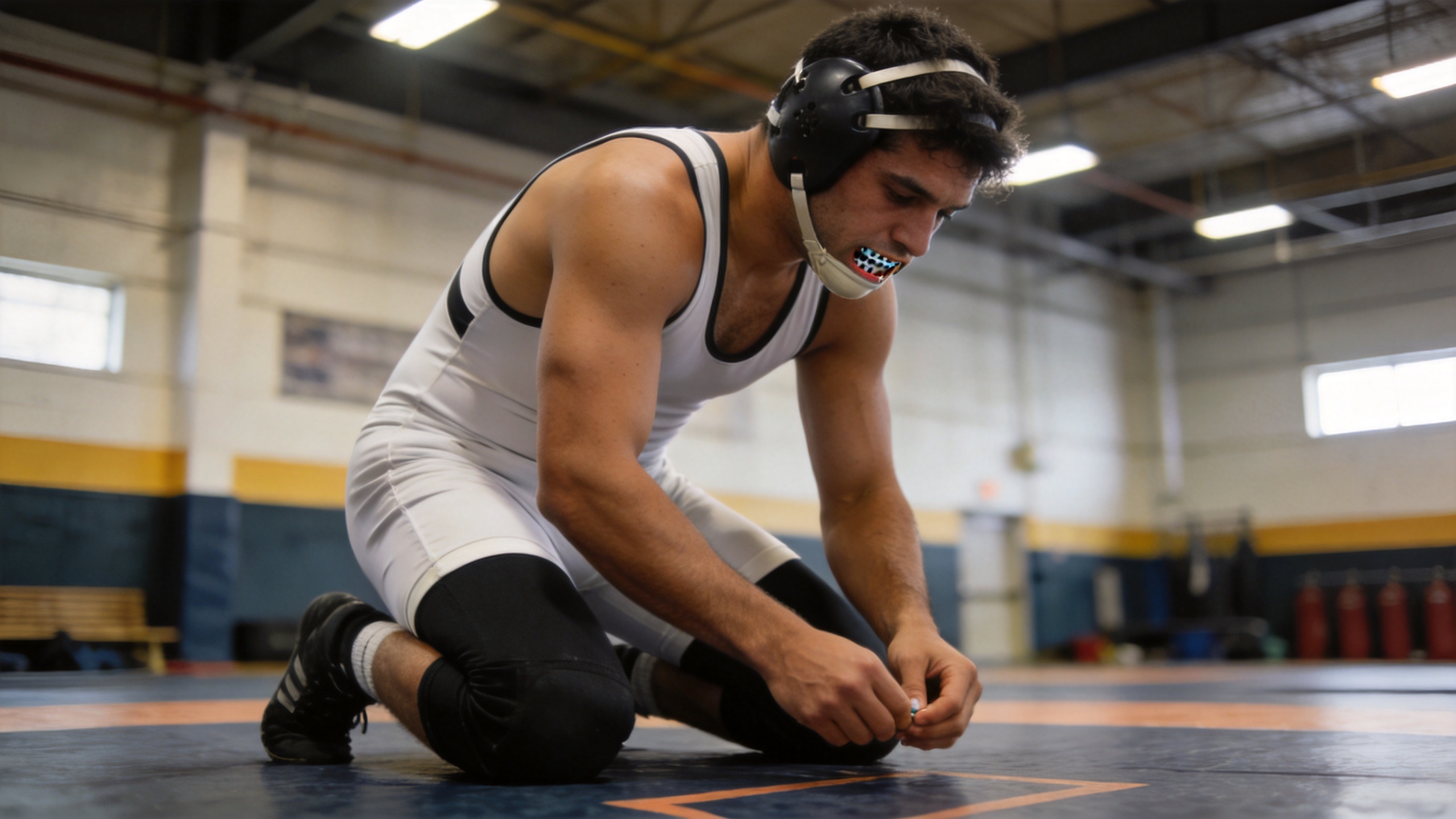
A premium wrestling mouthguard does not make an athlete stronger or faster on its own. Its value is more practical: it can help a wrestler stay focused on position, pace, and contact instead of worrying about an exposed tooth or a loose guard. In a sport where athletes hand-fight, shoot, scramble, and collide at close range, a wrestling mouthguard has to be protective enough to matter and comfortable enough to remain in place.
From a sports-protection use perspective, the right wrestling mouthguard starts with the actual training and competition setting. A guard that feels bulky, shifts during hard breathing, or makes communication difficult may spend more time in a gear bag than in an athlete’s mouth. That is why premium protection is more usefully understood as a combination of fit, retention, material information, and everyday wearability—not as an unsupported promise that one product suits every wrestler.
Why fit matters during a wrestling match
Wrestling demands quick changes in body position and repeated contact around the jaw and face. A properly fitted wrestling mouthguard can create a protective layer between the upper and lower teeth while helping the athlete keep the guard seated through movement. The American Dental Association recommends properly fitted athletic mouthguards to help reduce the incidence and severity of oral injury in sports and recreational activities with meaningful dental or facial injury risk. That guidance supports the habit of wearing a wrestling mouthguard; it does not certify a particular model or guarantee an outcome.
Fit is also a performance issue in the narrow, practical sense. When a wrestling mouthguard stays in place, the wrestler is less likely to interrupt a drill to reseat it. When its profile and edge finish are appropriate for the wearer, it may be easier to tolerate through a full practice. A premium wrestling mouthguard should therefore be assessed in motion, not only when it is first placed in the mouth.
Four qualities that can support consistent use
1. Stable retention
A wrestling mouthguard that repeatedly loosens can become a distraction. Retention depends on the wearer’s dentition, the molding or fabrication process, and the guard’s design. Custom-fit options are generally associated with closer adaptation, while boil-and-bite and stock guards can vary widely by user. Rather than assuming that any custom fit is automatically superior for every person, ask how the fit is achieved and what adjustment guidance is available.
2. Breathability and speech awareness
During live wrestling, athletes need to recover between exchanges and communicate with coaches or teammates. A wrestling mouthguard should be evaluated for how it feels during controlled breathing, not just for how it looks. Low-profile comfort is useful only if the guard still provides appropriate coverage and remains secure. If breathing feels restricted or speech is excessively difficult, the athlete should reassess the fit with a dental professional or qualified provider.
3. Material and thickness information
Premium protection should come with clear product information. A buyer evaluating a wrestling mouthguard can ask about material composition, intended use, care instructions, available sizes, and any documented fit process. Thickness alone does not tell the whole story; coverage, adaptation, resilience, and individual comfort all affect how a guard performs in use. Avoid treating unverified material labels or generic claims as proof of protection.
4. A realistic replacement routine
A wrestling mouthguard is not a set-and-forget item. It should be inspected for tears, sharp edges, distortion, odor, and changes in fit. Growing youth athletes, athletes with dental changes, and wrestlers using braces may need more frequent review. Cleaning and storing the wrestling mouthguard in a ventilated case also helps make regular use easier to maintain.
What “premium protection” should mean
For athletes and families, premium protection should mean a disciplined selection process rather than a marketing label. Start by defining whether the need is for youth practice, varsity competition, adult grappling, or wrestling with orthodontic appliances. Next, compare a wrestling mouthguard by coverage, retention, comfort under exertion, care requirements, and the availability of fit or specification information.
Braces deserve special attention. The ADA’s athletic-mouth-protector guidance notes that NFHS requires wrestlers wearing braces to use mouthguards; rule requirements can change, so teams should verify their current local association and event rules. More importantly, a wrestler with braces should not assume that a standard wrestling mouthguard will fit safely over orthodontic appliances. A dentist or orthodontist can help determine the appropriate approach.
How a well-chosen guard can help athletic readiness
A premium wrestling mouthguard supports readiness by reducing avoidable friction around gear. If it feels stable, the athlete can make wearing it part of the same routine as checking headgear, shoes, and fingernails. If it is easy to clean and store, parents, coaches, and equipment managers can reinforce the habit without adding unnecessary complexity.
That routine matters for teams as well. For a club, school program, retailer, or wholesale buyer, a wrestling mouthguard program should account for user age ranges, fit options, storage cases, care instructions, and a clear process for questions about braces or discomfort. Wholesale purchasing is not just about unit cost. It also involves whether the available product information can support accurate listing copy, customer education, and follow-up communication.
For equipment managers, a wrestling mouthguard checklist can make replacement and reordering easier. It should identify the intended wearer group, fit route, care material, and escalation path for a guard that does not sit securely. A retailer can use the same checklist to explain the difference between a general sports guard and a wrestling mouthguard selected for a close-contact mat sport. Clear specifications support responsible wholesale discussions without turning a product description into a medical claim.
A practical checklist before choosing a wrestling mouthguard
- Confirm the athlete’s primary use: practice, competition, or both.
- Check whether the wearer has braces, recent dental work, or a changing dentition.
- Ask how the wrestling mouthguard is fitted and how a poor fit is handled.
- Review material, care, replacement, and sizing information before purchase.
- Have the athlete test the wrestling mouthguard during controlled movement and breathing.
- For wholesale orders, request consistent product specifications and user-care materials rather than relying on broad claims.
Final perspective
A premium wrestling mouthguard can enhance athletic performance indirectly by supporting comfort, confidence, and consistent protective habits in a high-contact environment. A sound choice is not necessarily the thickest, most expensive, or most heavily advertised option. It is a wrestling mouthguard whose fit, use case, and documented information match the athlete’s real needs.
Before making a final choice, let the athlete try the guard in the conditions that matter: breathing hard, changing levels, speaking briefly, and moving through practice. A wrestling mouthguard that is worn correctly and consistently is more useful than one with impressive language but poor day-to-day fit.


 Hot News
