 EN



How Can High-Quality Mouthguard Custom Fit Prevent Sleep Bruxism Damage?
For a clinic, pharmacy, distributor, or private-label seller, a mouthguard custom fit question is not only about a product name. It is about whether a night-use appliance can sit securely, cover the intended tooth surfaces, and be explained responsibly to the end user. Bruxism describes clenching or grinding that often happens during sleep. A properly selected night guard may help place a protective barrier between upper and lower teeth, but it does not diagnose the cause of grinding or replace an examination by a dental professional.
From a dental-channel content perspective, the most useful way to assess a mouthguard custom fit is to separate three issues: product design, individual oral conditions, and the evidence a buyer can request. This distinction prevents a common error—turning a comfort feature into an unsupported health promise.
Why a Mouthguard Custom Fit Matters for Nighttime Grinding
A night guard is different from an athletic mouthguard. Both may be described as mouthguards, yet their intended situations, thickness choices, bite relationships, and professional review needs can differ. For sleep-related grinding, the practical aim is generally to reduce direct tooth-to-tooth contact and help protect teeth, restorations, and appliance surfaces from grinding forces. Whether a specific person needs a guard, and what design is suitable, remains a clinical decision.
A mouthguard custom fit approach starts with an impression or digital scan rather than a generic shape. That starting point can improve retention because the appliance follows the user’s teeth and gumline more closely. Better retention can matter at night: a guard that shifts, feels bulky, or causes pressure points is less likely to be worn consistently. Comfort is still individual, not assured for every wearer, and a user who experiences pain, gagging, bite changes, or persistent discomfort should seek professional advice.
Available dental information also frames occlusal guards as a means of helping protect teeth from the effects of grinding and clenching. That is a protection-oriented statement, not a claim that a guard cures bruxism, eliminates jaw symptoms, or treats sleep disorders. Good B2B content should preserve that boundary.
Which Fit Details Affect Protective Value?
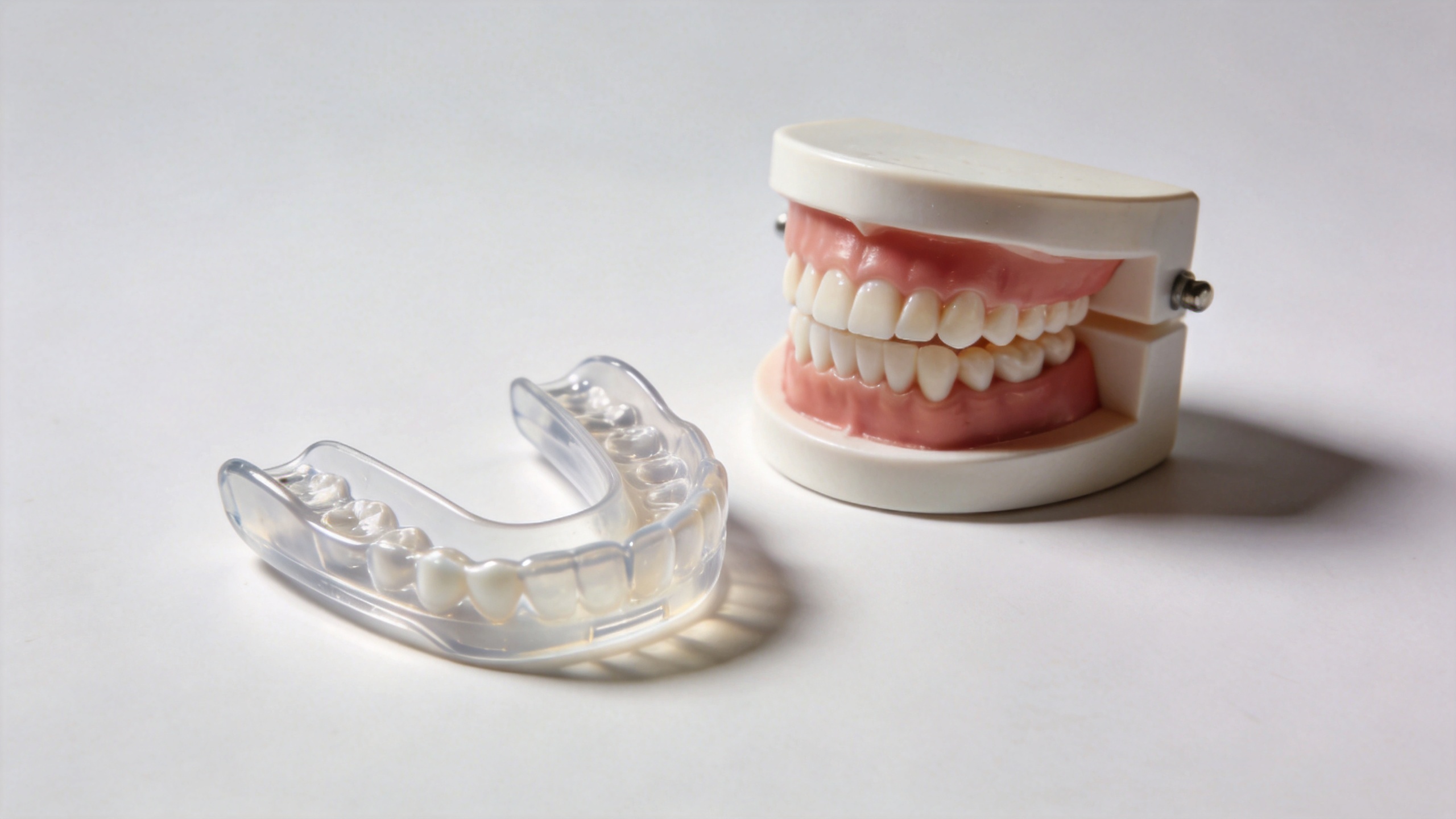
A high-quality mouthguard custom fit is a combination of several checks, not a single promise printed on packaging. The following product-level considerations are useful for buyer conversations:
- Retention: The guard should stay in place through ordinary sleep movements without relying on the wearer to hold it with jaw tension.
- Coverage: The design should cover the surfaces identified for protection while avoiding rough or irritating edges. The exact coverage approach should be confirmed by the responsible dental professional.
- Occlusal contact review: How opposing teeth meet the guard can matter. This is why a custom night guard should not be described as a one-size-fits-all appliance.
- Material and thickness documentation: Buyers can ask what material is used, how thickness is specified, and what manufacturing checks are recorded. A thicker guard is not automatically better for every situation.
- Finish quality: Smooth edges, clear cleaning instructions, and a suitable storage case support day-to-day use, but they do not substitute for fit assessment.
For buyers, a mouthguard custom fit is most credible when the supplier can explain how the fit is captured, trimmed, checked, and communicated—not when it relies on broad claims such as “suitable for every person.”
How Custom Fit May Help Reduce Damage Risk
The word “prevent” needs careful interpretation. No supplier can promise that every person will avoid enamel wear, cracked restorations, muscle discomfort, or other consequences associated with bruxism. What a well-managed mouthguard custom fit may do is create a physical interface between the teeth and provide a more stable appliance than a loosely fitting alternative. That may support the protective role of a night guard when it is professionally indicated and used as directed.
Fit also influences adherence. If an appliance is hard to insert, falls out, or feels sharp, users may stop wearing it. By contrast, a custom-made guard is based on the individual dentition, which is why fit and comfort are often discussed together in dental sources. Still, a comfortable fit is not proof that the bite relationship is appropriate. Professional review remains important, especially when a wearer has extensive restorations, orthodontic treatment, dental implants, tooth mobility, jaw locking, severe pain, or a suspected sleep-related breathing issue.
Factory Price Is Only One Part of B2B Evaluation
For wholesale and private-label programs, factory price can be an important commercial input. It should not be the only criterion for a mouthguard custom fit program. A lower unit price may be outweighed by unclear impression instructions, inconsistent trimming, inadequate packaging, or a lack of material and quality-control records. These gaps can create returns, customer-service pressure, and difficult product claims later.
Instead, ask suppliers to separate confirmed facts from options that still need validation. For example, a buyer can request sample workflow information, material specifications, labeling support, packaging details, inspection points, minimum order quantities, and the intended channel. Xiamen Yizhou’s disclosed business scope includes night guards, sports mouthguards, and dental whitening trays, while its stated audiences include wholesalers, e-commerce platforms, clinics, and pharmacies. That background supports a channel-focused discussion; it does not by itself verify the performance of any particular model.
Buyer Checklist for a Night Guard Program
Before selecting a supplier or presenting a mouthguard custom fit option, use this checklist:
- Define the intended use as a night guard for grinding-related tooth protection, not as a sports product or a treatment claim.
- Confirm whether the fit workflow uses an impression, digital scan, or another documented method.
- Request material, thickness, finishing, cleaning, and storage information in writing.
- Clarify which statements are product facts and which require dental or regulatory review in the target market.
- Plan escalation guidance: consumers with pain, changing bite, broken dental work, or persistent sleep concerns should consult an appropriate dental professional.
- Compare the total program cost, including samples, packaging, documentation, quality checks, and after-sales communication—not factory price alone.
This approach turns a mouthguard custom fit discussion into an evidence-aware buying process. It also helps different channels use accurate language: a pharmacy may need simple care information, a clinic may need technical documentation, and an e-commerce seller may need carefully bounded consumer-facing copy.
What Should Not Be Promised
Brand-safe wording matters because bruxism can have multiple contributors. Avoid claiming that a mouthguard custom fit will stop grinding, cure temporomandibular disorders, correct a bite, or resolve sleep apnea. Avoid telling every buyer that one material or thickness is right for them. It is more accurate to say that a night guard may be recommended to help protect teeth during grinding, while individual assessment determines whether and how an appliance should be used.
One distinction is especially important: a mouthguard custom fit specification is not the same as a medical outcome. The specification may cover scan or impression capture, edge finishing, material documentation, packaging, and inspection. The medical outcome depends on the individual and should be evaluated by a qualified professional. Keeping these layers separate makes product information more trustworthy.
Conclusion: Make Fit, Evidence, and Follow-Up Part of the Decision
A high-quality mouthguard custom fit can support nighttime tooth protection by providing an appliance tailored to the wearer’s dentition and intended use. The strongest claim is also the most careful one: a custom night guard may help reduce direct grinding contact when professionally indicated, properly fitted, and used as directed. It is not a substitute for diagnosis or individualized dental care.
For B2B buyers, the next step is practical. Verify the fit workflow, request documentation, check the intended claims for each channel, and ensure that users receive clear care and referral guidance. When the product story is built around evidence and appropriate limits, a mouthguard custom fit program is easier to assess, communicate, and support responsibly.


 Hot News
