 EN



Premium Dental Mouthguard Manufacturer And Wholesale Supplier
For a wholesaler, a dental mouthguard is not a single, interchangeable SKU. It is a product category that needs a clear intended-use brief, a documented material conversation, and a production process that can be repeated from sample to reorder. Search results often focus on consumer fit or nighttime use. Wholesale buyers have a different job: decide whether a supplier can turn a defined brief into consistent, responsibly presented stock.
As a buyer screening products for downstream channels, I start with resale requirements rather than a generic product name. That shift matters when discussing a dental mouthguard for sports protection, a night-use product, or a product positioned around bruxism relief. Individual suitability should be assessed with an appropriate dental professional; a supplier brief should not turn general product information into a diagnosis or a promise of results.
Start With the Use Case, Not the Catalog Label
A useful supplier conversation begins by separating purpose, user group, and sales channel. A sports-focused dental mouthguard may need a very different shape, instruction set, and packaging message than a product intended for nighttime tooth grinding. Do not assume that one design or description can serve every use case.
- Define the channel: pharmacy, clinic, sports retail, e-commerce, or distributor stock.
- Describe the user and use environment: adult or youth positioning, sport-specific needs, or nighttime-use expectations.
- Set the claim boundary: request language that explains intended use without promising clinical outcomes.
- Identify target markets: labeling, documentation, and classification requirements can differ by market and intended use.
This early work reduces a common sourcing error: choosing a dental mouthguard by appearance and trying to solve usage, label, and documentation questions after production has started.
Evaluate a Dental Mouthguard Supplier Through Evidence
Premium positioning should be supported by records a buyer can review, not by broad adjectives. Ask prospective suppliers to show how a specification moves from an approved sample into production. The conversation should cover the precise material designation, thickness or construction options where relevant, fit method, finishing requirements, and batch-identification approach. If information is unavailable, record it as an open item rather than filling the gap with assumptions.
Material and construction questions
Request the material description, color options, odor or taste controls if applicable, and any available safety or test documentation relevant to the target market. For a multi-layer dental mouthguard, clarify the layers and their purpose in the product specification. For a moldable item, ask how the instructions are validated for the planned audience. No material statement should be converted into an unverified health claim.
Sample-to-production control
Approve a physical sample against a written checklist. Include dimensions, edge finish, logo position, color reference, pouch or case configuration, and insert copy. Then ask what controls preserve those details on a later order: approved artwork files, version numbers, first-article review, batch records, and pre-shipment inspection criteria. This is more useful than relying on a general statement that quality is high.
Build Wholesale Requirements Into the Brief
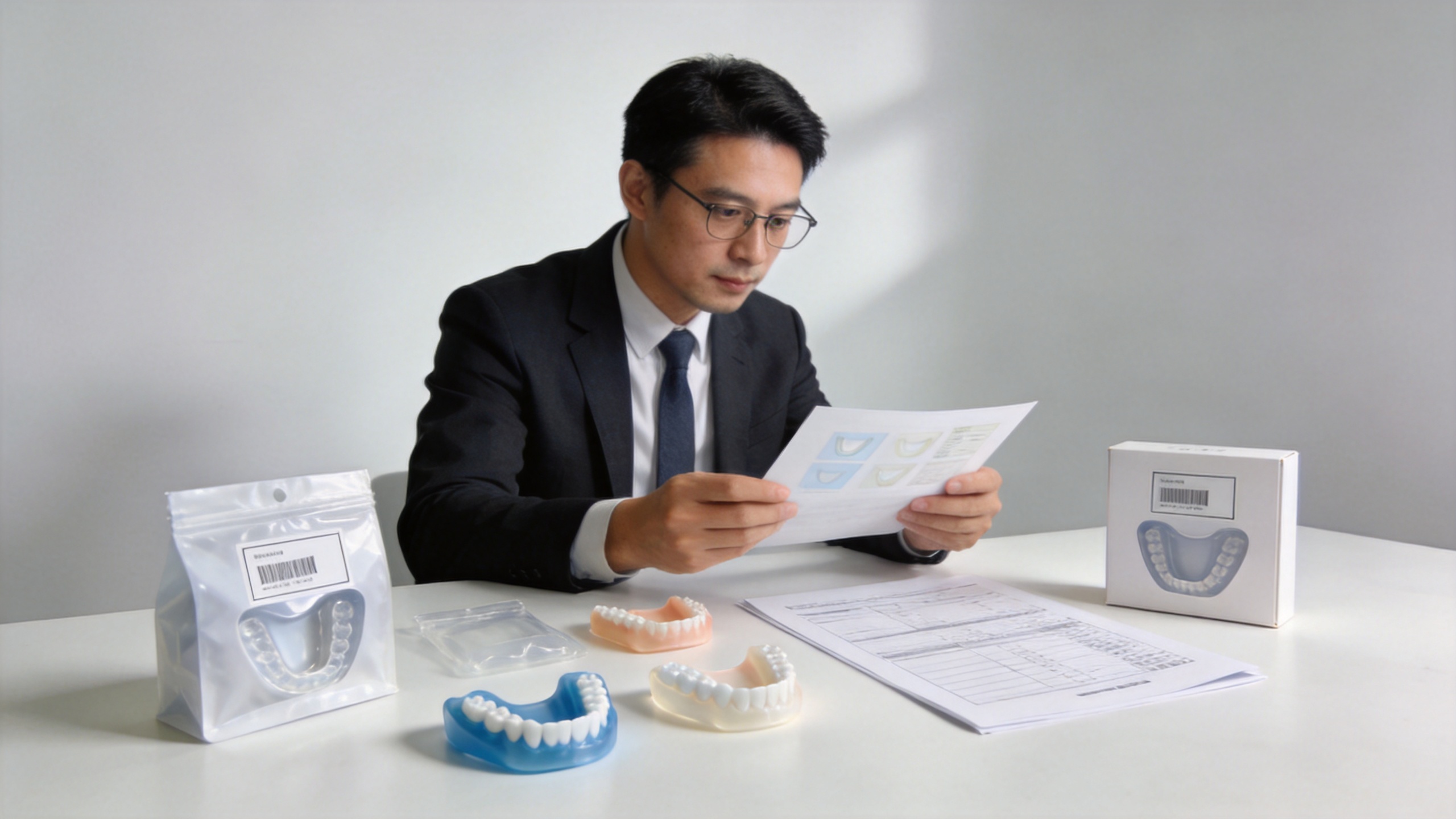
A capable wholesale program makes the handoff between supplier, importer, and reseller easier. The buyer should state whether the order needs retail-ready packaging, bulk packs for clinics, barcode placement, multilingual inserts, private-label artwork, or neutral packaging. Confirm the minimum order quantity, lead-time assumptions, packing count, carton markings, and the approval points that may affect timing.
For a wholesale launch, treat the following as approval checkpoints rather than informal notes:
- Written product specification and intended-use language.
- Approved dental mouthguard sample and artwork proof.
- Packaging layout, insert copy, and market-specific labeling review.
- Agreed inspection checklist, defect definitions, and batch traceability fields.
- Shipping packout, replenishment plan, and change-notification process.
Private-label projects particularly benefit from a change-control rule. A shift in material, mold, instructions, packaging, or supplier location should be flagged before it reaches a reorder. This gives the wholesale buyer time to review whether existing listings, documentation, and channel commitments still match the item.
Handle Bruxism-Related Requests Carefully
Demand for bruxism relief often brings buyers to the dental mouthguard category, but it should not lead to casual medical language. Teeth grinding can have multiple causes, and product appropriateness is individual. In a B2B brief, use neutral, supportable wording such as “intended for nighttime-use mouthguard distribution” only when the product documentation supports that positioning. Avoid language that says a product resolves a condition, works for everyone, or replaces professional assessment.
This boundary is commercially useful as well as responsible. It helps a wholesale buyer align product pages, customer-service scripts, and inserts with the evidence actually held in the supplier file. If a channel requires a particular registration, classification, test report, or label statement, request and review it before inventory is committed.
Compare Suppliers With a Practical Scorecard
| Review area | What to request | Why it matters |
|---|---|---|
| Product definition | Intended use, user group, construction, and sample specification | Keeps the dental mouthguard brief consistent across teams. |
| Documentation | Material details, available testing records, and market-relevant label information | Lets the buyer identify verification gaps before ordering. |
| Production control | Artwork approval, first-article process, inspection checklist, and batch identification | Supports repeatable wholesale replenishment. |
| Commercial terms | MOQ, lead-time assumptions, payment terms, packaging count, and change notice | Makes the wholesale plan operational rather than aspirational. |
| Communication | Named contact, revision history, and response process for nonconforming goods | Helps resolve issues without losing the original specification. |
Questions to Ask Before You Place a Wholesale Order
- Which details in this dental mouthguard specification are fixed, and which can be customized?
- Can the supplier provide a sample and a documented approval record before mass production?
- What records are available for the chosen material and target market?
- How are packaging artwork, inserts, and barcodes version-controlled?
- What inspection points apply to finish, dimensions, color, and packout?
- How will the supplier notify us if a material, process, or packaging component changes?
A Better Basis for Premium Sourcing
Premium sourcing is less about a label and more about disciplined confirmation. Choose a dental mouthguard manufacturer or wholesale supplier that can discuss the product by intended use, provide the documents it actually holds, work from an approved sample, and maintain clear production and packaging controls. That approach gives distributors and retailers a stronger foundation for accurate listings and dependable reorder discussions.
For products associated with bruxism relief or other oral-health concerns, keep consumer-facing communication within the available evidence and encourage appropriate professional consultation where individual fit or symptoms are involved. A clear brief, a traceable sample process, and careful wholesale documentation are the practical tools that turn a sourcing inquiry into a more manageable supply relationship.


 Hot News
