 EN



Premium Mouth Trays For Teeth Whitening Solutions For Global Beauty And Dental Importers
For a wholesale buyer, sourcing mouth trays for teeth whitening is not simply a question of finding a familiar shape at a workable unit price. The item has to make sense for a specific channel, a clearly described whitening system, and the documentation process that follows. A clinic distributor, a beauty retailer, a pharmacy buyer, and an e-commerce seller may all request a tray, yet their packaging, information, and support requirements can be quite different.
This guide approaches mouth trays for teeth whitening from a procurement perspective. It is designed to help global beauty and dental importers turn an early product request into a more usable sourcing brief. It does not provide treatment advice or promise whitening results. Rather, it focuses on fit, product positioning, information control, and the questions that make supplier comparison more practical.
Start With the Product System, Not the Tray Name
A tray is one part of a whitening routine, not a standalone description of every product in the category. Authoritative oral-health information commonly describes custom-fitted trays as a way to hold whitening gel against the teeth. That context matters to buyers because the tray, gel, instructions, storage, and consumer-facing claims must be reviewed as connected parts of a commercial offer.
When a buyer begins with only “whitening tray,” the request can blur several decisions: whether the proposed item is intended for professional-channel distribution or retail sale; whether it is supplied empty or as part of a custom kit; whether fitting is handled by a dental professional, the consumer, or a separate service; and which product information belongs on the pack. A clearer purchase brief makes the supplier’s response easier to compare.
- Define the intended sales channel and the end user’s expected level of guidance.
- State whether the tray is sold alone, paired with accessories, or incorporated into a custom kit.
- Separate tray specifications from claims about any whitening formulation.
- Ask what instructions, labeling, and traceability records are available for the destination market.
What Importers Should Verify Before Comparing Quotes
Two quotations can look similar while representing very different amounts of downstream work. Instead of treating price as the only comparison point, importers can use a shared checklist. The goal is not to assume performance from a photo or a sample; it is to make missing information visible before a product listing, tender, or retail launch is underway.
1. Intended Use and Channel Fit
Ask the supplier to describe the product’s intended use in plain, non-promotional language. For mouth trays for teeth whitening, the description should distinguish a tray product from a whitening agent and avoid suggesting a universal outcome. A dental importer may need information suited to professional consultation, while a beauty retailer may need concise point-of-sale copy and clearly bounded use instructions. The same physical format may require different packaging and support materials across these routes.
2. Fit Concept and Consumer Instructions
Fit is central to how a tray is positioned, but buyers should not convert a general fit statement into a clinical claim. The procurement question is more practical: what fitting method is intended, what consumer steps are included, and what support is expected after purchase? For a custom kit, request the complete workflow—contents, instructions, any impression or fitting component, and the handoff between brand, seller, and end user. This helps a buyer assess whether the kit can be responsibly explained in its target channel.
3. Material and Manufacturing Information
Do not infer material suitability from appearance. Request the material description, relevant specifications, color options, thickness options where offered, manufacturing controls, and available supporting records. If a supplier discusses a standard, ask which product or component it applies to, the test scope, and the evidence available for review. ISO 28399:2021 addresses requirements and test methods for external tooth-bleaching products intended for use in the oral cavity; whether it applies to a particular offer must be confirmed with the responsible supplier and the applicable market requirements.
4. Packaging, Labeling, and Traceability
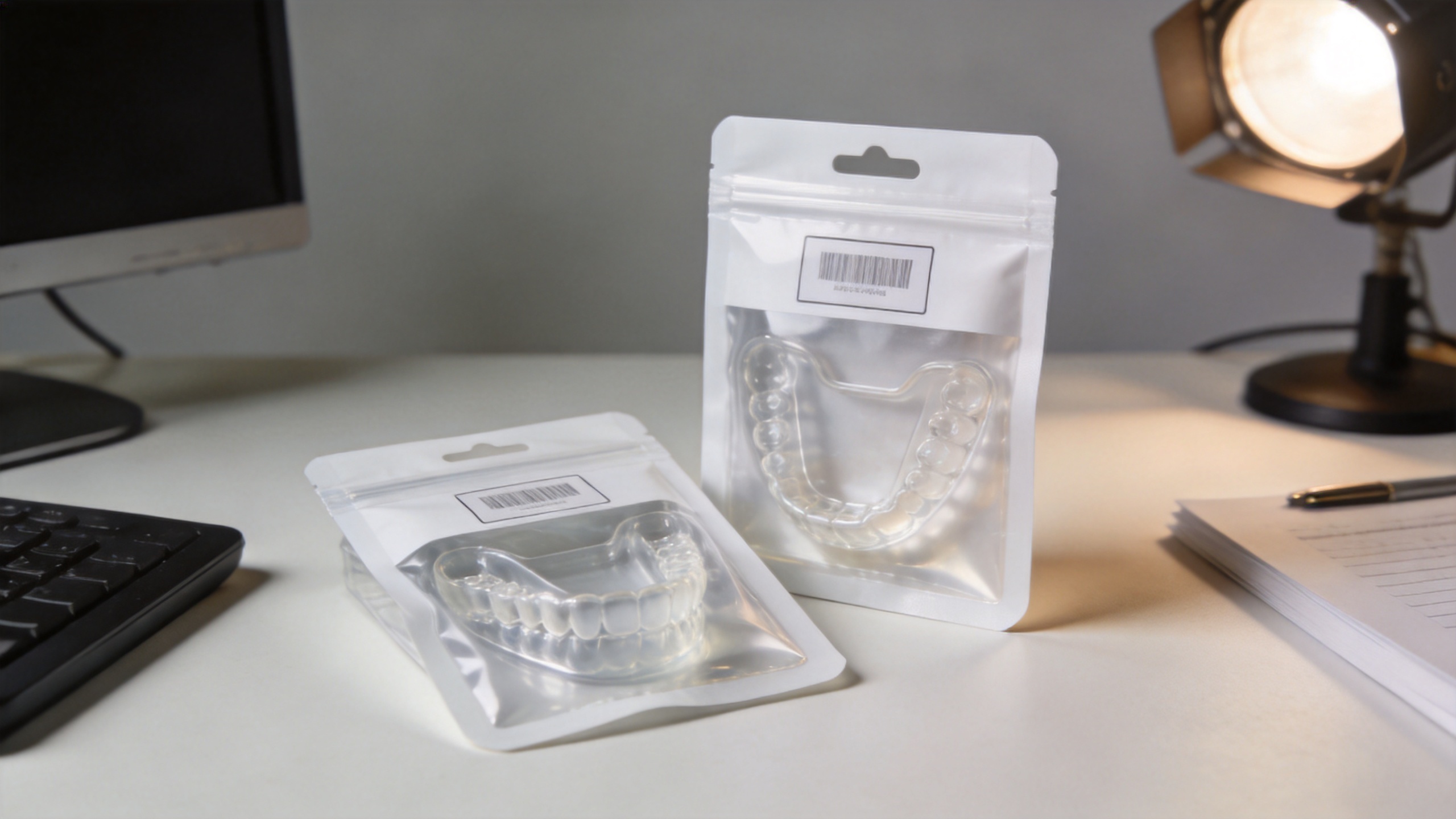
Packaging does more than present the product. It can affect SKU management, language handling, instructions, retail readiness, and the buyer’s ability to trace a shipment. A useful supplier discussion covers unit packing, outer-carton configuration, artwork process, label fields, batch or lot conventions if applicable, and document control. For a distributor working across several countries, ask how destination-specific language or importer details will be handled before artwork is approved.
How to Evaluate a Bulk Supplier Without Overlooking Total Workload
A bulk supplier should be evaluated on the clarity and repeatability of the commercial process, not on a broad claim of capability. A low quoted price can create extra work if packaging details, document versions, sample approvals, or production assumptions remain unresolved. Conversely, a quotation with a fuller specification may make internal review faster. The point is to compare offers on the same evidence base.
| Comparison area | Questions for the supplier | Why it matters to the importer |
|---|---|---|
| Product definition | What is included, and what is excluded from the offer? | Prevents a tray-only quotation from being confused with a finished custom kit. |
| Sample control | How will samples, changes, and final approval be recorded? | Creates a reference point before larger orders are discussed. |
| Artwork workflow | Which files, languages, and label fields are required? | Reduces avoidable changes during launch preparation. |
| Documentation | Which specifications and records can be supplied for review? | Supports responsible market and channel evaluation. |
| Order planning | What assumptions affect minimum order quantity, lead time, and packing? | Helps the buyer plan inventory without treating preliminary information as a commitment. |
Build a More Useful Request for Quotation
The quality of a supplier response usually reflects the quality of the request. Instead of asking only for a catalogue and price, provide a concise sourcing brief. This does not lock the buyer into a final specification; it gives each candidate the same baseline so that answers can be assessed fairly.
- Identify the destination market, sales channel, and planned positioning.
- Specify whether the requirement is for individual trays, a custom kit, or a larger private-label program.
- List required pack formats, languages, artwork responsibilities, and approximate order planning assumptions.
- Request available material descriptions, product specifications, sample process details, and applicable documentation.
- Ask the bulk supplier to identify any open questions rather than filling gaps with assumptions.
This approach turns a vague request for mouth trays for teeth whitening into a decision-ready conversation. It also keeps the discussion honest: performance, compliance, and market suitability depend on the final product configuration and the regulations relevant to the destination, not on generic marketing language.
Common Purchasing Mistakes to Avoid
One common mistake is to combine tray, whitening formula, and consumer claim into a single untested statement. Another is to approve packaging before confirming the information that must appear on it. Buyers also sometimes compare suppliers using different scopes—one quote may cover a basic tray, while another assumes a custom kit, printed packaging, or additional documentation support.
A more reliable method is to document assumptions beside every price and sample. If a claim, material detail, or market document is not yet verified, label it as an item for follow-up. This protects the purchasing team from presenting provisional information as a settled product fact.
Final Sourcing Takeaway
For global beauty and dental importers, successful sourcing of mouth trays for teeth whitening starts with disciplined product definition. Confirm the channel, define the kit scope, request evidence-based specifications, and compare each bulk supplier using the same checklist. A well-prepared inquiry cannot replace regulatory review or professional guidance, but it can make supplier conversations clearer, reduce rework, and support a more responsible route to market.


 Hot News
