 EN



Premium Teeth Light Whitening Kit Solutions For Global Beauty And Dental Importers
For a distributor, a teeth light whitening kit is not simply a light, gel, tray, and retail carton gathered into one box. It is a product program that must work across sourcing, labeling, channel presentation, and post-sale support. A kit that looks compelling in a consumer comparison may still create work for an importer if the component list, pack configuration, or market-specific documentation is unclear.
From a wholesale buyer’s point of view, the starting question is not “Which kit has the most eye-catching claim?” It is “What must be confirmed before this teeth light whitening kit can be responsibly offered through our intended channel?” That shift—from selling points to confirmation questions—makes it easier to compare a custom kit proposal, a standard private-label option, and a factory price quotation on the same basis.
Why importers need a different teeth light whitening kit checklist
Search results for LED whitening kits are largely built for individual shoppers. They tend to compare timers, light formats, treatments, or headline outcomes. Global beauty and dental importers have a broader job: they need a coherent product file, packaging that fits the channel, and claims that can be reviewed for the destination market. In other words, a workable teeth light whitening kit is both a consumer product and a procurement workflow.
This does not mean an importer must solve every regulatory issue alone. Classification and labeling obligations can vary with the formula, intended use, claims, and destination. For example, EU-market cosmetic products require an EU-based responsible person when the applicable cosmetic rules apply. In the United States, labeling requirements likewise depend on the product’s classification. The practical takeaway is to ask for information early and obtain qualified, market-specific review before launch rather than treating a generic certificate or template label as a final answer.
Start with the channel and the use case
A teeth light whitening kit may be positioned through online beauty retail, pharmacies, dental channels, or distributor networks. Each route changes the information that needs to be ready. E-commerce teams often need clear product imagery, a concise instruction path, carton dimensions, and approved claims language. Pharmacy or dental buyers may place more weight on ingredient information, precautions, and how the product is described to consumers.
Before requesting samples, write a one-page brief that answers these questions:
- Who is the intended retail buyer and through which channel will the kit be sold?
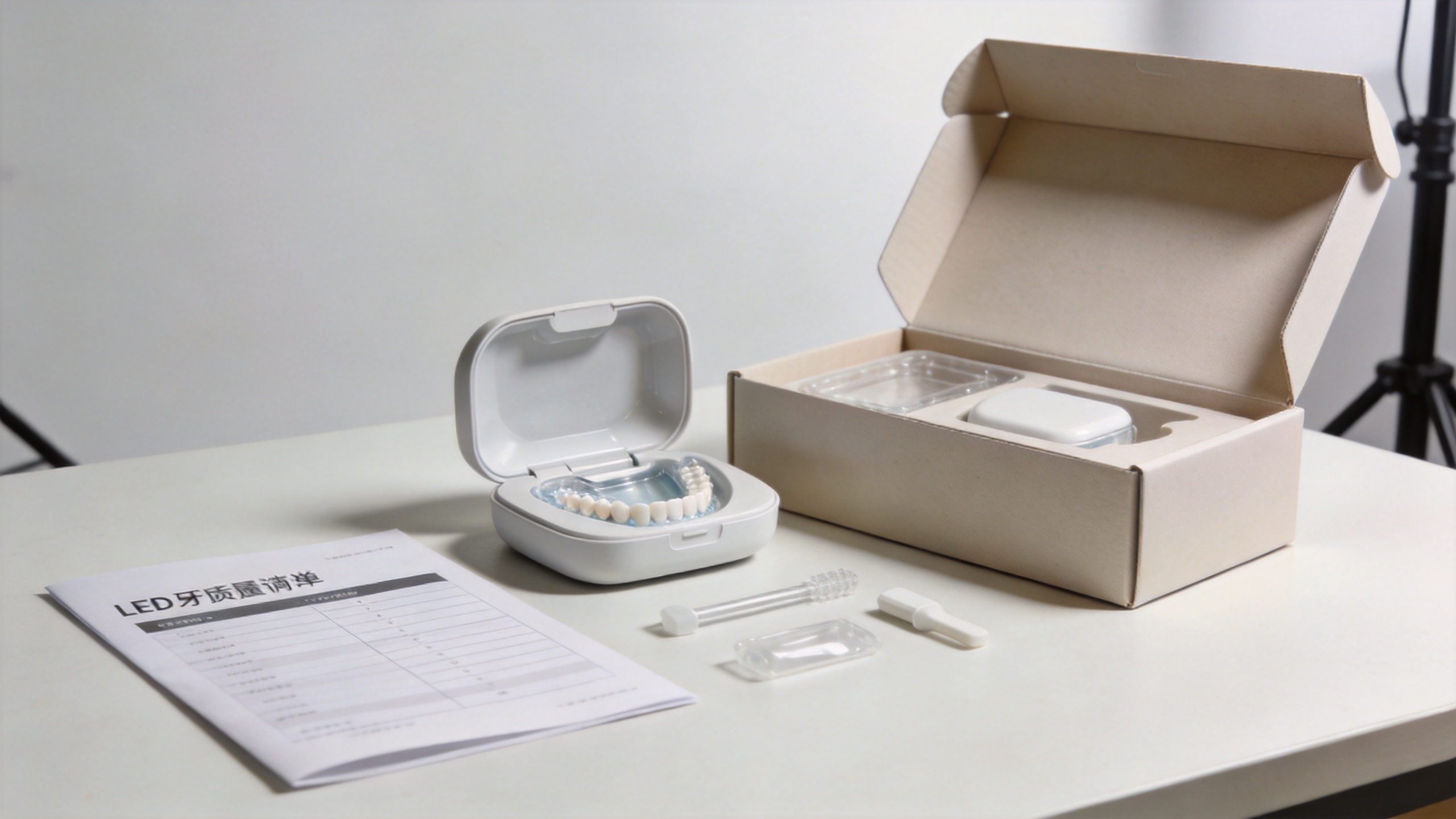
- What is included in the teeth light whitening kit: light device, mouth tray, gel format, shade guide, charging or battery components, and instructions?
- Which destination markets and languages must the retail pack support?
- Which product claims are being considered, and who will review them for the market?
- What evidence, specifications, and packaging files must be available before a purchase order is released?
This kind of brief is useful because it prevents a common sourcing mistake: treating a broad product name as if it automatically describes a finished, market-ready configuration.
Build a custom kit around confirmed components
A custom kit can be valuable when a distributor needs a distinctive retail presentation, a channel-specific bundle, or a pack that fits local language requirements. But “custom” should be broken into choices that can be quoted and approved. Ask the supplier to identify which elements are standard, which can change, and what approval is required for each change.
| Custom kit area | Questions to confirm | Why it matters |
|---|---|---|
| Core components | Which light, tray, gel, accessories, and instructions are included in the proposed configuration? | Prevents mismatches between the sample, quotation, and retail pack. |
| Brand presentation | What can be changed on the carton, insert, device, or accessory packaging? | Defines the private-label scope without assuming every component is customizable. |
| Artwork and languages | Who supplies final copy, translations, warnings, and artwork approval? | Helps allocate responsibility before production begins. |
| Instructions and precautions | What draft instructions and precaution statements are available for review? | Supports channel communication and market-specific review. |
| Sampling and change control | Which sample is the approved reference, and how are later changes documented? | Reduces the chance that production differs from the approved version. |
Here, conditional language is helpful. A supplier may be able to accommodate a packaging or bundle change, but the buyer should verify the related minimum order, tooling, lead time, and document updates. A custom kit is most useful when those dependencies are visible rather than implied.
Read factory price as a total procurement question
Factory price is important, but it is only one line in the decision. Two teeth light whitening kit quotations can show different unit prices because they include different components, pack materials, documentation support, inspection steps, freight assumptions, or minimum order quantities. Comparing a lower factory price with an incomplete specification often produces a misleading result.
A more reliable comparison uses a like-for-like quotation sheet. Request the same fields from every supplier: component list, packaging specification, artwork process, minimum order, sampling cost, production lead time, payment terms, inspection arrangement, and what technical or labeling information is available. Then ask which items would change the price if the custom kit specification changes.
In practice, buyers also need to allow for the work after arrival: warehouse handling, channel listing, consumer questions, returns, and packaging corrections. Looking at this total workload does not guarantee the lowest overall cost; it gives the importer a clearer way to avoid choosing a quote that later requires unexpected rework.
Ask for documentation before claims are finalized
Marketing language should follow verified product information, not lead it. When evaluating a teeth light whitening kit, request the current component specification, ingredient or formulation information where relevant, instructions, packaging artwork, and available quality documentation. If the product will be sold in more than one market, create a checklist showing which documents are generic supplier materials and which still need local review.
It is also sensible to separate product facts from performance language. An importer can describe the kit format and included items once confirmed. Claims about whitening outcomes, safety, or suitability should be reviewed against the exact finished product and market requirements. This is especially important for a dental-adjacent product, where general sourcing guidance is not a substitute for professional or regulatory advice.
Sample the customer journey, not just the product
A sample review should cover more than whether the light turns on. Have the commercial team open the carton, read the instructions, check the accessory count, and inspect the proposed custom kit as a shopper would. Then have the operations team compare that same sample with the purchase specification and artwork file. If those two views do not align, resolve the gap before production.
Useful sample-review questions include:
- Does the teeth light whitening kit contain exactly the items named in the quotation?
- Are the instructions, warnings, batch or traceability fields, and market language requirements ready for the intended channel?
- Is the charging, battery, or electrical information clear enough for the destination market and logistics route?
- Has the team identified which claims are approved, which are provisional, and which should not be used?
- Is there a documented reference sample or signed specification for production inspection?
A practical supplier conversation for global buyers
The most productive supplier conversation is specific but not adversarial. Instead of asking whether a teeth light whitening kit is “premium,” ask what the proposed configuration includes, what can be customized, what documents are available, and what remains for the importer to validate. Instead of asking only for factory price, ask what changes it and what work sits outside it.
For beauty retailers, dental distributors, pharmacies, and online sellers, this approach creates a more useful procurement record. It also respects an important boundary: a light-based whitening product should be presented with information that is accurate for its configuration and market, rather than with universal promises or implied clinical conclusions.
Final procurement checklist
Before choosing a teeth light whitening kit supplier, confirm the intended channel, final component list, custom kit scope, quote assumptions, label and instructions workflow, documentation status, sample approval method, and local review responsibilities. When each item is explicit, the importer can compare factory price fairly and plan a more controlled launch.
The strongest sourcing decision is usually not the quickest quote. It is the proposal that gives the buyer enough confirmed information to move from product concept to a channel-ready kit with fewer unanswered questions.

 Hot News
