 EN



Professional Led Teeth Whitening Kit Manufacturer And Wholesale Supplier
Buying a led teeth whitening kit for resale is not the same as choosing one for personal use. Consumer pages tend to focus on treatment time, shade claims, or the look of an LED mouthpiece. A wholesale buyer has a different job: turn a broad product request into a specification, a labeling plan, a sample review, and a supplier conversation that can survive the target market’s requirements.
That distinction matters for distributors, ecommerce teams, clinics, and pharmacies. Xiamen Yizhou Imp. & Exp. Co., Ltd. serves oral-care channels that include wholesalers, ecommerce platforms, offline clinics, and pharmacies, so the useful starting point is not a promise of results. It is a clear list of what the proposed kit contains, how it will be positioned, and which documents still need to be checked.
Start with the channel and the intended product claim
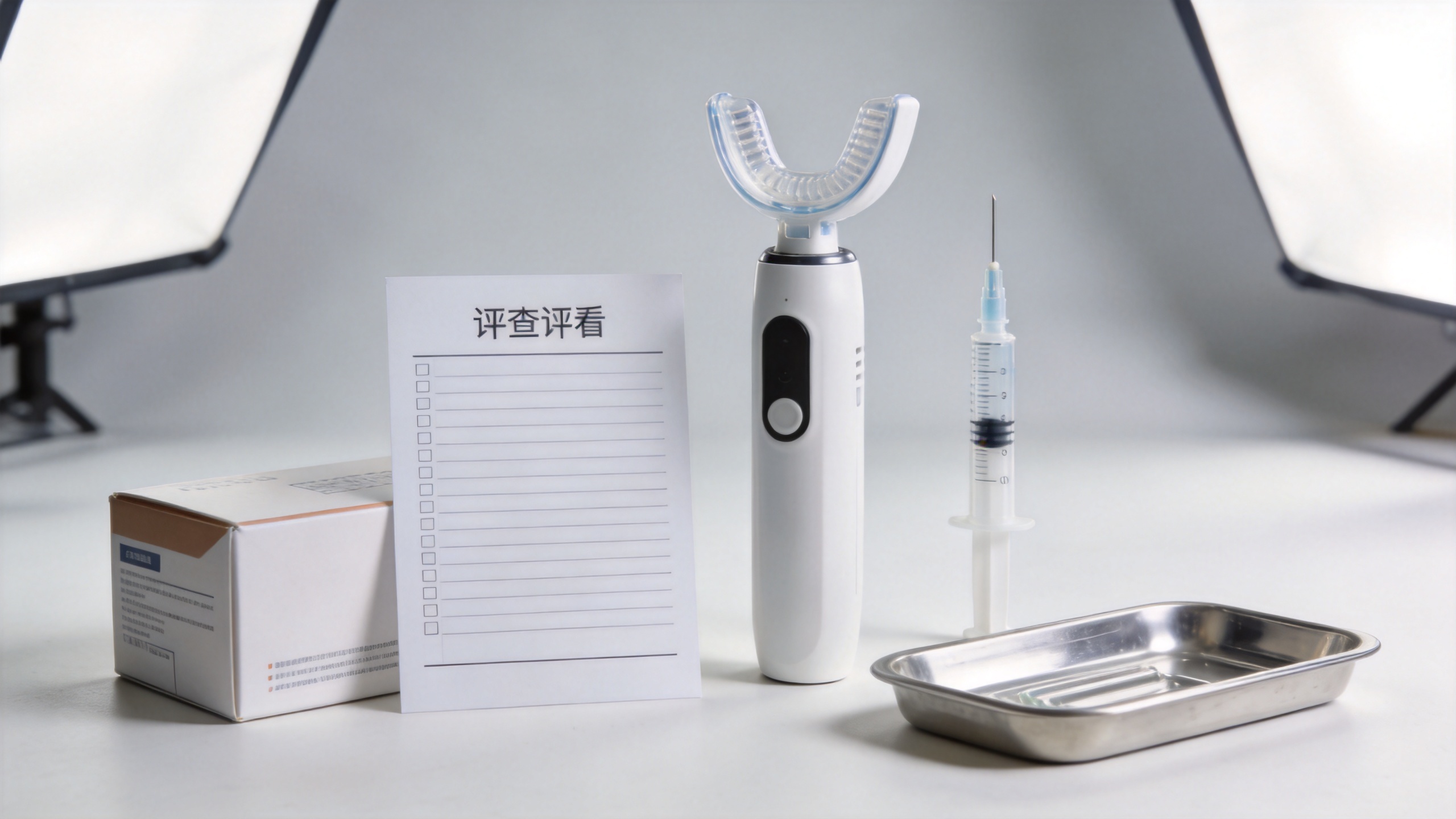
A professional led teeth whitening kit may combine a light device, a tray or mouthpiece, gel, instructions, and retail packaging. Those parts should not be treated as one compliance question. The formula, the LED component, the wording on the pack, and the sales channel can each affect the review needed before launch.
For example, European rules around hydrogen peroxide are market-specific. Public guidance from Ireland’s HPRA states that oral products up to 0.1% hydrogen peroxide may be supplied directly to consumers, while products above 0.1% and up to 6% involve dentist supply and first-use supervision; products above 6% must not be made available. That is not a universal formula rule or a substitute for legal advice. It is a practical reminder to identify the destination market before asking a factory to quote a finished configuration.
In the United States and elsewhere, classification can likewise depend on ingredients and intended claims. A buyer should therefore avoid copying a competitor’s wording. Instead, agree on the product’s cosmetic positioning, permitted claims, user instructions, age limitations where relevant, and documentation route with qualified regulatory reviewers.
What to request from a led teeth whitening kit manufacturer
The first request should be a configuration sheet, not simply a catalogue image. Ask the manufacturer to separate each component so your team can see what changes when you move from a sample to a private-label order.
- Formula details: ingredient list, active-system information, batch identification, shelf-life support, storage conditions, and any available safety documents.
- LED assembly: the model, power source, charging arrangement, instructions, warnings, and any component-specific test or compliance material relevant to the destination market.
- Tray or mouthpiece: material description, dimensions or fit approach, cleaning instructions, and packaging contact information.
- Retail presentation: carton dieline, label copy, language versions, barcode space, inserts, tamper evidence if applicable, and country-of-origin details.
- Traceability: lot coding, sample approval records, production inspection points, and the process for handling a packaging or formula change.
A light, gel, and tray can look interchangeable when quotes arrive. In practice, the purchasing decision turns on documents and change control. If a supplier cannot identify which items are fixed, optional, or still subject to confirmation, the quote is not yet comparable.
How OEM/ODM changes the wholesale discussion
OEM/ODM is useful shorthand, but buyers should define the scope. An OEM request may focus on applying your approved brand artwork to an established configuration. An ODM request may involve more decisions, such as pack architecture, accessory selection, user-flow changes, or a market-specific kit concept. Neither label guarantees that a formula, claim, or package is ready for every jurisdiction.
For a led teeth whitening kit, put the following points into a written brief before sampling: target countries, intended sales channels, required languages, target retail price range, component list, packaging dimensions, artwork owner, documents expected, and the approval authority on your side. This reduces the common gap between a visually good preproduction sample and an order that cannot be released because copy, instructions, or records changed late.
OEM/ODM also benefits from a staged review. Approve the empty pack and mandatory copy first; approve the assembled kit and instructions next; then approve the production sample against an agreed checklist. It may be less exciting than choosing colors, but that order makes supplier comparison more dependable.
Compare a bulk supplier beyond unit price
A bulk supplier quote should answer more than “what is the MOQ?” Ask for the MOQ by configuration, the sampling fee and lead time, the production lead time after artwork approval, the payment terms, the inspection arrangement, and the tolerance for mixed SKUs or replacement components. Also ask which artwork changes trigger a new proof, whether the factory retains approved files, and how label revisions are controlled.
Total workload often matters more than the lowest unit figure. A low initial price can create downstream cost if instructions arrive late, outer-carton marks are inconsistent, a batch code is unreadable, or a documentation request has no owner. Conversely, a higher quote is not automatically safer. Compare quotes only when they use the same component list, packaging specification, claim assumptions, document list, and delivery terms.
A practical supplier qualification checklist
- Match the product to the channel. Specify whether the kit is intended for ecommerce, clinic, pharmacy, distributor, or a combination of channels.
- Confirm the bill of materials. Record every item included in the led teeth whitening kit and distinguish standard from optional parts.
- Review claims before design lock. Make sure the proposed packaging and instructions fit the destination market and the approved positioning.
- Request evidence, not verbal assurances. Ask which records are available now and which must be confirmed for the final market and configuration.
- Test the sample as an operator. Check charging, assembly, inserts, lot coding, carton condition, and the clarity of user-facing instructions.
- Define change control. Establish how you will be notified if a component, packaging material, supplier source, or label changes.
Questions to ask before placing a wholesale order
- Which components in this led teeth whitening kit are fixed, and which can be customized?
- What is the MOQ for branded packaging, and what is the MOQ for a modified kit configuration?
- Which product, safety, and packaging documents can be provided for the specific market?
- Who reviews artwork and instructions before production, and how are revisions recorded?
- What does the final inspection checklist cover, and how are lot codes linked to the order?
- What are the lead times for samples, artwork approval, mass production, and replacement parts?
Choose a supplier who can support a repeatable process
A suitable led teeth whitening kit supplier for a wholesale program is not necessarily the one making the boldest consumer claim. Look instead for a partner whose team can help turn your brief into a transparent specification, explain what needs market-by-market verification, and keep the approved version consistent through production.
For buyers building a branded oral-care range, begin with a focused inquiry: share your target channel, countries, preferred configuration, packaging requirements, and document checklist. That gives a manufacturer or bulk supplier enough context to prepare a meaningful sample plan without assuming certifications, performance levels, or regulatory outcomes that have not been confirmed.
FAQ
What should a wholesale buyer verify first?
Start with the intended market, the complete component list, and the proposed claims. These decisions determine which supplier documents, labels, and reviews may be needed.
Can one led teeth whitening kit be sold in every market?
Do not assume so. Formula restrictions, device requirements, labeling, language, and claim rules may vary by market. Obtain current professional confirmation for each destination before launch.
Is OEM/ODM the same as regulatory approval?
No. OEM/ODM describes the manufacturing and customization arrangement. Product classification, claims, documentation, and market access still require separate confirmation.



 Hot News
