 EN



Why Is Our Custom Nose Snoring Device Highly Recommended By Sleep Experts?
For a wholesale buyer, the better question is not whether a nose snoring device can be promoted with a dramatic promise. It is whether the product is described accurately, supplied with the right information, and offered to the right customer pathway. Sleep experts tend to value that disciplined approach: clear product boundaries, attention to fit and comfort, and a willingness to direct people with concerning symptoms to qualified care rather than oversell a device.
That is a useful lens when discussing a custom nose snoring device for wholesale channels. The aim is to help distributors, online sellers, clinics, and pharmacies ask better questions before they list, recommend, or customize a sleep-related product. Product information is not a diagnosis, and no general article can decide whether a person has a sleep disorder. Still, a careful buying framework can make consumer conversations more responsible and easier to manage.
Why sleep experts focus on the evaluation process
A sleep-focused professional generally starts with the source and pattern of the complaint, not a catalogue claim. Snoring may have different contributing factors, and a product that seems relevant to one situation may not be appropriate for another. A practical nose snoring device discussion therefore begins with intended use, instructions, fit expectations, and the evidence available for that specific item.
This matters especially where symptoms suggest a need for medical assessment. Breathing that stops and starts during sleep, gasping or choking sounds, and persistent daytime tiredness are examples of concerns that should not be handled as a routine retail selection. A responsible product page or sales conversation should encourage professional evaluation in those circumstances instead of suggesting that a consumer can self-diagnose or self-treat with a device.
Put simply, an expert recommendation is not a blanket endorsement of every item called a snoring solution. It is an endorsement of a suitable pathway: accurate claims, realistic expectations, and professional input when the situation calls for it.
What makes a custom nose snoring device easier to evaluate
“Custom” is useful only when it refers to a defined, documented process. Buyers should ask what is being customized, how the user receives instructions, and what information is needed before the product is selected. The answer may concern a size range, a fitting method, a configuration choice, packaging, or branding. It should not be inflated into an unsupported clinical claim.
1. A clearly stated intended use
Start with language that explains what the nose snoring device is intended to do and what it is not represented to do. That distinction protects both the end user and the seller. It also helps a wholesale team keep listings, product inserts, customer service scripts, and ad copy consistent.
2. Information that supports a fit-and-comfort conversation
Comfort is personal, so it is better to explain the product’s fitting or sizing information than to promise universal comfort. Ask the supplier for available dimensions, material disclosure where applicable, instructions for use, cleaning guidance, and known limitations. If a custom option is available, identify the exact input needed from the buyer and the lead time required to complete the order.
3. Claims that stay within the available documentation
For health-adjacent products, documentation matters as much as product language. A credible supplier can distinguish between product facts it can provide and questions that require a clinician or local regulatory review. That restraint is one reason professional audiences often prefer a methodical sourcing conversation over exaggerated before-and-after messaging.
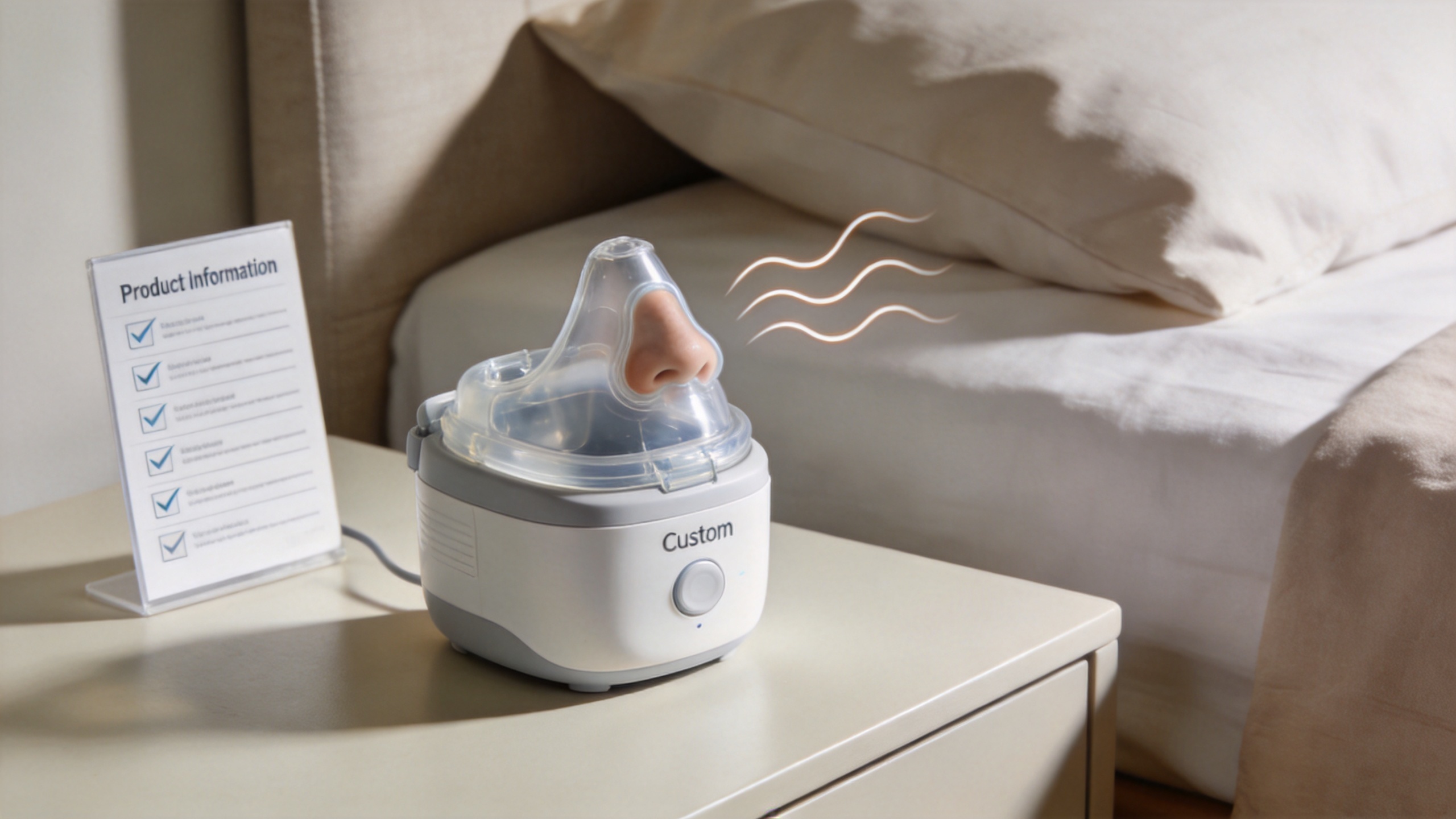
A practical wholesale checklist before you place an order
Wholesale purchasing often works well when the team turns a broad request into a short set of verifiable requirements. Instead of asking only for a quote on a nose snoring device, ask for the product information needed to support the intended sales channel.
- Channel and customer: Is the planned route an online marketplace, pharmacy, clinic-related channel, or distributor network? Each route may need a different level of product education and review.
- Intended-use wording: Request the supplier’s proposed product description and confirm that it does not go beyond the documentation you hold.
- Fit and instructions: Review sizing, fitting, cleaning, storage, and user guidance before creating a listing or retail insert.
- Materials and packaging: Ask which material information, labels, batch details, and packaging options can be documented for the target market.
- Support boundary: Build a clear escalation line for customers reporting breathing pauses, choking, marked daytime sleepiness, pain, or other concerns that need professional advice.
- Order execution: Confirm minimum order quantity, sampling process, lead time, artwork approval, inspection expectations, and replenishment terms.
That last group of questions is where a wholesale program becomes operationally stronger. A low unit cost may not reduce total workload if packaging, instructions, customer queries, or claim review are left unresolved.
How OEM/ODM work can add value without adding unsupported promises
OEM/ODM collaboration is most useful when it improves product-market fit and makes the information package easier to use. For example, a buyer may need brand artwork, a channel-specific insert, a different carton configuration, or a sample approval sequence. Those are tangible customization questions. They can be scoped, reviewed, and documented.
What OEM/ODM should not become is a shortcut for inventing performance claims. A new color, package, logo, or configuration does not by itself prove that a product is appropriate for every snoring complaint. Before launch, align the product description with its intended use, the supplier’s available documentation, local requirements, and the professional boundaries appropriate for a sleep-related category.
For many buyers, an effective OEM/ODM conversation has three stages: first, define the target channel and customer education need; second, specify the product and packaging elements that can be customized; third, approve the final instructions and claim language alongside the physical sample. This sequence reduces rework and makes a custom nose snoring device easier to present responsibly.
Questions sleep-conscious buyers should bring to a supplier
- What is the stated intended use for this nose snoring device, and what evidence or documentation supports that wording?
- Which fit, sizing, material, cleaning, and replacement details can be supplied in writing?
- Which elements are genuinely customizable through OEM/ODM, and what are the sample and approval steps?
- What product information can be adapted for wholesale packaging without changing the underlying intended-use boundary?
- How should customer-facing teams respond when symptoms point beyond a routine product question?
These questions do not make clinical judgments. They help a buyer separate product selection from health assessment and make sure the commercial process is built on information that can actually be checked.
The balanced reason experts respect a careful product approach
A custom nose snoring device earns more confidence when the seller avoids “works for everyone” language and instead supports informed decisions. The strongest recommendation is often conditional: the product should be considered only within its stated use, with appropriate fit information and with professional assessment where symptoms warrant it.
For wholesale teams, that standard is practical rather than restrictive. It creates cleaner listings, fewer avoidable misunderstandings, and a better foundation for OEM/ODM customization. Start with a precise brief, request the documents that match your channel, and keep the consumer’s safety boundary visible from sample review through final packaging.


 Hot News
