EN



Custom FDA-Grade Whitening Mouth Guard For Dental Whitening Brands
For a dental whitening brand, a whitening mouth guard is not simply a generic tray with a new logo. It is a fitted product concept, a consumer instruction tool, and a set of claims that need to stay aligned with the evidence on file. The phrase “FDA grade” can make a sales page sound reassuring, but it is not a substitute for confirming the product’s intended use, material documentation, labeling responsibilities, and applicable regulatory path.
As a dental-channel content editor, I would start with the questions a clinic, pharmacy, or e-commerce buyer needs answered before asking for visual mockups: What exactly is the whitening mouth guard intended to do? How is it fitted? Which documents support the material and manufacturing statements? And which claims have been reviewed for the market where the finished product will be sold?
Start by defining the product—not the slogan
At first glance, a whitening mouth guard, a sports mouthguard, and a night guard can look similar. More accurately, they should be separated by intended use. A custom whitening mouth guard is typically discussed as a tray that holds whitening gel against the teeth during a teeth whitening routine. It should not be presented as a sports protective appliance or as a solution for oral-health conditions unless the product documentation and intended use support those statements.
This distinction matters for brand briefs. It affects the tray geometry, gel-reservoir discussion, fitting instructions, warnings, product naming, photography, and customer-service scripts. It also keeps a teeth whitening range from inheriting irrelevant performance language from another mouthguard category.
What “FDA grade” should mean in a supplier conversation
“FDA grade” is often used informally, so a brand should turn it into a verification checklist rather than repeat it as a stand-alone claim. FDA explains that device classification depends on the controls needed to provide reasonable assurance of safety and effectiveness. That does not establish the status of a particular whitening mouth guard. The final assessment depends on the actual product, intended use, market, and regulatory information.
FDA also recognizes a consensus standard covering requirements and test methods for external tooth bleaching products. For a buyer, that is a useful prompt to request documentation; it is not proof that a supplier’s tray or a finished teeth whitening kit conforms. Ask for the specific standard reference, revision, test scope, applicable material information, and evidence that connects the record to the product you plan to sell.
Documents worth requesting before approving copy
- A clear intended-use statement for the whitening mouth guard and its compatible whitening-gel directions.
- Material identification and traceability information for the tray, including any relevant declarations supplied by the manufacturer.
- Product drawings or fit specifications that explain the custom workflow, trim line, thickness range, and any gel-reservoir design.
- Market-specific labeling, warning, and instructions-for-use drafts.
- Applicable quality, test, registration, listing, or other regulatory documentation reviewed against the target market.
- Approval records for every claim used on the box, product page, insert, and marketplace listing.
A useful internal rule is simple: if a document does not identify the product or the claim it supports, treat it as background information rather than publishable proof.
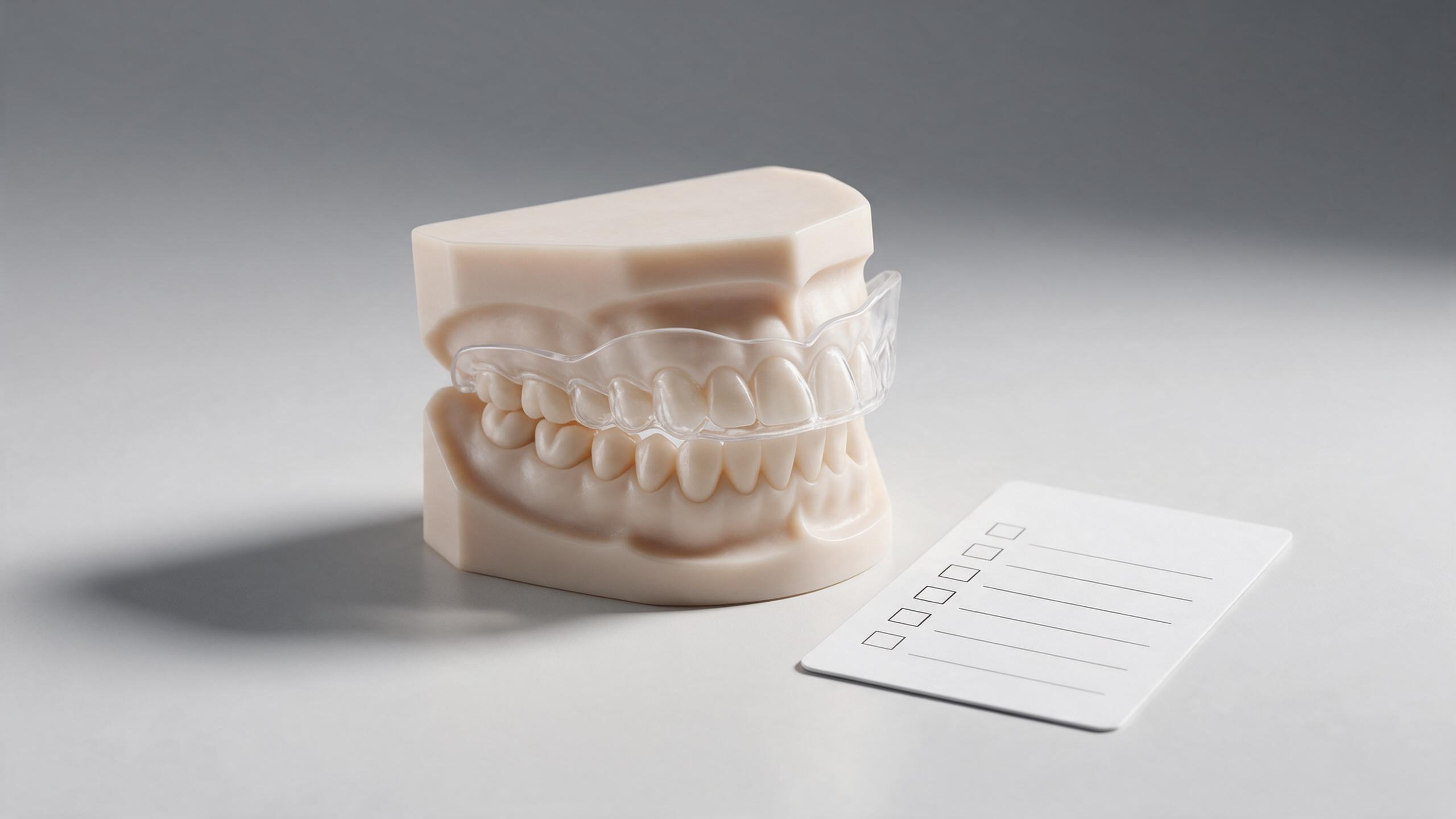
Build the custom whitening mouth guard brief around the user journey
A custom product brief works better when it describes the complete teeth whitening experience. Begin with the fitting method. Will the brand use an impression-based route, a scan-led dental workflow, or a thermoplastic process? Each route calls for different instructions, customer expectations, and quality checks. Do not imply a level of fit precision that the selected process has not been documented to deliver.
Next, define how the whitening mouth guard will be used with the brand’s gel system. Include only compatibility guidance that has been confirmed. A generic statement that a tray works with “all” gels can create avoidable support and compliance questions. It is safer to specify the intended routine, the included or referenced instructions, and the boundaries of the claim.
| Brief element | What the brand should confirm | Why it matters |
|---|---|---|
| Fit workflow | Impression, scan, or approved forming process | Sets realistic consumer instructions and service expectations |
| Tray design | Arch coverage, trim line, thickness, and documented gel-management features | Connects product copy to a specific design record |
| Material statement | Named material and traceable supporting records | Avoids vague FDA grade language without evidence |
| Use instructions | Gel compatibility, wear routine, cleaning, storage, and warnings | Supports consistent teeth whitening communication |
| Claim review | Approved wording by target market and channel | Helps keep packaging and marketplace copy aligned |
Use a channel-specific content checklist
Different buyers need different proof. A clinic may focus on fit workflow, professional handling, and instructions. A pharmacy buyer may need pack contents, shelf language, and consumer warnings. An e-commerce team may need image rules, listing attributes, and a concise explanation of what a whitening mouth guard is designed for. The product should stay the same; the order of information can change.
For each channel, separate confirmed facts from items still awaiting review. For example, “custom whitening mouth guard designed for the brand’s documented whitening routine” may be a usable description once the routine is confirmed. By contrast, a broad FDA grade statement should remain off public-facing materials until the compliance team can tie it to product-specific evidence and permitted wording.
Common mistakes when developing teeth whitening trays
Borrowing language from sports or bruxism products
These categories may use similar-looking appliances, but their purpose, instruction set, and claims can differ. Reusing their messaging can confuse the buyer and blur the intended use of a whitening mouth guard.
Treating a material label as a regulatory conclusion
Material information can be important, yet it does not by itself establish that a finished product has a particular regulatory status. Keep material documentation, finished-product evidence, and marketing approval as separate checkpoints.
Finalizing packaging before evidence is organized
Packaging often freezes the language that later appears in listings and sales sheets. Create a claim-to-document matrix before releasing artwork. That makes it easier to identify unsupported phrases while changes are still inexpensive.
A practical approval sequence for dental whitening brands
- Write a one-sentence intended-use statement for the custom whitening mouth guard.
- Confirm the fitting workflow and design specifications with the manufacturer.
- Collect the material, quality, test, and market-specific documents relevant to the planned product.
- Match each product-page, package, and marketplace claim to an identified source or approval record.
- Review teeth whitening instructions, warnings, and customer-support language together.
- Obtain regulatory and legal review for the target market before publishing FDA-related wording.
Make the product story easier to defend
The strongest whitening mouth guard story is usually the clearest one: explain the fitting route, define the intended teeth whitening use, show the information a buyer can verify, and state what still needs review. That approach gives dental whitening brands a more useful foundation than broad compliance shorthand. It also gives distributors, clinics, pharmacies, and online teams a shared checklist for bringing a custom tray range to market responsibly.
This article provides product-information guidance, not regulatory, dental, or medical advice. Product-specific claims and instructions should be reviewed by qualified professionals for the relevant market.

 Hot News