EN



Premium Silicone Mouth Guard Manufacturer And Wholesale Supplier
For a wholesale buyer, a silicone mouth guard request often arrives with a short brief: a target price, a preferred color, and a desire for a comfortable fit. Those details matter, but they do not yet define a product that can be compared responsibly. The same broad phrase can cover sports protection, grinding-related guards, whitening trays, or other oral-care accessories. Before comparing suppliers, clarify the intended use, target channel, and evidence needed for the market where the item will be sold.
Xiamen Yizhou Imp. & Exp. Co., Ltd. works with wholesale, e-commerce, clinic, and pharmacy channels in oral-care-related product categories. From a buyer’s perspective, the productive first conversation is not “What is your lowest number?” It is “What must this silicone mouth guard do, how will it be presented, and which specifications need written confirmation?” That approach makes quotation comparisons more useful and gives a distributor a clearer handoff to its own sales team.
Start With the Intended Use, Not the Material Name
Silicone is a material category, not a complete product specification. A silicone mouth guard intended for a sporting-goods assortment should be evaluated differently from an accessory intended for a dental whitening routine or a consumer product positioned around nighttime wear. Search results for this term mix all of these use cases, which is why a buyer should define the application before asking for a sample or a factory price.
Use a short application brief that covers the wearer, the distribution channel, the expected usage setting, and any restrictions imposed by the destination market. For a sports-related project, the brief should describe the sport and user group. For a whitening-tray accessory, it should state the compatible routine and any dimensional requirements. For a product associated with grinding or other oral-health concerns, marketing language should remain careful: a supplier description is not individual health guidance.
A clear use statement also helps avoid an expensive mismatch. A soft feel alone does not establish suitability for every scenario. Ask the manufacturer to explain what is included in the quoted configuration and what is outside the scope. That may include the guard shape, thickness options, molding approach, color, individual packaging, instructions, and any artwork process. If a detail is not documented, treat it as an open item rather than assuming it is included.
How to Assess a Comfortable Fit Without Overclaiming
“Comfortable fit” is a useful buyer requirement, but it needs to be converted into checkable design and sampling questions. Fit can be influenced by the guard geometry, edge finishing, size range, molding method, instructions, and the wearer’s expectations. It is more accurate to ask how the sample is intended to be fitted and what user feedback process the supplier can support than to ask for a universal comfort promise.
- Define the format: Is the requested item stock-size, heat-moldable, impression-based, or designed for a specific accessory routine?
- Request a sample path: Confirm the sample quantity, feedback timing, revision method, and who approves the final reference sample.
- Check edge and finish expectations: Put any requirements for surface feel, flash control, color consistency, and labeling into the written brief.
- Separate use guidance from performance claims: Instructions can explain the product’s intended use; they should not imply treatment, prevention, or a result that has not been substantiated.
This is especially important for e-commerce and pharmacy buyers. Their product page, packaging, and customer-service teams all need the same approved language. A supplier that can respond clearly to specification questions may reduce later revision work, even when the first quotation is not the lowest visible line item.
Compare Factory Price on a Like-for-Like Basis
A factory price is meaningful only when the comparison basis is fixed. Two quotations can look similar while covering different materials, tooling assumptions, packaging levels, sample charges, artwork work, inspection steps, or delivery terms. Instead of requesting a single number, use a quote sheet that makes each element visible.
| Quotation item | What to confirm | Why it matters |
|---|---|---|
| Product configuration | Format, color, dimensions, and included components | Prevents a lower quote from referring to a different item. |
| Order basis | MOQ, price breaks, sample cost, and any tooling or artwork charges | Shows the real purchasing threshold for your channel. |
| Packaging | Individual pack, retail carton, labeling, and master-carton assumptions | Packaging affects shelf readiness and fulfillment work. |
| Documentation | Material information, test records where available, and market-specific documents requested by the buyer | Lets the buyer validate claims before listing the item. |
| Commercial terms | Lead time, incoterm, payment terms, and inspection arrangement | Keeps the price comparison aligned with operational planning. |
Cost is broader than the unit quote. A lower factory price can create additional work if the buyer must repeatedly clarify packaging, translate incomplete instructions, or correct unsupported product claims. Conversely, a higher quote needs equally careful scrutiny; it should be tied to an explicit scope, not to vague premium positioning. Compare the total commercial package only after every supplier answers the same brief.
Ask for Evidence That Matches Your Market and Product Claim
Material and compliance language should be handled with care. Public regulatory information on food-contact substances, for example, ties assessments to the specific intended use and conditions of use. That does not automatically establish a claim for a finished silicone mouth guard. Buyers should identify the destination market and requested claim, then ask for documents that relate to that configuration.
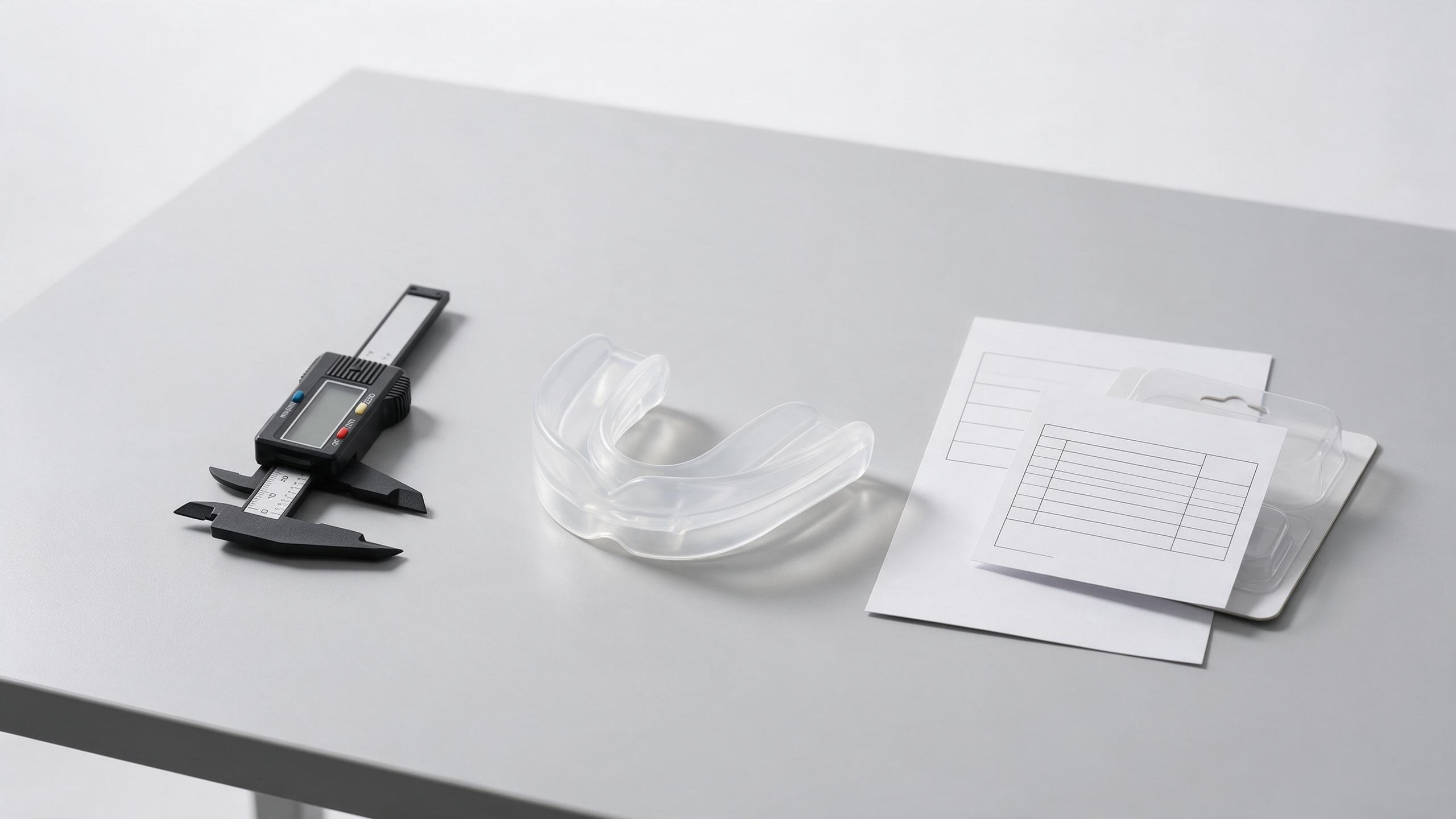
A practical request list can include a material declaration, a specification sheet, the sample reference, packaging artwork, and any test report or compliance document the supplier says is available. Review the document scope, product identity, date, and market relevance. If the record does not match the proposed configuration, note the gap before launch. This documentation-first approach is more credible than filling a listing with broad labels that neither the seller nor buyer can verify.
For sports-oriented projects, define the use context before discussing protective language. Industry literature describes sports mouthguards in relation to impact management, but that general context does not establish the performance of a particular wholesale item. A buyer should ask what evidence exists for the requested construction and avoid extending a generic material description into an unverified outcome claim.
A Wholesale Supplier Review Workflow
- Write a one-page brief. Include intended use, channel, target market, format, packaging, artwork, and delivery expectations.
- Request an itemized quotation. Keep product scope, sample charges, MOQ, packaging, tooling, documents, and delivery terms separate.
- Review the sample against the brief. Record observations about finish, instructions, presentation, and the proposed fit process rather than relying on a general impression.
- Confirm claim boundaries. Align product-page wording, packaging, and customer-service guidance with documents actually available for the selected configuration.
- Approve a production reference. Keep the approved sample, artwork version, and specification summary together before production begins.
This workflow is suitable for buyers serving different channels because it focuses on usable records, not on assumptions. Wholesale distributors, online sellers, clinics, and pharmacies may prioritize different packaging or communication details, yet each benefits from an approved product reference and a consistent document set.
Questions to Send Before Requesting a Quote
- Which intended use and user group does this silicone mouth guard specification address?
- What format and fitting instructions are included with the quoted item?
- What are the available color, packaging, and private-label options for the requested order quantity?
- Which material and product documents can be supplied for the proposed market and configuration?
- How are sample cost, MOQ, tooling, artwork, production lead time, and shipping terms shown in the quotation?
- What sample-feedback and final-approval process will be used before production?
Make the Next Supplier Conversation More Useful
Premium sourcing is not defined by an adjective or a price tier. It comes from matching the silicone mouth guard specification, presentation, documentation, and commercial terms to a real channel need. Start with the use case, ask for a comparable factory price breakdown, and turn comfortable fit into sample-based questions that can be reviewed. With those basics in place, a buyer can have a more productive conversation with a wholesale supplier and make a clearer decision about what to approve next.

 Hot News