 EN



Custom Mouth Guard For Karate For Maximum Protection And Comfort
Karate is controlled, but it is not contact-free. Kumite exchanges, accidental clashes, and an unexpected fall can put teeth, lips, cheeks, and the jaw at risk. A mouth guard for karate is therefore not simply another piece of kit to throw into a bag. It needs to stay in place when you breathe hard, speak to a partner, reset your stance, and return to training after a short break.
As a practical starting point, think less about a bold “maximum protection” label and more about whether a guard fits your own mouth, covers the areas it should cover, and is comfortable enough to wear for every round. The American Dental Association recommends properly fitted mouthguards for activities with a meaningful risk of dental injury, including combat sports. That does not mean any guard can prevent every injury; it does mean fit and consistent use deserve real attention.
Why a Karate-Specific Fit Matters
A mouth guard for karate has to work through a different rhythm than one used only for a short, isolated drill. You may need to bow, answer an instructor, breathe between combinations, and keep your attention on distance and timing. If the guard shifts when you open your mouth or makes you immediately want to remove it, it is unlikely to be worn consistently.
That is where a custom fit changes the conversation. Rather than assuming that a thicker guard is automatically better, start with retention, edge comfort, and the way the guard sits against the teeth and gums. A guard that remains stable without constant biting can be easier to use during technical work as well as sparring. It should not pinch, scrape soft tissue, or create a distracting bulk that makes normal breathing difficult.
For individual needs, a dentist or qualified dental professional can help assess fit, especially if you have braces, restorations, jaw discomfort, or a history of dental injury. General product guidance cannot replace that individualized assessment.
Custom, Boil-and-Bite, or Stock: Make the Right Comparison
The familiar categories are custom-made, boil-and-bite, and stock guards. Each can be part of the market, but the useful question is not which label sounds most premium. Ask whether the finished guard gives you secure coverage and whether you will actually wear it throughout karate practice.
| Type | What to assess for karate | Practical note |
|---|---|---|
| Custom-made | Individual fit, retention, edge comfort, and room for normal speech | A dental professional may recommend this route when individual fit requirements are important. |
| Boil-and-bite | Whether molding instructions are followed closely and the guard remains stable after cooling | A properly fitted option may be suitable in some circumstances, but a loose result is a reason to reassess. |
| Stock | Basic coverage and whether it stays seated without repeated clenching | A generic shape can be less predictable for fit; do not treat “one size” as proof of comfort. |
The ADA notes that custom mouthguards are made from individual impressions and that, depending on circumstances, a dentist may recommend a custom-fit guard or a properly fitted boil-and-bite model. That is a useful distinction: a custom option is not a magic promise, and a lower-cost option is not automatically unsuitable. The real test is whether the finished guard is properly fitted for the person using it.
What “Premium Protection” Should Mean in Practice
Premium protection should describe a disciplined selection process, not an unsupported promise. For a mouth guard for karate, look at the complete use case: contact level, whether you train kumite, age and dentition, orthodontic appliances, and how often the guard will be worn. A product description alone cannot confirm that a guard is appropriate for every athlete or every dojo rule.
- Stable seating: it should remain positioned when you relax your jaw, not only when you clamp down.
- Comfortable edges: check for rubbing against the gums, lips, tongue, or cheek lining.
- Breathing and communication: test it during light movement and brief spoken responses before relying on it in a full session.
- Appropriate coverage: confirm the guard is intended for athletic use and follow its fitting directions.
- Condition: inspect it for tears, distortion, rough spots, or a fit that has changed over time.
It is worth separating product information from medical conclusions. A mouthguard can cushion contact and help reduce the risk and severity of sports-related dental injuries when properly fitted and worn, but it does not make contact risk disappear or replace safe coaching, supervision, and rule-following.
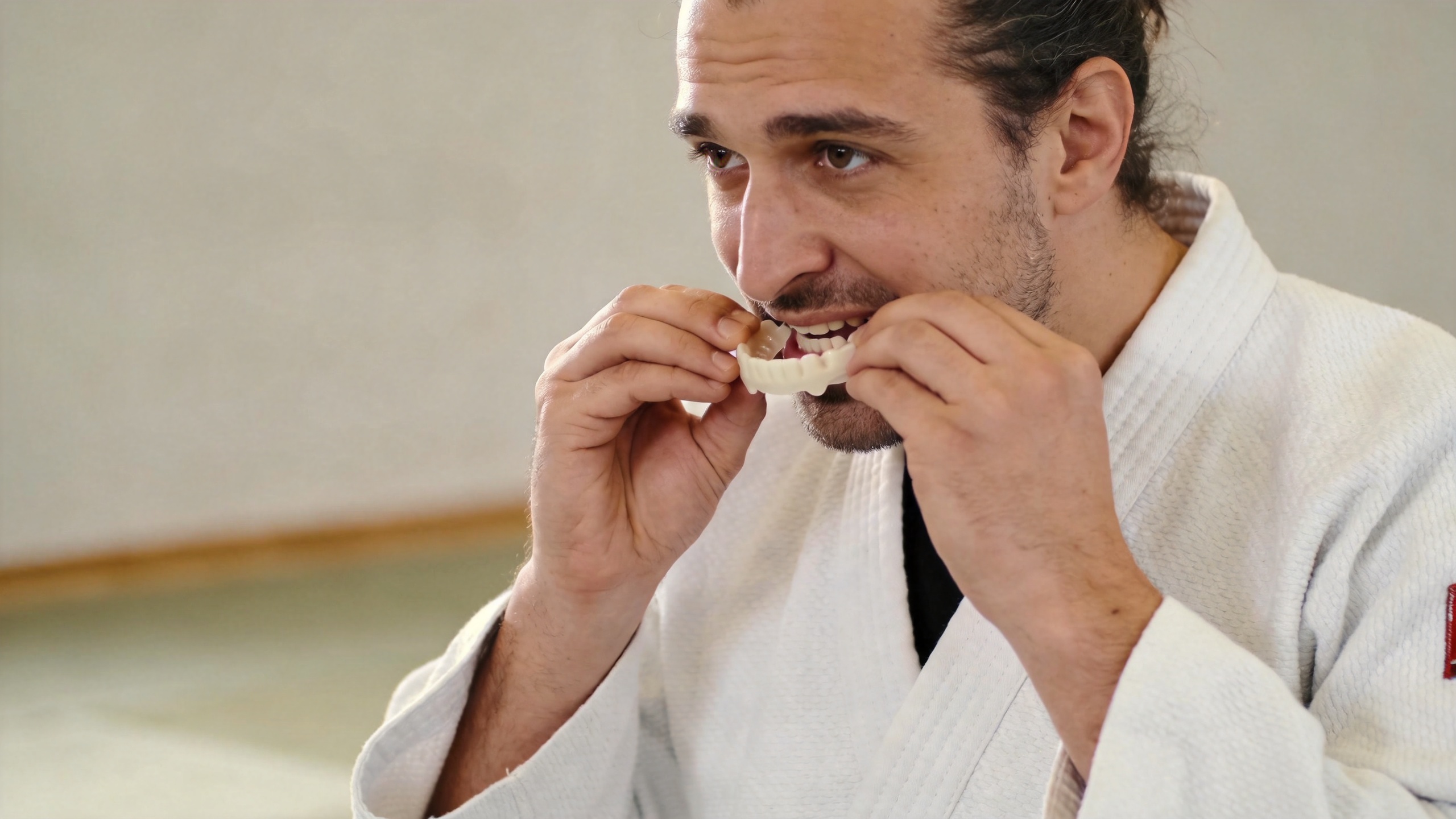
Use a Simple Fitting Check Before Sparring
Try the following check after the guard has been fitted or molded. It is deliberately simple because a guard that passes a complicated countertop test but fails during movement is not solving the real problem.
- Clean the guard and place it as instructed by its manufacturer or dental professional.
- Relax your jaw and open slightly. Notice whether it stays seated without you having to hold it in place.
- Say a few short words, then breathe through a light warm-up. Stop if it causes pain, gagging, or sharp rubbing.
- Check the edges in a mirror and with a clean finger. Rough or damaged edges are a reason to stop using it until the issue is addressed.
- Ask your instructor about dojo expectations and use the guard for the activities where contact risk is present, including practice when applicable.
A custom fit is particularly useful when the guard repeatedly loosens, interferes with orthodontic appliances, or feels uncomfortable despite correct fitting directions. The point is not to chase a category label; it is to remove the practical reasons people leave a mouth guard for karate in their bag.
Care Habits That Protect Comfort and Fit
Good care supports comfort just as much as the original fit. Rinse the guard with cool water after use, clean it according to the maker’s instructions, and let it dry before storing it in a ventilated case. Avoid hot environments that may distort the shape. Do not chew on the guard between rounds, share it, or leave it loose in a gear bag where it can collect debris or be crushed.
Recheck the fit regularly, especially for growing athletes, people in orthodontic treatment, or anyone whose dental work has changed. If a guard feels different, becomes damaged, develops an odor that cleaning does not resolve, or no longer stays in place, replace it or ask a dental professional for guidance. Consistent use of a clean, comfortable guard is more valuable than saving a worn-out one for “just one more class.”
Questions to Ask Before You Buy or Refit
Whether you are a karate student, a parent, a coach, or a buyer comparing athletic mouthguards, use questions that lead to evidence rather than assumptions:
- Is this option intended for athletic impact protection rather than nighttime or cosmetic use?
- What fitting method is required, and who should be involved if the athlete has braces or existing dental concerns?
- Can the athlete breathe, speak briefly, and move comfortably while the guard remains seated?
- What are the cleaning, storage, inspection, and replacement instructions?
- Which claims are confirmed by product documentation, and which still need professional advice?
Choose the Guard You Will Wear Every Session
A suitable mouth guard for karate is not defined by marketing language alone. It is the one that is properly fitted, comfortable enough for regular practice, and used whenever the activity creates a meaningful chance of oral contact or impact. For athletes who need closer retention and individualized comfort, a custom-made route can be worth discussing with a dental professional. For others, a correctly fitted boil-and-bite guard may be the practical starting point.
Keep the decision grounded: prioritize a secure fit, inspect the guard often, and replace it when its condition or retention changes. That approach gives “premium protection” a useful meaning while keeping comfort, safety, and personal dental needs in the right order.
Frequently Asked Questions
Do I need a mouth guard for karate if my dojo has light contact?
Requirements vary by dojo and activity, but mouthguards are commonly recommended for sports with a risk of oral impact. Ask your instructor about class rules and consider the contact level, drills, and your own dental needs.
Is a custom mouth guard necessarily better than a boil-and-bite guard?
Not automatically. A custom-made guard is designed from individual impressions, while a boil-and-bite guard depends on careful fitting. What matters is a properly fitted guard that stays in place and is worn consistently; a dental professional can advise on individual circumstances.
How often should I replace a karate mouthguard?
Replace it when it is damaged, distorted, uncomfortable, difficult to keep clean, or no longer fits securely. Growing athletes and people with orthodontic or dental changes may need fit checks more often.



 Hot News
