 EN



Customized FDA-Grade Snoring Aid Mouthpiece To Prevent Snoring Comfortably
For a private-label buyer, a snoring aid mouthpiece is not simply a sleep accessory with a logo added at the end. It is an intraoral product that has to balance fit, repeatable production, labeling discipline, and a responsible approach to health-related claims. The most useful sourcing conversation starts with the intended market and the evidence your brand will need—not with a request to print “FDA-grade” on packaging.
This guide is written for wholesalers, e-commerce operators, clinics, and pharmacy buyers evaluating a customized snoring aid mouthpiece. It focuses on the procurement decisions that affect comfort and commercial readiness, including OEM/ODM scope, material documentation, claim review, and the checks that should happen before a production commitment.
Start by defining what the snoring aid mouthpiece is designed to do
“Anti-snoring mouthpiece” can refer to different device concepts. Common categories include mandibular-advancement designs, which position the lower jaw forward, and tongue-retaining designs, which hold the tongue forward. A buyer should not treat those approaches as interchangeable. The mechanism influences the product brief, user instructions, mold geometry, adjustment features, and the comfort feedback that matters during sampling.
In the United States, 21 CFR 872.5570 addresses intraoral devices for snoring and intraoral devices for snoring and obstructive sleep apnea. That context is important, but it does not make every product automatically FDA-cleared or appropriate for every claim. For a snoring aid mouthpiece, ask the supplier to identify the exact intended use, the market being served, and the documentation that supports any regulatory statement. Avoid turning a general category reference into a product-specific clearance claim.
Comfort is a specification, not a slogan
Customers usually experience a snoring mouthpiece through pressure points, retention, saliva flow, jaw position, and ease of cleaning. Those factors should be translated into a sampling plan. Instead of asking whether a prototype is “comfortable,” define the questions your team will test:
- Does the appliance stay in place across the intended size range?
- Are edges and tray transitions smooth after forming and trimming?
- Does the adjustment mechanism feel controlled rather than abrupt?
- Can a user understand fitting, cleaning, storage, and stop-use instructions without guessing?
- Does the pack clearly tell users when to seek professional advice, such as persistent symptoms or signs of sleep-disordered breathing?
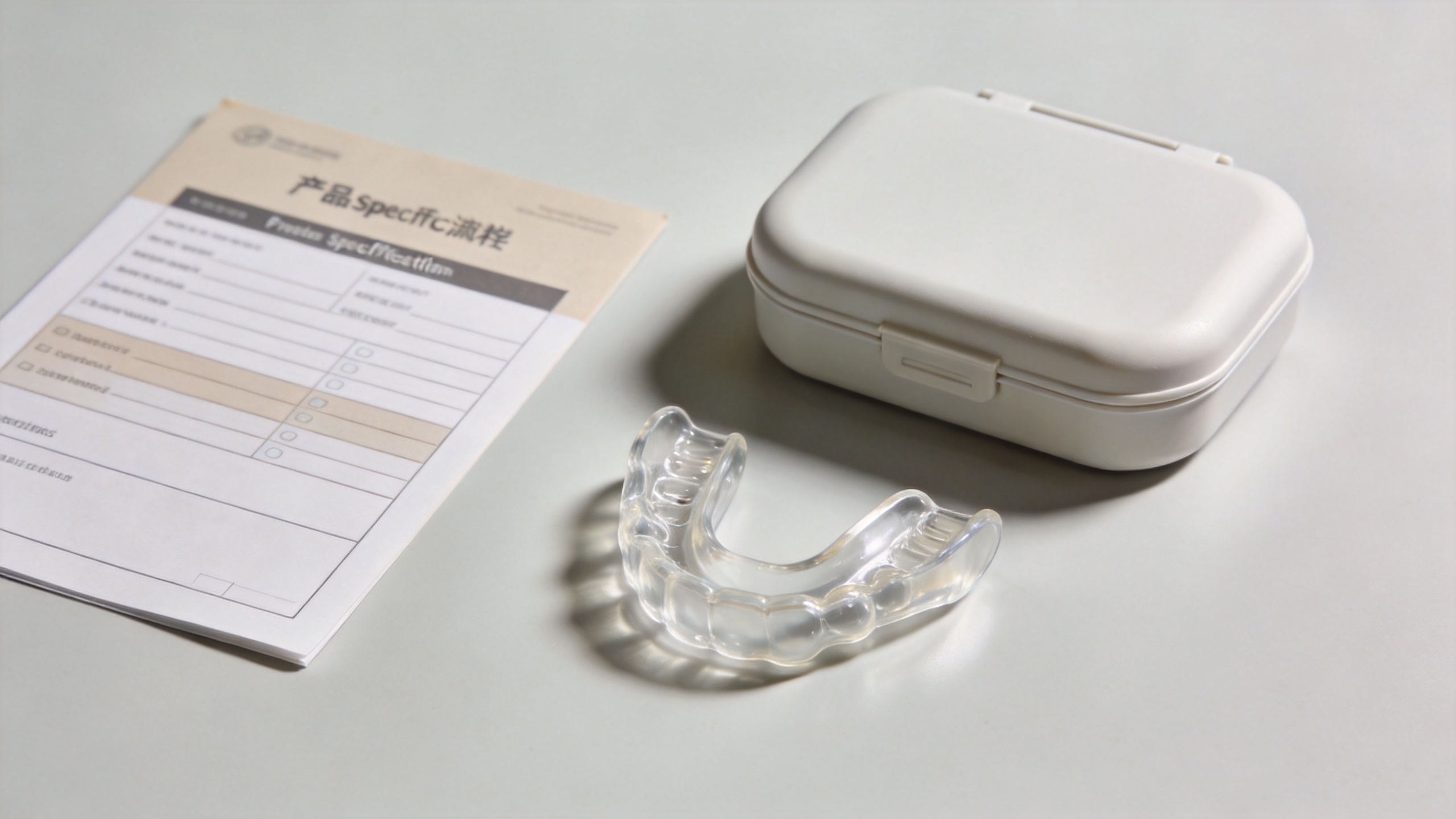
These questions make a snoring aid mouthpiece brief more useful for engineering and quality teams. They also reduce a common sourcing error: approving a sample that looks polished in a photo but has not been evaluated as a product people will wear overnight.
What “medical grade” should mean in your purchasing file
Medical grade is often used as a marketing shorthand, but it should lead to a document request rather than a broad promise. For every material that contacts the mouth, ask for the material identity, supplier traceability, applicable test or compliance documents, colorant information, and any limits on processing conditions. If the material or finished device has a stated biocompatibility basis, request the scope and relevance of the evidence instead of assuming that a generic certificate applies to your final configuration.
Quality-system evidence matters too. FDA describes ISO 13485:2016 as the foundational quality-management framework incorporated by reference in its Quality Management System Regulation. For a buyer, that does not substitute for product-specific verification. It is a prompt to examine how the factory controls design changes, incoming materials, production records, nonconformities, and traceability for the configuration you intend to sell.
Build an OEM/ODM brief before requesting final pricing
A well-scoped OEM/ODM program prevents late-stage surprises. Divide the request into items that can be customized safely and items that require further validation. Brand colors, outer-carton artwork, multilingual instructions, carrying cases, and approved packaging layout may be straightforward. Changes to bite surfaces, retention features, adjustment geometry, or intended-use language can affect comfort, risk controls, validation needs, and market access.
| Brief area | What to confirm | Why it matters |
|---|---|---|
| Product configuration | Device type, size range, adjustment range, and included components | Creates a stable reference for sampling and labeling |
| Material file | Material identification, contact-use documentation, and lot traceability | Supports a defensible medical grade review |
| Claims and instructions | Intended use, warnings, contraindications, and market-specific review path | Helps prevent unsupported health claims |
| Quality controls | Inspection criteria, records, change notification, and complaint handling process | Improves consistency after the approved sample |
| Commercial pack | Artwork approval, labeling language, barcode, and storage case | Lets the brand launch a coherent retail offer |
Verify “FDA-grade” language with precision
In buyer conversations, “FDA-grade” may be intended to describe material quality, manufacturing discipline, or a desire to sell into the U.S. market. Those are different claims. A responsible private-label program should ask: Is there a specific FDA clearance or listing relevant to this finished snoring aid mouthpiece? Which entity holds it? Does the intended labeling remain within its scope? If the answer is not documented, use more limited language until a qualified regulatory review is completed.
The same restraint benefits comfort messaging. You can describe a feature’s intended role when supported by the product file, but avoid guarantees that the device will prevent snoring for every user. Snoring can have different causes, and a mouthpiece may not be suitable for every customer. Clear cautions and a practical return or support process are part of a credible offer.
A sample-to-production checklist for a snoring aid mouthpiece
- Lock the concept. Confirm whether the brief calls for a mandibular-advancement or tongue-retaining approach and document the intended user group.
- Review the technical file. Match bills of materials, material documents, drawings, and instructions to the actual sample.
- Run a comfort review. Assess fit, edges, retention, cleaning steps, and instruction clarity with defined acceptance criteria.
- Approve claims separately. Have regulatory and legal reviewers examine product language, imagery, packaging, and marketplace listings.
- Control the handoff. Record the approved version, inspection points, change-notification rules, and artwork revision before mass production.
Questions to ask before choosing a supplier
- Which parts of the OEM/ODM program can be changed without altering the validated product configuration?
- What documentation supports the stated medical grade materials for the final product—not merely for a raw resin or an unrelated item?
- How are production lots identified and linked to inspection records?
- What happens when a material, mold, process, or artwork change is proposed after approval?
- Which claims are supported for the intended destination market, and which require a customer-side review?
Make comfort and evidence the basis of your private-label decision
A customized snoring aid mouthpiece becomes easier to source when the team treats comfort, documentation, and claims as one decision system. Begin with a clear device concept. Translate comfort into testable criteria. Use medical grade as a reason to inspect evidence. Give the OEM/ODM partner a controlled brief, and verify any FDA-related statement against the finished product and its intended market.
That discipline does more than reduce procurement risk. It gives distributors and brand owners a clearer product story—one built around responsible specifications, understandable instructions, and a more comfortable path from sample approval to launch.

 Hot News
