 EN



Customized FDA-Grade Anti Snoring Device Mouthguard To Prevent Snoring Comfortably
For a wholesale buyer, an anti snoring device mouthguard is not simply another oral-care SKU. It is a health-adjacent product category where fit, intended use, evidence, labeling, and channel communication need to agree. The phrase “FDA-grade” appears in many sourcing briefs, but it should not replace device-specific documentation. A responsible private-label program starts by separating material language from FDA clearance, then asking what the finished device is actually intended to do.
This article is a procurement guide, not medical advice. Snoring can have different causes, and suspected sleep apnea or persistent symptoms call for evaluation by an appropriate health professional. For product teams, the practical goal is clear: build a comfortable, customized mouthguard program without promising outcomes that the available evidence does not support.
Start with the intended use—not the product name
An anti snoring device mouthguard may be discussed as a mandibular-advancement style oral appliance or, in other designs, a tongue-retaining device. These categories should not be treated as interchangeable. The American Academy of Dental Sleep Medicine describes oral appliances in appropriate clinical contexts, while the AASM/AADSM guideline distinguishes custom, titratable devices from non-custom oral devices when therapy is prescribed for adults with obstructive sleep apnea.
That distinction matters in wholesale planning. A retailer may want a simple consumer product; a clinic-facing distributor may require a different evidence package, adjustment pathway, and professional-use positioning. Before requesting a factory price, define the proposed market, intended user, distribution route, and exact claims permitted on packaging.
What “FDA-grade” should mean in a supplier conversation
“FDA-grade” is not, by itself, a regulatory status. It can be used loosely to describe a material, a production expectation, or a marketing idea. None of those proves that a finished anti snoring device mouthguard is FDA cleared, registered, or suitable for a particular indication. FDA guidance addresses intraoral devices for snoring and/or obstructive sleep apnea under 21 CFR 872.5570, and device-specific status depends on the actual product, intended use, labeling, and regulatory pathway.
Ask suppliers to state precisely what they can document. Useful questions include:
- Is the material claim backed by a current material specification, biocompatibility information, and traceable batch documentation?
- Is there an actual FDA 510(k) clearance or other device-specific record for the finished design? If yes, can the supplier provide the identifying information and approved indication?
- Are the design, labeling, manufacturing site, and intended use the same as the documented product?
- What warnings, instructions for use, and professional-referral language are required for the target market?
If these records are unavailable, the prudent route is to reduce the claim strength. A material statement should stay a material statement; it should not become a claim that the mouthguard is FDA approved or that it will prevent snoring for every user.
Comfort is a design and validation question
Comfortable overnight wear is a commercial priority, but it is not established by a soft-looking sample alone. A customized anti snoring device mouthguard needs a clear fit process, usable instructions, and a way to communicate adjustment boundaries. Buyers should request a sample plan that reflects their intended channel rather than approving an isolated prototype on appearance.
For example, a clinic-oriented program may need an impression or scan workflow, adjustment controls, and professional-use information. A consumer-oriented program may need especially clear directions, eligibility statements, cleaning instructions, and complaint handling. In either case, avoid translating comfort feedback from a small sample group into a universal clinical promise.
Review the components of a useful sample program
- Fit method: Confirm whether the design is stock, boil-and-bite, impression-based, scan-based, or otherwise customized.
- Adjustment method: If the design changes jaw position, document how adjustments are made, by whom, and within what limits.
- Instructions and warnings: Review the exact language before it reaches a marketplace, pharmacy, or clinic.
- Feedback protocol: Track comfort, retention, fit concerns, and adverse feedback separately from efficacy claims.
- Change control: Require notice if materials, tooling, labels, or manufacturing locations change after approval.
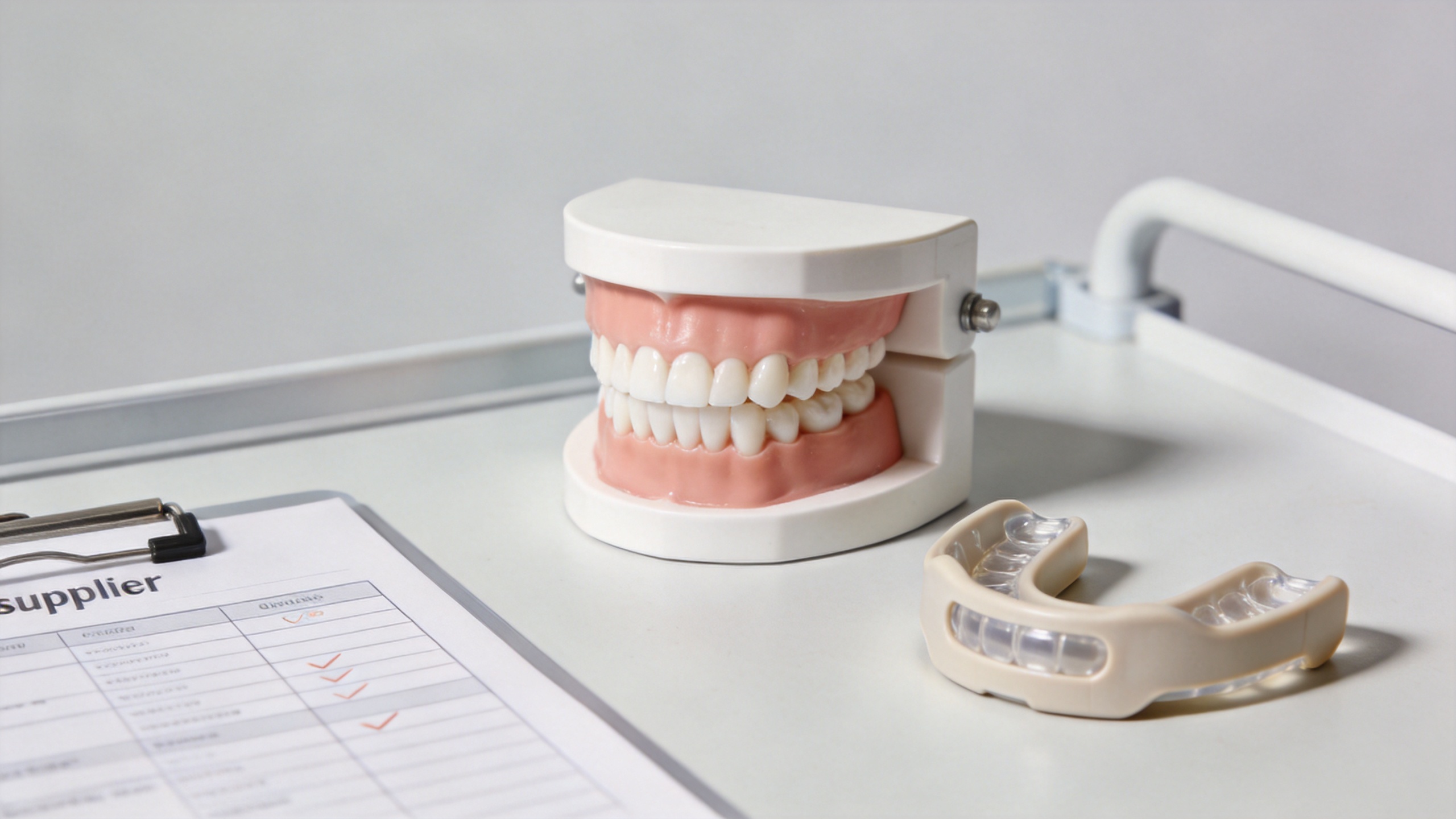
How to compare factory price without losing the real cost
A low factory price can be useful, but it is only one line in the total program cost. In a wholesale launch, missing documentation, unclear instructions, or inconsistent packaging often creates more work than a modest difference in unit cost. Compare quotations on like-for-like assumptions: order quantity, customization method, packaging, inserts, tooling, inspection level, documentation support, lead time, and shipping terms.
It helps to use a quotation table that forces these details into the open:
| Evaluation area | What to confirm | Why it affects the program |
|---|---|---|
| Customization | Stock, impression-based, or scan-based workflow | Changes fit expectations, onboarding, and unit economics |
| Documentation | Material records, labeling review, and product-specific regulatory evidence | Supports accurate channel communication |
| Packaging | Retail box, multilingual insert, hygiene pack, and lot traceability | Influences readiness for pharmacy, ecommerce, or clinic channels |
| Quality process | Inspection points, sample approval, and change notification | Helps prevent drift after the first production run |
| After-sales plan | Returns criteria, complaint intake, and escalation path | Reduces avoidable channel friction |
In short, compare cost only after the scope is fixed. A quote that excludes labeling work, documentation, or packaging may not be a lower-cost choice once the product is ready for resale.
Build a responsible wholesale launch brief
For wholesale buyers, the most effective inquiry is specific. Rather than asking a supplier to “make an FDA-grade anti-snoring mouthguard,” provide a structured brief. Identify the intended sales region, audience, product configuration, desired customization pathway, packaging requirements, and claims you are prepared to substantiate. Then ask which parts are confirmed by existing documents and which require development or legal review.
For a customized anti snoring device mouthguard, this approach also keeps teams from confusing a product feature with a health claim. Material choices, smooth edges, and a fit workflow may support a better product-development conversation. They do not alone demonstrate that the device can diagnose, treat, or reliably prevent a sleep-related condition.
Questions to ask before approving production
- Which claims are supported by product-specific evidence, and which claims must be removed or qualified?
- What documentation will accompany each production lot?
- Can the supplier show the approved artwork, instructions, and warnings for the target channel?
- How will custom orders be identified and traced without exposing unnecessary personal data?
- What is the escalation plan for fit complaints, jaw discomfort, dental issues, or reports suggestive of sleep apnea?
The last question is especially important. A careful seller does not position an oral device as a substitute for professional assessment. It explains the product category honestly and directs customers to appropriate care when symptoms or risk factors warrant it.
Final takeaway
A customized anti snoring device mouthguard can be evaluated more confidently when the buyer begins with intended use, fit, documentation, and channel readiness. Keep the title-level idea of “FDA-grade” anchored to verifiable facts: request actual material and device records, avoid unverified clearance language, and make comfort claims proportionate to the evidence. For a sustainable wholesale program, a transparent supplier brief and a complete review checklist are usually more valuable than the fastest quote.


 Hot News
