 EN



How Can Custom Orthodontic Mouthpiece Offer Better Comfort And Protection?
If you wear braces, a mouthguard has to do more than cover your teeth. It needs to make room for brackets and wires, soften contact against the lips and cheeks, and remain comfortable enough to wear during the activity it was bought for. That is why an orthodontic mouthpiece deserves a different fit conversation from a standard sports guard.
An oral-health product selection review starts with the situation rather than the product label: Is the wearer in a contact sport? Are brackets newly placed or adjusted? Does the guard pinch, rub, fall out, or make breathing difficult? The answers help separate a workable design from one that merely looks protective in its packaging.
Why braces change the protection problem
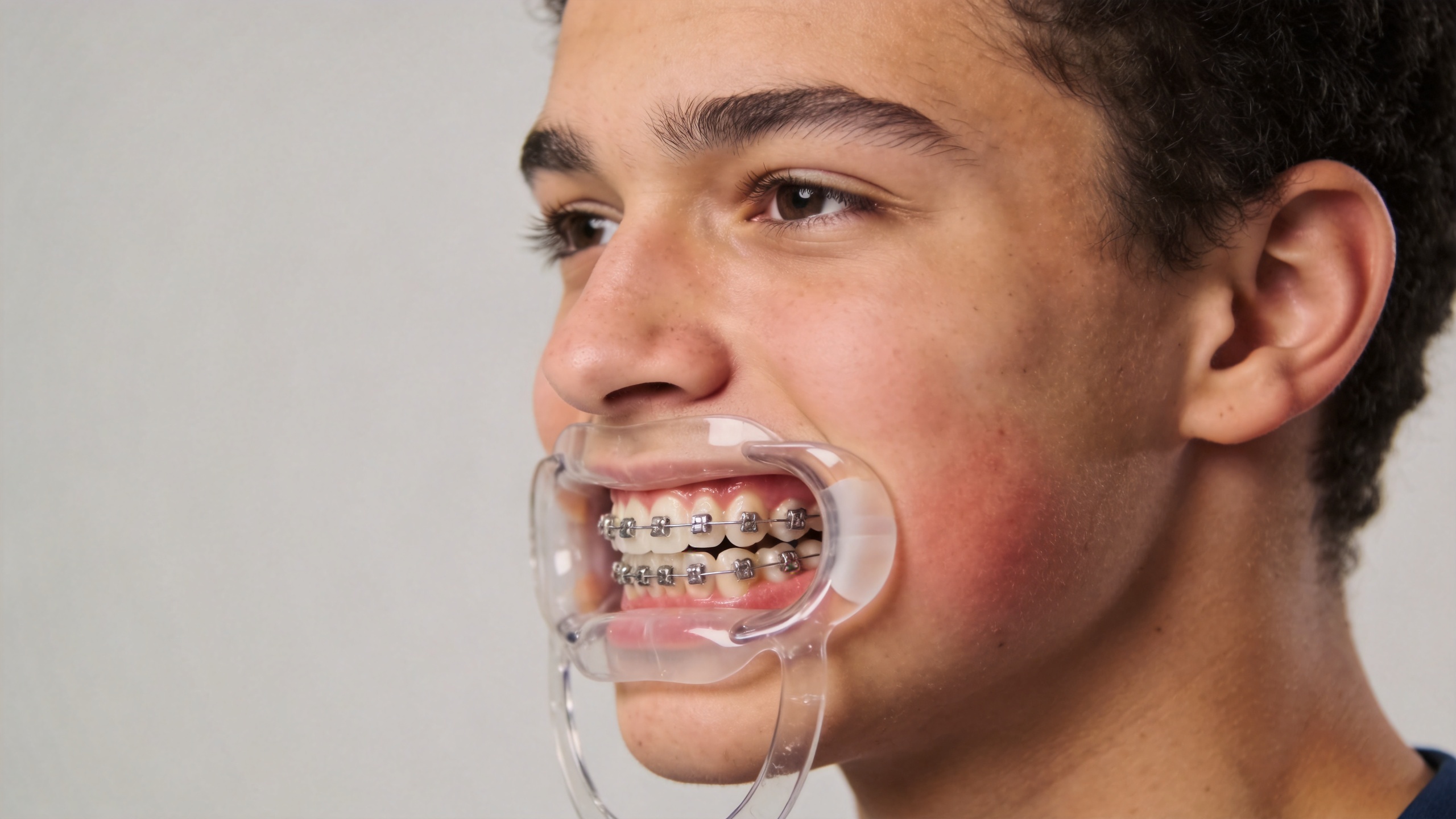
Brackets, wires, and changing tooth positions create contours that a close-fitting generic guard may not accommodate well. During a collision or fall, the goal is not to make a medical promise; it is to create a cushioning layer that covers the orthodontic hardware and helps reduce direct contact between it and soft tissue. The American Association of Orthodontists notes that a well-fitted mouthguard can cover braces and retainers and help protect against potential dental trauma.
A conventional guard designed around a smooth dental arch may feel tight over brackets. It can press against a sore area, lose its position when the wearer talks or breathes, or leave less useful space where the appliance needs it. This is also why the word custom matters: it refers to tailoring the shape, clearance, and edge treatment to a particular orthodontic situation rather than assuming one profile fits every mouth.
How a custom orthodontic mouthpiece can improve comfort
1. Purposeful clearance around brackets and wires
The most immediate comfort benefit is controlled room where braces need room. An orthodontic mouthpiece can be designed with a less restrictive interior profile around brackets, reducing the chance that a sharp point continually presses into the lip or cheek. More space is not automatically better, though. Too much bulk can make the guard feel loose or encourage chewing. The useful target is stable coverage with enough clearance for the current appliance and anticipated movement.
2. A more stable seat during activity
Comfort often comes from stability. When a guard shifts every time the wearer opens their mouth, the user is more likely to remove it. A custom approach can focus on retention across the arch and on smooth, rounded borders that do not dig into the gumline. For sports that involve frequent talking, calling plays, or hard breathing, trying the orthodontic mouthpiece in those conditions is more revealing than judging fit only while standing still.
3. Edge design that respects sensitive tissue
After an adjustment, areas beside the brackets may be especially tender. A thoughtful design does not treat the edge as an afterthought: it avoids unnecessarily sharp transitions and places coverage where it can act as a buffer. If there is persistent pain, a damaged appliance, or a fit change after treatment, the wearer should ask their orthodontic team for individualized advice rather than trying to force the guard into place.
What protection features should be evaluated?
Protection is a relationship among coverage, material behavior, fit, and the sport itself. No single thickness or product description proves that a mouthguard is appropriate for every athlete. Instead, use this practical review:
- Coverage: Does it cover the brackets and wires that could contact the lips or cheeks?
- Retention: Does it stay seated through speaking, breathing, and ordinary jaw movement?
- Cushioning: Is there a meaningful barrier between the appliance and soft tissue without creating excessive bulk?
- Activity match: Is the design being considered for the actual impact level and rules of the sport?
- Change tolerance: Can the fit be reviewed after orthodontic adjustments, growth, dental work, or visible wear?
The final question is easy to overlook. Teeth and appliances can change during treatment, so an orthodontic mouthpiece should be inspected rather than assumed to fit indefinitely. Cleaning it regularly, storing it in a protective case, and checking it for tears, distortion, or rough areas makes it easier to notice when reassessment is needed.
Custom, stock, and boil-and-bite: compare the decision, not just the price
| Option | Potential advantage | Question to verify for braces |
|---|---|---|
| Stock guard | Fast to obtain | Does its pre-formed shape leave adequate room for brackets without becoming unstable? |
| Brace-aware boil-and-bite | Some adjustability | Is it explicitly made for orthodontic use, and can it be remolded or reassessed after changes? |
| Custom orthodontic mouthpiece | Fit can be tailored to the wearer and appliance | What clearance, coverage, retention, and care instructions are documented for this case? |
The comparison should not be reduced to a blanket ranking of categories. A brace-aware boil-and-bite guard may be appropriate in some circumstances, while a custom solution may make sense when fit, comfort, or repeatable specifications matter more. The safest route is to discuss sport use and appliance status with the orthodontic provider.
What does “custom” mean for an OEM factory conversation?
For buyers sourcing an orthodontic mouthpiece, the term can mean several different things. An OEM factory may offer branding, color, packaging, material options, or different mold profiles. Those choices are not proof of clinical suitability. A productive specification discussion separates commercial customization from fit-related requirements.
- Clarify whether the design is intended for users with braces and what appliance clearance it is designed to allow.
- Request consistent information on sizing, molding instructions, care guidance, and the intended activity category.
- Ask how edge finishing and retention are checked in production; avoid treating a marketing phrase as a performance guarantee.
- Plan labels and instructions that tell users to stop use and seek professional advice if the guard causes pain, no longer fits, or the orthodontic appliance is damaged.
Clear requirements reduce ambiguity for an OEM factory. For distributors and teams, they also make it easier to explain what the orthodontic mouthpiece is designed to do—and what it is not designed to replace.
A fit check before the next practice
- Place the guard as directed and confirm it covers the relevant braces without forced pressure.
- Speak a few sentences, breathe normally, and move the jaw gently to check whether it stays in place.
- Look for pinching, rubbing, sharp edges, cracks, or areas that push against a bracket or wire.
- Clean and dry the guard after use; store it in a ventilated protective case.
- Recheck after orthodontic adjustments, a growth spurt, dental work, visible wear, or any change in comfort.
Bottom line
A custom orthodontic mouthpiece can offer better comfort and protection when its design creates appropriate room for braces, stable coverage during the sport, and smooth contact around sensitive tissue. The useful measure is not a broad “maximum protection” claim. It is whether the guard fits the wearer’s current appliance, activity, and comfort needs—and whether that fit is reviewed as treatment changes. When in doubt, an orthodontic professional is the right person to help confirm suitability.


 Hot News
