 EN



How Can High-Quality Custom Night Guard For Teeth Prevent Sleep Bruxism Damage?
Waking with a tight jaw, worn tooth edges, or a cracked filling can make nighttime clenching feel alarming. A custom night guard for teeth is a removable occlusal appliance that creates a protective layer between the upper and lower teeth while you sleep. It is not a cure for sleep bruxism, and it cannot replace an examination when symptoms are new or worsening. Its practical value is simpler: when clenching or grinding happens, the guard is designed to take the contact before tooth enamel, restorations, or implant-supported work do.
For a dental clinic, retailer, or sourcing team, that distinction matters. A high-quality custom night guard for teeth should be presented as a protective appliance with fit, material, finish, and follow-up requirements—not as a universal solution for every sleep or jaw concern.
Why sleep bruxism can damage teeth
Sleep bruxism describes grinding, clenching, or gnashing that occurs during sleep. Because the person is asleep, they may not notice the habit itself. A partner may hear grinding, or the first clues may be morning jaw fatigue, tooth sensitivity, flattened biting surfaces, chipped teeth, loose restorations, or headaches. These signs can have other causes too, which is why a dentist should evaluate persistent symptoms rather than relying on a self-diagnosis.
The concern is repeated tooth-to-tooth contact. Natural enamel is durable, but it is not intended to be the sacrificial surface in ongoing grinding. Crowns, veneers, fillings, and teeth with existing cracks may also deserve individual assessment. A custom night guard for teeth does not stop every jaw-muscle contraction; instead, it separates the opposing teeth and helps distribute or buffer direct contact across the appliance.
How a custom guard provides protection
It creates a barrier between opposing teeth
The core mechanism is physical separation. When the teeth cannot meet directly, the guard can reduce direct enamel-on-enamel wear and may help protect restorative work from repetitive contact. This is why a guard is often described as an occlusal guard: it sits over one dental arch and changes where the contact occurs.
It is shaped for the wearer rather than adapted from a stock form
A custom night guard for teeth is made from an impression or a digital scan of the individual dentition. That individualized form is important because retention and coverage affect whether a person can wear the appliance consistently. A poorly retained device may shift, feel bulky, create uneven contact, or be abandoned after a few nights. Custom fabrication does not automatically make one design right for every person; the clinician’s assessment, bite relationship, and treatment plan still determine whether a hard, soft, or layered approach is appropriate.
It can support a safer monitoring routine
A well-made appliance also gives the patient and dental team a consistent surface to inspect. New perforations, pronounced wear marks, cracks, looseness, or a changed bite after removing the guard are reasons to contact a dental professional. The guard should be cleaned as directed, stored in a ventilated case, and kept away from heat that could distort it. Protection depends on ongoing fit, not merely on owning a guard.
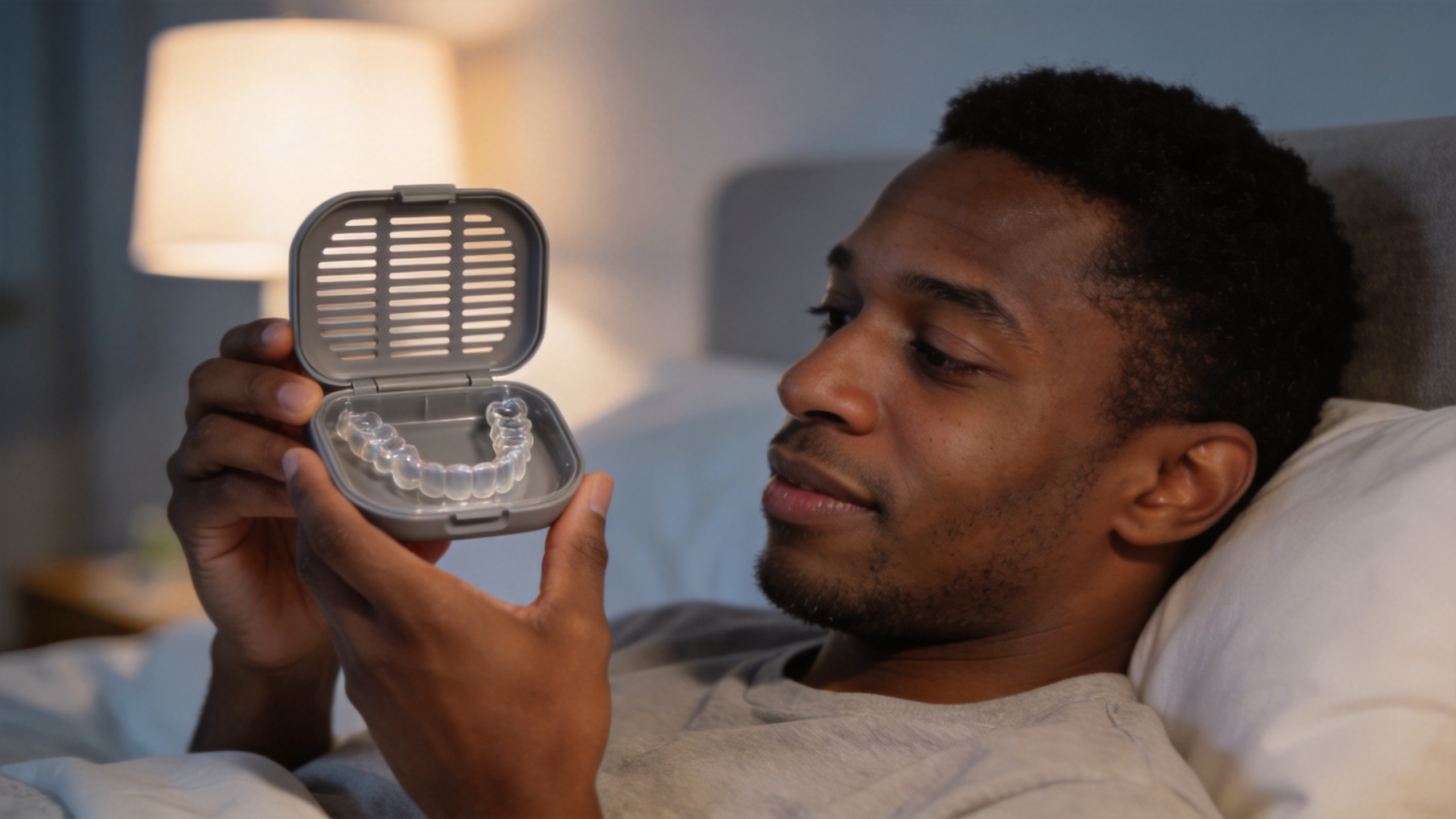
What “high quality” should mean in a custom night guard for teeth
Quality should not be reduced to a marketing label. For an individual wearer, the useful questions concern clinical appropriateness, accurate capture of the teeth, stable fit, smooth finished edges, and access to adjustments. A clinician may also discuss thickness, coverage, opposing teeth, existing dental work, and whether signs suggest another condition that needs attention.
- Accurate fit: the appliance should seat fully and remain secure without painful pressure.
- Finished edges: smooth margins help reduce irritation to the tongue, cheeks, and gums.
- Balanced contact planning: this should be assessed by a qualified dental professional rather than guessed from an online photo.
- Clear care instructions: users need guidance for cleaning, storage, review, and replacement.
- Transparent product information: a seller or clinic should avoid claiming that an appliance diagnoses, cures, or prevents all consequences of sleep bruxism.
When a night guard is not the whole answer
A custom night guard for teeth can be one part of a broader plan. Bruxism may coexist with sleep disruption, stress, medication effects, bite changes, temporomandibular symptoms, or other health concerns. A guard can protect tooth surfaces while those concerns are assessed, but it should not delay care for severe pain, swelling, a broken tooth, a loose restoration, difficulty opening the mouth, or a suspected sleep-breathing issue.
It is also wise to ask what the patient is trying to solve. If the main complaint is snoring or daytime exhaustion, a dental guard intended for bruxism is not automatically the right device. Product categories should be explained clearly so that a sleep-bruxism guard is not confused with an anti-snoring appliance or a sports mouthguard.
A practical selection and review checklist
- Arrange a dental assessment if grinding signs, pain, or tooth damage are present.
- Confirm the intended use: sleep-bruxism protection, not a blanket claim to treat sleep disorders.
- Use an accurate impression or scan and confirm the appliance seats correctly.
- Follow professional instructions for wearing time, cleaning, storage, and follow-up.
- Seek review if the guard cracks, no longer fits, causes soreness, or the bite feels different after removal.
OEM/ODM and wholesale communication: keep claims responsible
For OEM/ODM and wholesale teams, the same care applies to product communication. Procurement materials can clearly identify the intended category, customization workflow, packaging needs, and user-care instructions, but should not convert a protective function into a medical guarantee. Buyers should request the specifications and compliance documentation required for their market, then have qualified dental and regulatory professionals review the final claims, labeling, and instructions for use.
That approach is useful for a wholesale program because it separates what can be responsibly described—custom-fit night-guard products and their care information—from claims that need substantiation. It also helps clinics, pharmacies, and ecommerce sellers give customers a more accurate expectation: a custom night guard for teeth may help limit damage from tooth contact during sleep, while diagnosis and management of bruxism still belong with qualified healthcare professionals.
Frequently asked questions
Can a custom night guard for teeth stop sleep bruxism?
It is primarily a protective appliance. It may reduce direct tooth-to-tooth contact, but it does not by itself diagnose or cure the causes of sleep bruxism. Ask a dentist about persistent symptoms or damage.
How do I know whether my guard still fits?
It should seat as instructed and should not cause persistent pain or obvious instability. If it feels loose, cracked, warped, painful, or if your bite feels changed after use, arrange a dental review.
Can a wholesale supplier make medical claims for a night guard?
Claims should be limited to substantiated, market-appropriate information. OEM/ODM and wholesale materials should be reviewed for applicable regulatory, clinical, and labeling requirements before publication.
The bottom line
A high-quality custom night guard for teeth can help protect enamel and dental work by acting as a fitted barrier during nighttime clenching or grinding. The greatest value comes from a guard that fits properly, is monitored over time, and is used alongside professional assessment when symptoms point to sleep bruxism or another oral-health concern. For buyers and suppliers alike, clear boundaries make the message stronger: protect the teeth, avoid cure claims, and direct people to appropriate care when warning signs appear.


 Hot News
