 EN



How Can High-Quality Mouth Guard Case Prevent Sleep Bruxism Damage?
A mouth guard case cannot stop bruxism, cure jaw pain, or replace a professionally evaluated night guard. Its job is more practical: it helps protect the appliance that separates a person’s teeth during sleep. For distributors, clinics, pharmacies, and private-label sellers, that distinction matters. A good case can reduce avoidable damage to a clean, dry guard between uses and during transport; it does not provide bruxism relief by itself.
From a procurement and fit-assessment perspective, the useful question is not “Does a case treat grinding?” It is “Will this mouth guard case help the user keep the guard clean, dry, identifiable, and less likely to be crushed, lost, or distorted?” The answer depends on the case design, the guard’s dimensions, and the care instructions supplied with the finished product.
Why storage affects a sleep guard’s usable condition
A night guard is often removed in the morning, rinsed, cleaned as instructed, and put away until the next night. That routine leaves several ordinary risks: placing the guard on an unclean surface, enclosing it while still wet, wrapping it in a tissue that gets discarded, or letting it sit loose in a bag where it can be bent or stepped on. A properly sized mouth guard case creates a dedicated storage point, which makes the routine easier to repeat.
Care guidance found during research consistently recommends letting a night guard dry before storage and keeping both the guard and its container clean. Those are maintenance practices, not medical outcomes. A ventilated mouth guard case may support drying after the guard has been cleaned; it should not be marketed as proof of sterilization, germ elimination, or a solution for a wet guard that was not cleaned correctly.
That boundary is important in health-related product content. A storage case can support the condition of a guard used for sleep bruxism, while the guard’s fit, material, and suitability remain matters for the wearer and, where appropriate, a dental professional.
Four ways a quality mouth guard case protects the product
1. It limits crush and bend damage
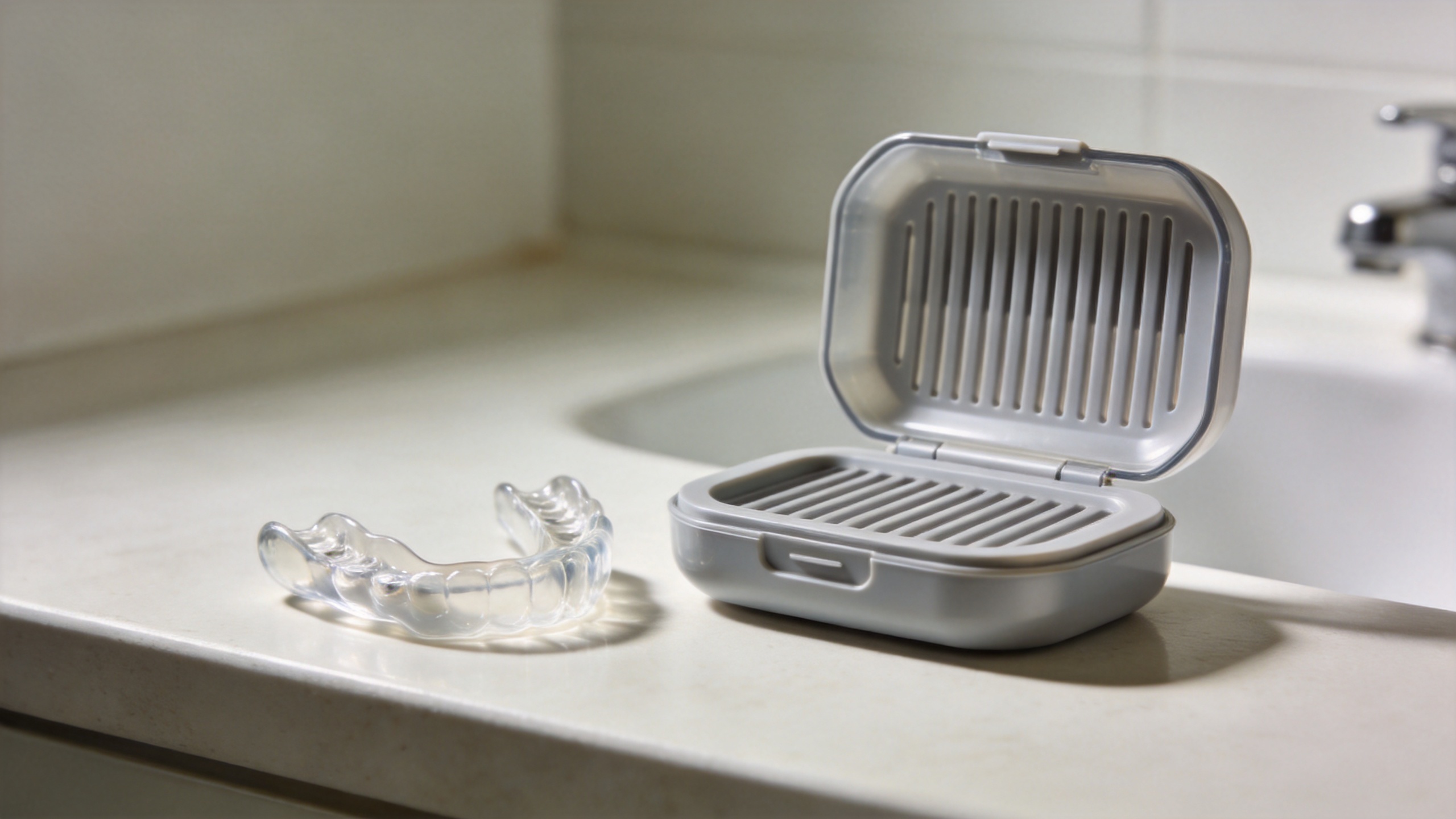
Rigid or semi-rigid walls help keep a guard from being squeezed under toiletries, books, or travel gear. The right mouth guard case has enough internal clearance that the appliance rests without forcing the bite surfaces, edges, or strap area into an unnatural shape. A case that is too small can create the very deformation it is intended to avoid.
2. It separates the guard from dirty surfaces
Dedicated storage reduces casual contact with drawers, counters, bags, and pockets. This is especially useful for a removable night appliance that may travel between home, a clinic, and a customer’s luggage. The case itself still needs routine cleaning. A clean guard placed in a dirty container is not a reliable hygiene routine.
3. It encourages dry, traceable storage
Ventilation holes, a cleanable interior, and a latch that closes securely are practical features to inspect. The goal is not to trap moisture; it is to give a cleaned guard a protected place once it has dried. A labeled mouth guard case also lowers the chance that one person’s appliance is mixed up with another’s in a shared household, clinic workflow, or retail fulfillment process.
4. It reduces loss during routine travel
Many guards are damaged simply because they are wrapped in paper, left in a napkin, or dropped loose into a bag. A visible, consistently used mouth guard case gives the product a fixed home. That small behavior change can protect the investment in a custom or retail night guard without overstating what the case can do.
What a case cannot do for bruxism relief
Claims need to stay precise. A case does not absorb grinding forces while a person sleeps, reposition the jaw, diagnose a bite problem, or promise bruxism relief. Those claims belong, if anywhere, to an appropriately evaluated oral appliance and professional guidance—not to storage packaging.
The responsible positioning is simple: the case helps preserve the guard’s condition between uses. If a guard cracks, no longer fits, develops an odor that cleaning does not resolve, or causes discomfort, the wearer should follow the manufacturer’s care instructions and seek professional advice as appropriate. A mouth guard case is a supporting accessory, not a treatment device.
OEM/ODM questions that improve the finished case
For OEM/ODM buyers, a case is more than a generic add-on. It affects unboxing, product protection, care compliance, and perceived quality. Before approving a mouth guard case, ask for confirmation on the points below rather than relying on appearance alone.
- Fit range: Which guard dimensions and styles fit without compression? Request internal length, width, depth, and tolerance information.
- Wall and hinge design: Does the shell resist ordinary bag pressure? How many open-close cycles has the hinge been checked for, if testing information is available?
- Ventilation: Where are the openings located, and can they be cleaned without sharp edges or difficult-to-reach gaps?
- Closure: Does the latch remain shut in normal travel while remaining manageable for the intended users?
- Material documentation: Ask what material is used and which product-specific documentation can be provided for the target market. Do not imply certification until verified.
- Branding and instructions: Can the mouth guard case carry a logo, color system, batch identifier, and care insert that clearly separates storage advice from medical claims?
These questions are useful whether the final channel is wholesale, e-commerce, a pharmacy, or a clinic. They convert a vague request for a “premium case” into specifications that a supplier and buyer can verify together.
A practical care workflow for end users
- Remove the night guard and rinse or clean it according to the product’s instructions.
- Place it on a clean surface and allow it to dry thoroughly before closing it in the mouth guard case.
- Clean and dry the case regularly, especially if it is used every day.
- Keep the closed case away from high heat, direct sunlight, pets, and places where it may be crushed.
- Check the guard and case together for cracks, warping, rough edges, or an unreliable closure.
This workflow supports consistent storage; it is not a substitute for the individual care instructions that accompany the appliance.
Choosing the right message for a high-quality mouth guard case
A credible product message is specific and clear. A high-quality mouth guard case can help protect a night guard from everyday storage and transport damage, keep the appliance separate from dirty surfaces, and support a more repeatable care routine. It cannot promise to prevent sleep bruxism damage inside the mouth or guarantee bruxism relief.
For an OEM/ODM program, validate fit, cleanability, ventilation, closure security, material records, and labeling before launch. That approach gives buyers and end users a clear reason to value the case: not as a cure, but as a well-designed part of protecting a sleep guard between uses.



 Hot News
