 EN



How To Choose The Right Thin Mouth Guard For Teeth Grinding?
A thin mouth guard can feel much easier to tolerate than a bulky appliance, but “thin” is only one part of a sound choice. For people who clench or grind, the useful question is not simply which thin mouth guard looks least noticeable. It is whether the fit, intended use, material information, and level of grinding all work together. From a product-selection perspective, that is where a comfortable choice starts.
A night guard may help protect teeth from the effects of grinding, but it is not a diagnosis or a universal solution. If you have ongoing jaw pain, chipped teeth, headaches, gum changes, a loose restoration, or sleep concerns, speak with a dentist. A thin mouth guard should be part of a considered plan, not a reason to ignore symptoms.
Start by defining when and how you grind
Before comparing a thin mouth guard, write down the situation you are trying to address. Do you notice wear after sleeping? Do you clench while concentrating at work? Do you need something for occasional daytime contact, or for repeated nighttime grinding? These are different use cases, and a sports mouthguard is not automatically the right substitute for a grinding guard.
Low-profile designs are often attractive because they may feel less intrusive when speaking, breathing, or falling asleep. However, a thinner profile may not be appropriate for every force pattern. Someone with mild, occasional clenching may prioritize discretion differently from someone whose teeth show substantial wear. A dentist can help assess that distinction and advise whether a thin mouth guard is reasonable for your situation.
Fit matters more than a marketing thickness claim
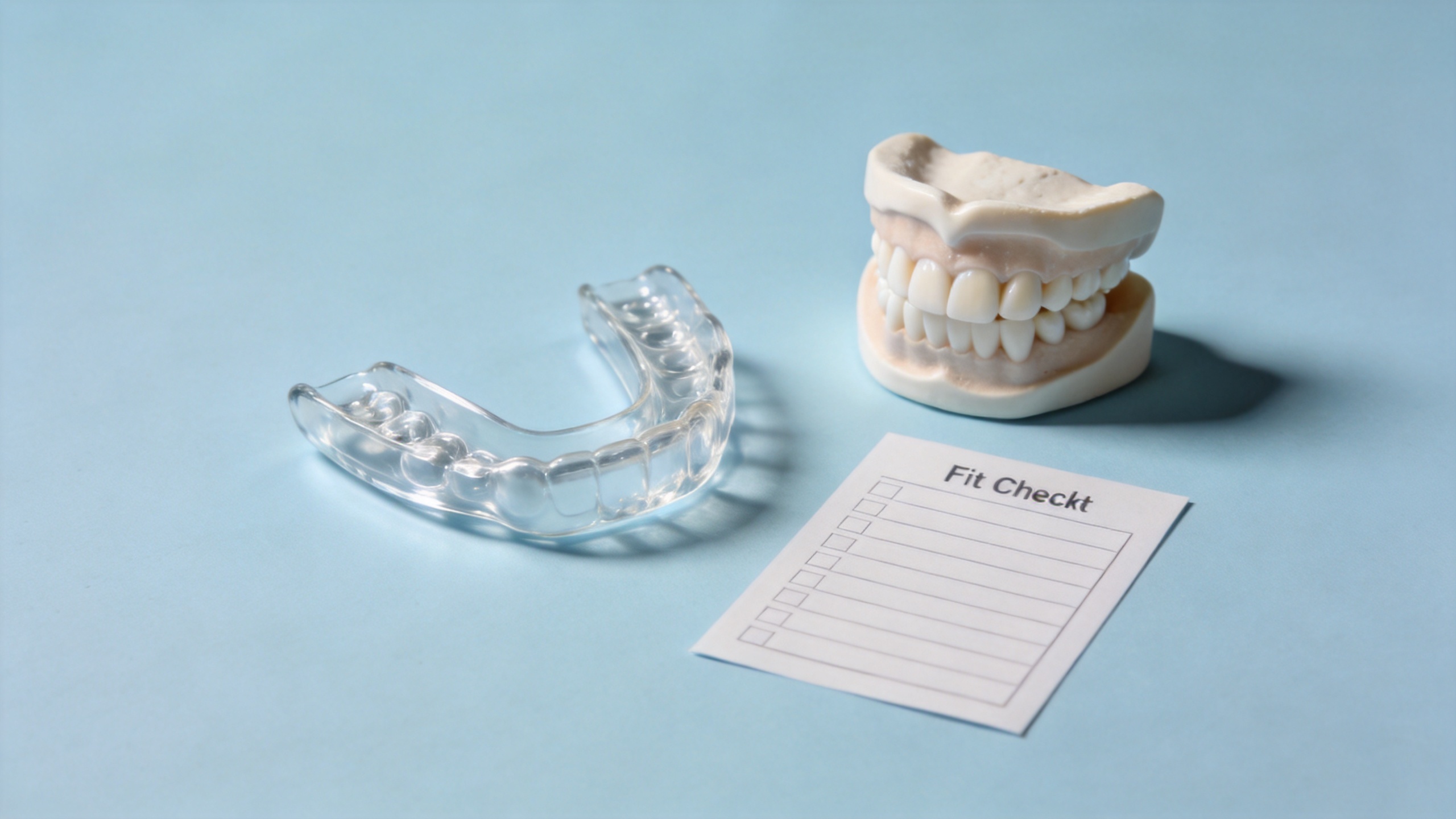
It is easy to compare millimetres first. A better order is fit, coverage, edge comfort, retention, then thickness. A thin mouth guard that shifts, presses on the gums, creates sharp edges, or changes how your teeth meet is unlikely to be a good long-term choice, even if the profile sounds appealing.
- Full seating: The guard should sit consistently without rocking or lifting during ordinary jaw movement.
- Comfortable edges: Smooth, well-finished edges reduce irritation and make regular wear more realistic.
- Stable retention: You should not need to bite down constantly to keep it in place.
- Appropriate coverage: Coverage and design should follow professional guidance rather than a generic online comparison.
Think of the decision as moving from a label to a confirmation list. A thin mouth guard is useful only if it remains stable enough to create a consistent barrier between the teeth while feeling manageable to wear.
Match the material conversation to real use
“Dental grade” is a helpful starting phrase, not a complete specification. If you are evaluating a thin mouth guard from a clinic, retailer, or supplier, ask what the term means in that specific product record. Request material identification, intended-use information, care instructions, and any available test or compliance documentation relevant to the market where it will be sold.
Do not assume that a thin mouth guard with a clear appearance, a soft feel, or a familiar material name is automatically right for grinding. Material firmness, fabrication method, finish, and fit can all affect the wearing experience. For business buyers, the same principle applies: obtain documentation before presenting a material claim to customers. If paperwork is incomplete, treat that as information still to be verified rather than filling the gap with assumptions.
Use force and comfort as a trade-off, not an either-or choice
The appeal of a thin mouth guard is understandable: less bulk can support better day-to-day acceptance. Yet more comfort does not mean less need for evaluation. A guard that feels unobtrusive may be a practical option for the intended scenario, while a person with heavier grinding may need a different design discussion. The goal is not to choose the thinnest option; it is to choose a thin mouth guard that is appropriate for the force, schedule, and fit.
One simple check is to separate your priorities into three columns: wear comfort, protection needs, and professional recommendations. If all three point in the same direction, you have a stronger basis for choosing a thin mouth guard. If they conflict, do not solve the problem by selecting on price or thickness alone.
Compare factory price without losing sight of the total decision
For wholesale or private-label sourcing, factory price can be relevant, but it should not be treated as proof of value. A low quote may leave unanswered questions about material records, fitting workflow, sample approval, packaging, replacement terms, labeling, or quality checks. Comparing the factory price of two thin mouth guard options makes sense only when the intended use, requested documentation, order terms, and quality requirements are comparable.
Ask for a sample and a written specification sheet before judging a thin mouth guard solely by a quoted amount. Then clarify which parts of the offering are confirmed and which require follow-up. This approach reduces downstream customer-service work and helps buyers avoid presenting unverified claims as established facts.
Questions to ask before choosing
- Is this product specifically intended for clenching or teeth grinding rather than sport impact protection?
- Does a dentist recommend this style and coverage for my symptoms and pattern of wear?
- How will the thin mouth guard be fitted, checked, adjusted, and replaced if it no longer fits?
- What does dental grade mean here, and which material and care documents can be provided?
- For a sourcing project, does the quoted factory price include the same specifications, packaging, and quality controls being compared?
The practical bottom line
The right thin mouth guard is not automatically the lowest-profile or lowest-priced option. It is one with a suitable purpose, stable fit, clear material information, and a design appropriate for your grinding pattern. Start with the intended use, involve a dental professional when symptoms or tooth wear are present, and use thickness as one decision factor among several. That gives comfort a proper place in the choice without asking it to do all the work.


 Hot News
