 EN



How Can High-Quality Mouth Guard For Grinding Prevent Sleep Bruxism Damage?
Waking with a tight jaw, a worn biting edge, or a partner who hears clicking can be unsettling. Sleep bruxism is the repeated clenching, grinding, or jaw movement that happens during sleep, often without the person realizing it. A mouth guard for grinding cannot promise to stop the habit itself. Its practical job is different: it creates a protective barrier so opposing teeth do not rub directly together as forcefully overnight.
That distinction matters. A well-chosen mouth guard for grinding can help limit wear on tooth surfaces and may make the bite feel less exposed to nightly friction. It is not a diagnosis, a cure for jaw pain, or a substitute for investigating why grinding is occurring. If you have cracked teeth, loose dental work, severe facial pain, persistent headaches, or breathing concerns during sleep, speak with a dentist rather than relying on a guard alone.
What Damage Can Sleep Bruxism Cause?
Grinding does not affect everyone in the same way. Some people have mild, occasional clenching; others develop flattened chewing surfaces, chips, tooth sensitivity, sore jaw muscles, or damage around restorations. The National Institute of Dental and Craniofacial Research describes bruxism as a pattern that can include grinding, clenching, and jaw thrusting. In other words, the visible tooth wear may be only one clue.
A mouth guard for grinding is designed to take the contact between upper and lower teeth instead of leaving enamel and restorations to meet directly. That buffering role is why a guard may be recommended as part of a broader plan. It does not prove that your grinding has stopped, and it does not make persistent symptoms something to ignore.
How a Mouth Guard For Grinding Protects Teeth
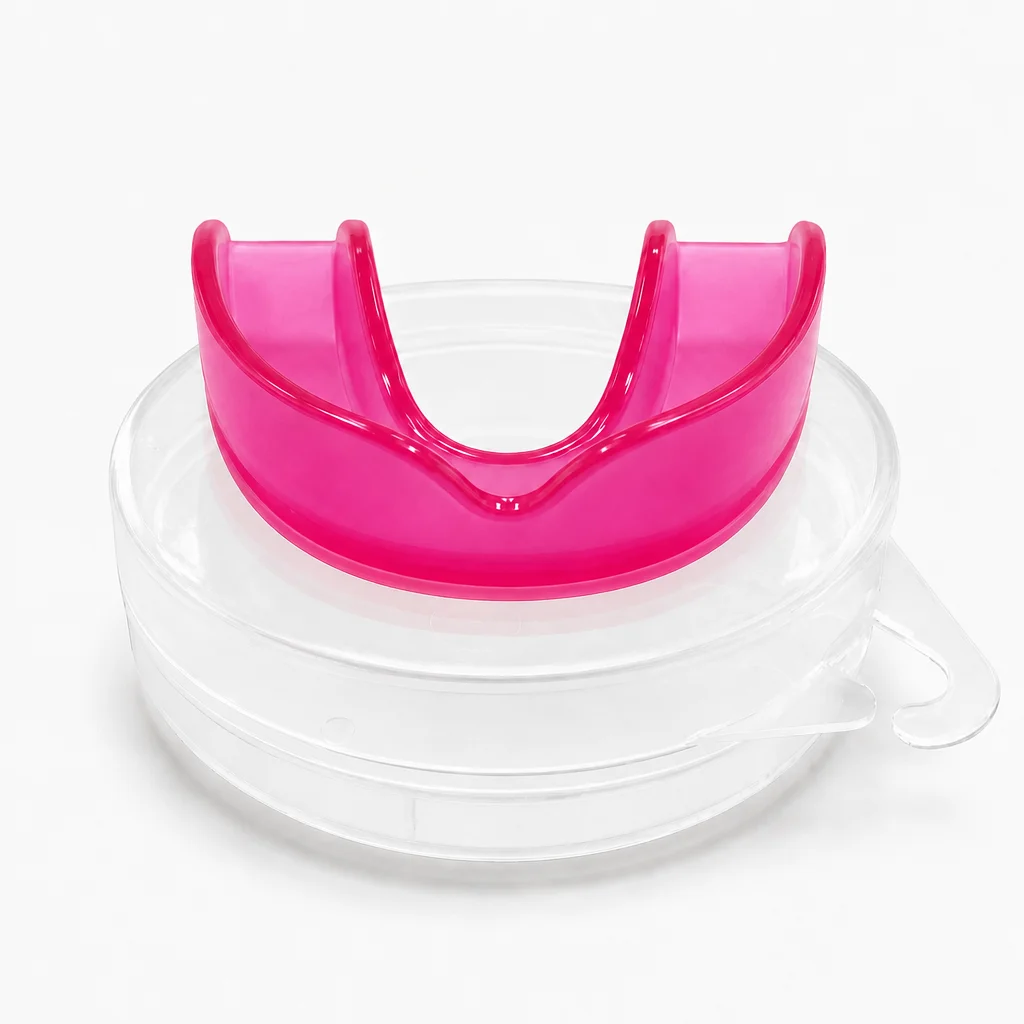
Think of a mouth guard for grinding as a sacrificial contact surface. When the jaw closes or moves during sleep, the guard separates the arches. Depending on the design and professional advice, it may distribute contact more evenly and reduce direct tooth-to-tooth abrasion. The guard itself may show indentations over time; that wear is useful information to discuss at a dental visit.
- Limits direct friction: a mouth guard for grinding places material between the teeth.
- Helps preserve vulnerable surfaces: it may reduce repeated rubbing against enamel, fillings, crowns, or veneers.
- Creates a monitoring cue: changes in fit, cracks, or deep bite marks can signal that it needs review or replacement.
Protection is only as useful as consistent wear. A comfortable fit is therefore not a luxury feature. If a guard feels bulky, pinches the gums, falls out, causes pressure, or changes how your teeth meet in the morning, people are less likely to use it—and the fit itself may need attention.
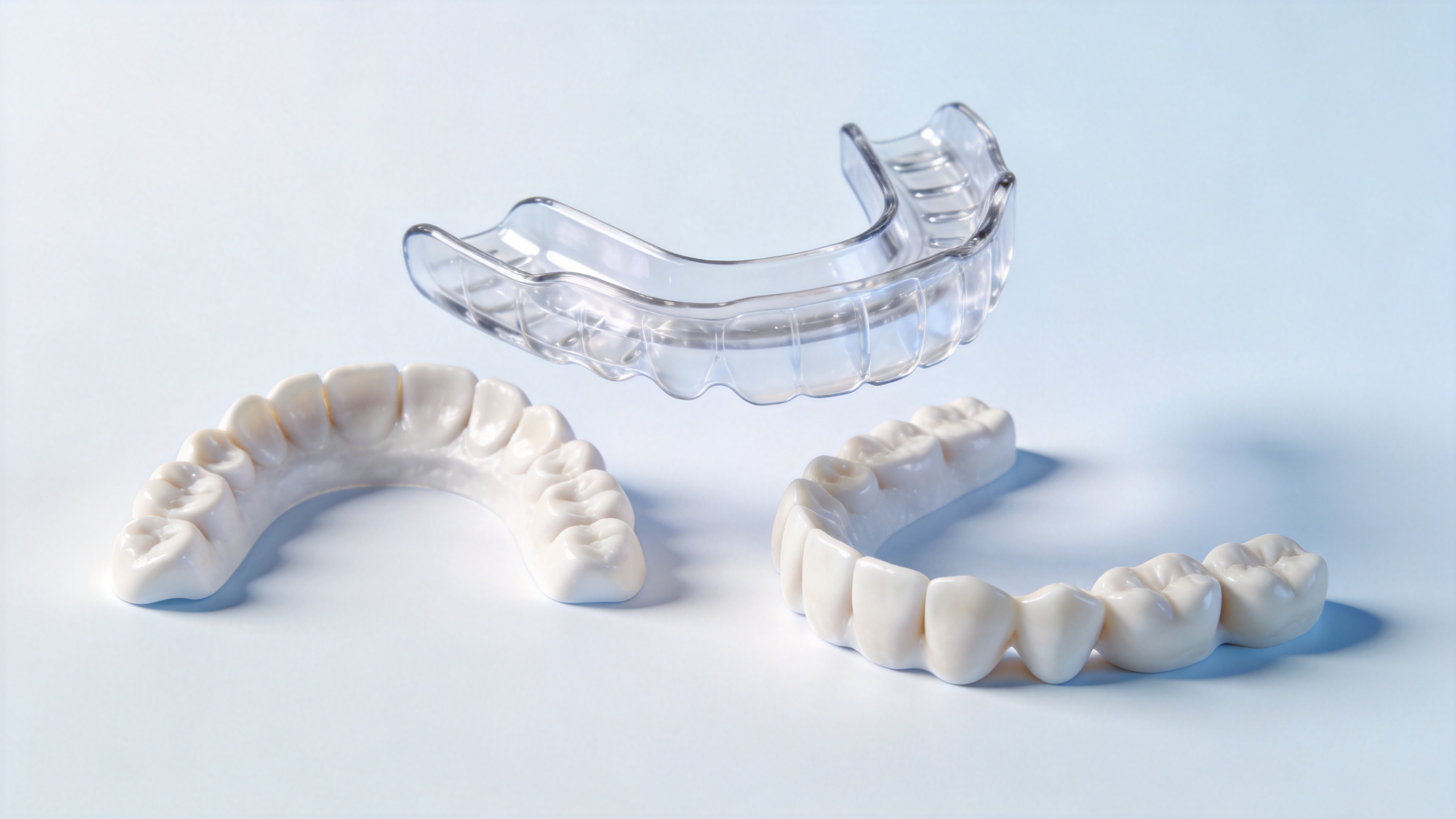
Why Fit Matters More Than a Generic “Soft” or “Hard” Label
There is no single mouth guard for grinding that is appropriate for every person. Ready-to-use, boil-and-bite, and professionally made guards can differ in thickness, coverage, retention, and material. A dentist can help determine whether a particular design is appropriate when there is significant tooth wear, dental work, jaw symptoms, or uncertainty about the cause of grinding.
A genuinely comfortable fit should feel secure without cutting into soft tissue or requiring you to clench to hold it in place. It should not be so loose that it shifts during sleep, nor so tight that it produces new pressure. A poorly fitted mouth guard for grinding may be hard to wear and can complicate an already sensitive bite. That is why “one-size-fits-all” should be treated as a convenience description, not a performance guarantee.
For severe wear, frequent breakage, or complex dental restorations, ask a dental professional whether a custom option is more appropriate. A custom guard is not automatically necessary for everyone, but personalized assessment is valuable when the risk or symptoms are higher.
What Does “Dental Grade” Actually Tell You?
The phrase dental grade can sound reassuring, but it is not a complete buying decision on its own. Product descriptions should make clear what material is used, how it is intended to be cleaned, whether it is made for nighttime grinding, and what fit process applies. A dental grade claim should not be treated as proof that a guard will treat bruxism, fit every mouth, or replace professional care.
When comparing a mouth guard for grinding, ask practical questions: Is the intended use stated clearly? Are cleaning and replacement instructions provided? Does the supplier explain when to stop using the guard and seek advice? Can you identify the material rather than relying on a vague label? Clear answers are more helpful than dramatic promises.
A Simple Selection Checklist
- Start with the purpose. Choose a mouth guard for grinding—not a sports guard or a whitening tray—when nighttime tooth contact is the concern.
- Prioritize retention and comfort. A comfortable fit supports regular use; discomfort, movement, or a changed bite deserves review.
- Check material information. Look beyond the words dental grade and review the product’s stated care, use, and replacement guidance.
- Match the option to the level of concern. Marked wear, pain, repeated breakage, or existing restorations are reasons to ask a dentist for tailored advice.
- Keep expectations realistic. A mouth guard for grinding protects against contact-related damage; it does not independently diagnose or resolve the underlying trigger.
Use, Cleaning, and Replacement Habits
A high-quality mouth guard for grinding also needs sensible care. Rinse it after use, clean it according to the manufacturer’s instructions, let it dry in its case, and keep it away from heat that could distort the shape. Inspect it regularly for cracks, rough edges, odor that persists after cleaning, or areas that have become thin. Do not keep modifying a guard at home if it has become uncomfortable.
Bring the guard to dental appointments when possible. Your dentist can look at the fit and the wear pattern alongside your teeth and symptoms. That conversation is especially useful if the guard no longer feels like a comfortable fit, if you wake with worsening pain, or if there are signs of tooth damage despite regular use.
When a Guard Is Not Enough
A mouth guard for grinding is a protective tool, not a reason to delay care. Arrange dental assessment for jaw locking, pain that persists, tooth fractures, sudden bite changes, loose restorations, bleeding gums, or increasing sensitivity. Mention snoring, gasping, daytime sleepiness, medication changes, stress, and caffeine or alcohol patterns if they seem relevant; these details can help a clinician decide what to investigate.
The most useful approach is balanced: use a well-fitted mouth guard for grinding to reduce direct nightly tooth contact, maintain it carefully, and seek professional guidance when symptoms or damage suggest a larger problem. That combination protects what a guard can protect while keeping attention on the cause that may still need care.
Frequently Asked Questions
Can a mouth guard for grinding stop sleep bruxism?
Usually, its primary role is to protect teeth from direct contact and wear. It may not stop the underlying grinding behavior, so ongoing symptoms or damage should be evaluated by a dental professional.
Is a comfortable fit important for a night guard?
Yes. A guard that shifts, pinches, feels too tight, or changes your bite can be difficult to wear consistently and should be reviewed rather than forced into use.
Does dental grade mean a guard is right for me?
No. Dental grade is a material or marketing description, not a guarantee of fit, suitability, or treatment. Confirm intended use, care instructions, and whether professional assessment is advisable.


 Hot News
