 EN



How Can High-Quality Thin Night Guard Prevent Sleep Bruxism Damage?
Waking with a tight jaw, tender teeth, or a rough edge you do not remember creating can make nighttime clenching feel urgent. A thin night guard can be a useful protective barrier when it fits well and is appropriate for your situation. Its role is straightforward: it creates separation between upper and lower teeth, so repeated contact is less likely to wear enamel or chip restorations. It is not a cure for bruxism, and it does not replace an assessment when symptoms are severe, new, or changing.
From a dental-product selection perspective, the better question is not simply “How thin is it?” It is whether the guard has a stable fit, enough coverage for the teeth involved, and a design that you can realistically wear consistently. That distinction matters because comfort supports regular use, while poor fit can make even a premium-looking guard a bad choice.
What a Thin Night Guard Can—and Cannot—Do
For many people, a premium night guard is a practical way to place a resilient layer between the biting surfaces at night. The useful standard is not an advertising label; it is a secure, comfortable design that is used as directed and reviewed when wear changes.
Sleep bruxism describes unconscious grinding or clenching that often occurs during sleep. A thin night guard sits between the biting surfaces and helps reduce direct tooth-on-tooth contact. Clinical guidance commonly describes splints or mouth guards as devices that keep the upper and lower teeth separated while sleeping; that separation can help limit the damage caused by clenching and grinding.
That is a protection mechanism, not a promise that grinding will stop. Stress, sleep patterns, medicines, bite changes, and other factors can contribute to bruxism. If you have persistent jaw pain, frequent headaches, cracked teeth, loose restorations, or a sudden change in your bite, a dentist should evaluate the cause rather than relying on a guard alone.
Why “Thin” Can Improve Wearability
A thin night guard can make the protective routine feel less intrusive, especially when bulk is the reason previous appliances were left in a drawer. That benefit counts only if the guard remains stable and comfortable throughout the night.
A low-profile guard may feel less bulky, which can make it easier to tolerate at night. For people who abandon a bulky appliance after a few uses, a thinner option may support a more consistent routine. But thinness is only one design variable. A thin night guard still needs to stay seated, avoid sharp edges, and distribute contact in a way that suits the user’s teeth and grinding pattern.
Results for thin guards often emphasize profiles around one millimeter or lighter designs. Those descriptions can be useful starting points, not universal prescriptions. A light or occasional clencher may prioritize a discreet feel, while someone with heavy wear patterns may need professional advice on whether a different material, thickness, or design is more appropriate. Choosing by the smallest number alone can overlook the actual level of force and tooth protection needed.
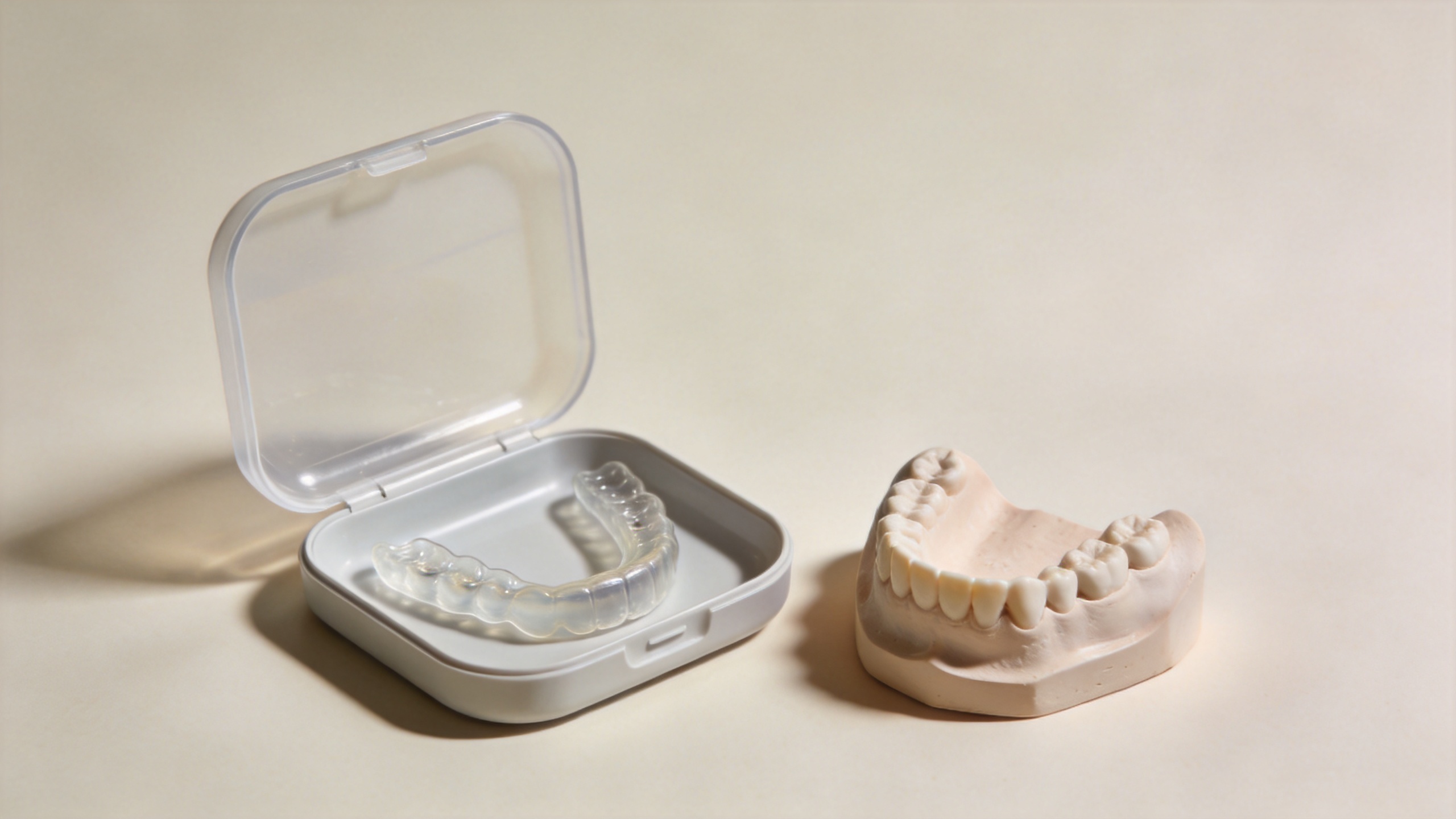
Four Quality Signals to Check Before Choosing
Before selecting a thin night guard, compare the details that affect actual nightly protection rather than relying on a product name alone. The following checks turn a vague comfort claim into practical questions.
1. Fit is stable but not painful
For a thin night guard, secure seating is the foundation of protection: a guard that shifts or lifts cannot reliably act as the surface between opposing teeth.
A well-fitting guard should stay in place through normal sleep movement without pinching gums or requiring you to bite down constantly to hold it. A custom night guard is often considered when fit precision is important, because it is made around the individual dentition. Whichever route you consider, stop using a guard that causes pain, pressure points, or a new bite change and ask a dental professional for guidance.
2. Coverage matches the intended use
Ask whether the thin night guard covers the teeth involved in your grinding pattern and whether a clinician has identified special areas that need protection.
Coverage is not a cosmetic detail. The guard should protect the surfaces your clinician or product instructions identify as relevant to the grinding pattern. Shorter coverage may feel less noticeable, but the trade-off should be assessed carefully. It is reasonable to ask what teeth the guard is intended to cover and why.
3. Material information is clear
Material transparency helps you assess a premium night guard on evidence rather than slogans, particularly when you will wear it for hours while sleeping.
Do not treat terms such as “premium” or “medical” as proof of suitability. Look for clear information about intended use, care instructions, material disclosure, and the maker’s fit or remake process. With a dental night guard, the useful question is whether the available information lets you understand how it should be fitted, cleaned, stored, and monitored—not whether the product page uses the strongest adjective.
4. The design is reviewed as wear changes
Even a carefully chosen thin night guard should be examined for new grooves, cracks, or looseness over time.
Bruxism patterns and dental work can change. A guard that once fit well may eventually show perforations, deep grooves, warping, or looseness. Regularly inspect it under good light, and bring it to dental visits when possible. Monitoring wear is practical evidence of whether the appliance continues to act as the protective surface instead of your enamel or restorations.
How a Thin Guard Helps Limit Damage
When clenching or grinding occurs, the teeth normally rub or press against each other. A thin night guard provides an intervening surface. This may help reduce direct enamel wear and reduce the chance that repetitive contact will damage vulnerable edges or restorations. It does not guarantee that every symptom will disappear, and it cannot diagnose why the force is happening. Still, separating the teeth is a meaningful first layer of protection when a dental professional recommends it.
The practical benefit comes from pairing the guard with a realistic routine: use it as directed, clean it after each use, let it dry in its case as instructed, and report changes rather than forcing an uncomfortable fit. This is especially important for people who notice worsening morning soreness, tooth sensitivity, or visible wear.
A Simple Decision Checklist
Use this checklist to decide whether a thin night guard fits your needs and which questions should go to a dental professional.
- Describe the pattern: Is the concern occasional clenching, visible wear, fractured dental work, jaw discomfort, or a combination?
- Confirm the purpose: A sleep guard is different from a sports mouth guard and should not be selected only because the names sound similar.
- Prioritize fit before marketing language: Ask how the guard stays in place, what it covers, and what to do if it becomes loose or painful.
- Match thinness to the risk: A slim profile may be comfortable, but high-force grinding may require a different recommendation.
- Plan follow-up: Have persistent pain, headaches, cracking, or bite changes assessed by a dentist.
When to Seek Professional Advice Promptly
A dental night guard can be part of protection planning, but it should not delay an examination when pain or damage is progressing.
Do not wait for a guard to solve everything if you have severe or persistent jaw pain, repeatedly broken teeth or restorations, difficulty opening your mouth, a changed bite, or sleep symptoms that concern you. National dental-health guidance notes that severe bruxism can be associated with tooth damage, jaw discomfort or fatigue, and headaches. A clinician can help distinguish a straightforward protective need from an issue requiring broader care.
The Bottom Line
The right thin night guard is a purposeful protective device, not a one-size-fits-all fix for sleep bruxism.
A high-quality thin night guard may help prevent sleep bruxism damage by creating a protective barrier between the teeth. The strongest choice is not automatically the thinnest option; it is the one whose fit, coverage, material information, and follow-up plan match the actual pattern of clenching or grinding. Use comfort as a reason to wear the guard consistently, but use professional guidance when symptoms or tooth damage suggest that more than a simple barrier is needed.


 Hot News
