 EN



Why Is A Custom-Fit Mouth Night Guard Crucial For Nighttime Protection?
Waking with a tired jaw, sensitive teeth, or a partner who hears you clench can make nighttime feel less restful than it should. A mouth night guard creates a protective barrier between upper and lower teeth while you sleep. Its purpose is straightforward: when clenching or grinding happens, the teeth do not meet directly. For many people, that barrier is a practical part of protecting tooth surfaces and restorations while they investigate the habit with a dental professional.
The important word is fit. A custom-fit mouth night guard follows the shape of one dental arch rather than relying on a generic shape. That closer relationship affects how it stays in place, how evenly it covers the teeth, and whether you are likely to keep wearing it through the night. It is not a diagnosis, and it does not automatically stop grinding. It is a protective appliance whose suitability depends on the person, the pattern of wear, and professional guidance.
What nighttime protection is actually for
People often use “mouth guard” as one broad label, but the purpose changes with the situation. A sports guard is intended to help manage impact during activity. A mouth night guard is typically discussed for sleep-related clenching or grinding, often called bruxism. The American Dental Association notes that a dentist may recommend a night guard to help protect teeth while a person sleeps. That is a useful distinction: protection is not the same as a promise to remove the cause.
When repeated pressure occurs overnight, a mouth night guard can separate the biting surfaces. This may help limit direct tooth-on-tooth contact. It can also provide a clear, physical reminder that the appliance is designed for a particular purpose—not for treating sleep apnea, replacing an examination, or serving as a one-size-fits-all sports product. If snoring, breathing pauses, severe pain, a loose tooth, or a broken restoration is involved, seek timely dental or medical advice rather than relying on a guard alone.
Why a custom fit changes the protection conversation
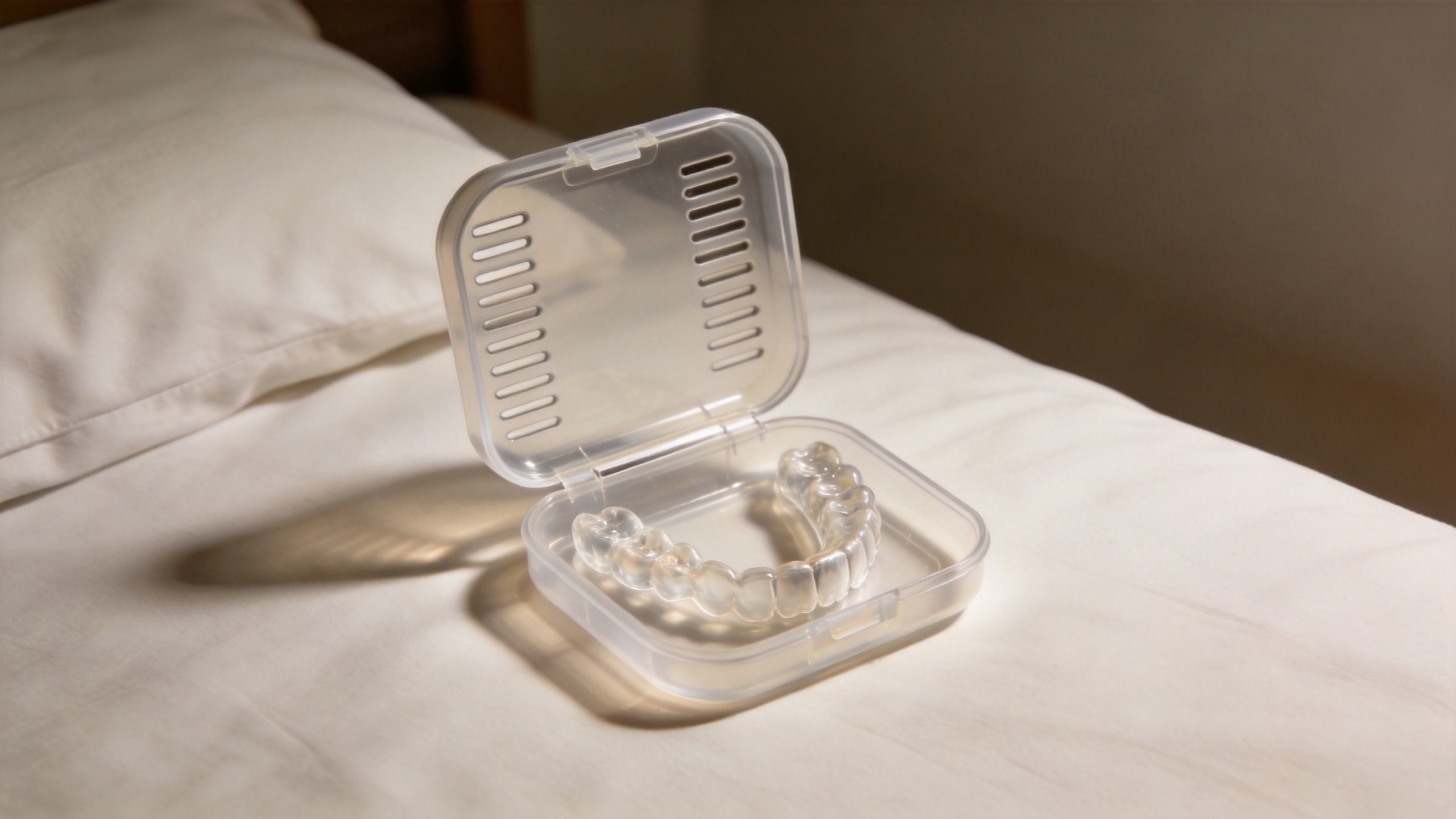
1. Retention matters while you are asleep
A mouth night guard cannot be useful if it shifts, falls out, or is uncomfortable enough to remove in the middle of the night. A custom-fit design is made around the contours of the selected arch, so retention can be assessed as part of the fitting process. That does not mean every custom device feels identical; bite relationships, material selection, and the intensity of clenching can all matter. Still, a fit designed around your own teeth gives a more sensible starting point than assuming a universal tray will behave the same way.
2. Coverage should match the teeth being protected
A well-planned mouth night guard is not simply a thick layer of material. Its coverage and edges need to work with the user’s teeth and soft tissues. In practical terms, a custom approach lets a dental professional evaluate where the appliance sits and whether it feels stable without irritating the gums. That is particularly relevant for people with crowns, bridges, orthodontic work, missing teeth, or noticeable wear. Those conditions do not automatically rule out a mouth night guard; they make individualized assessment more important.
3. Comfort supports consistent use
Nighttime protection works only when it is used as directed. A bulky or poorly retained device may be left on the bedside table. A custom-fit mouth night guard can be considered with comfort in mind: the arch chosen, edge finish, material feel, and bite relationship are all questions worth raising. There is no need to promise that any guard will feel invisible. The practical goal is a device you can tolerate consistently, with follow-up if it causes rubbing, pressure, or a change in how your bite feels.
Custom night guard versus a generic option
A custom night guard and an over-the-counter device are not interchangeable simply because both sit over teeth. A generic option may be convenient for a short-term purchase decision, but it is not built from an individual dental impression or scan. A custom device adds an evaluation step: fit, tooth condition, the likely area of contact, and the intended use can be considered together.
| Question | Why it matters at night |
|---|---|
| Does it stay in place? | A shifting device may interrupt sleep or provide inconsistent separation. |
| Does it cover the right teeth? | Coverage should be considered in relation to the teeth and restorations present. |
| Does it create sore spots? | Persistent irritation is a reason to stop guessing and request an assessment. |
| Is it for grinding rather than snoring or sports? | A mouth night guard should be selected for its intended purpose, not its name alone. |
This is why “custom” is more than a marketing adjective. It describes a process of matching an appliance to a real mouth and a defined nighttime goal. Delta Dental similarly explains that an occlusal guard does not stop clenching or grinding itself, but can help protect teeth from those habits. That boundary is valuable because it keeps expectations realistic.
Signs it is time to ask about a dental night guard
Only a clinician can assess your individual situation, but certain patterns are worth discussing: flattened or chipped edges, frequent morning jaw fatigue, repeated clenching noticed by a partner, unexplained sensitivity, or damage to existing dental work. A dental night guard may be one part of a wider plan that also considers stress, sleep quality, medications, bite changes, or jaw symptoms. The right next step may be an examination, not a rushed purchase.
Bring useful details to that conversation. Note when symptoms occur, whether you wake with headaches, whether the discomfort is on one side, and whether the appliance would be for a child or an adult. If you already use a mouth night guard, mention any looseness, cracking, persistent odor after cleaning, or change in fit. These observations help distinguish a fitting issue from a broader oral-health concern.
How to use a mouth night guard responsibly
- Use it only for its intended nighttime role. Do not treat a mouth night guard as a substitute for a sports guard or a snoring device.
- Follow cleaning and storage instructions. Clean it after use and keep it in a ventilated case once dry.
- Check fit over time. Dental work, tooth movement, wear, and damage can change how a mouth night guard sits.
- Report persistent discomfort. Sharp edges, new pain, altered bite sensation, or a cracked appliance deserve professional attention.
For distributors, clinics, and retailers, the same clarity matters in product information. Describe a custom mouth night guard as a nighttime protective appliance, state its intended use, and avoid turning general comfort language into a medical guarantee. Readers make better decisions when the use case, fitting pathway, cleaning needs, and limits are all visible.
Frequently asked questions
Can a mouth night guard stop teeth grinding?
A mouth night guard is generally used to protect teeth from the effects of clenching or grinding; it does not necessarily stop the habit or identify its cause. A dental professional can advise on the appropriate next steps.
Is a custom mouth night guard worth considering?
It can be worth discussing when stable fit, comfort, tooth coverage, existing dental work, or noticeable grinding are concerns. The appropriate option depends on your mouth, symptoms, and professional assessment.
Can I wear a mouth night guard if I snore?
Do not assume a grinding guard addresses snoring or sleep apnea. Those issues need their own evaluation, especially if there are breathing pauses, choking sensations, or marked daytime sleepiness.
The bottom line
A custom-fit mouth night guard is crucial for nighttime protection because it is designed around the teeth it needs to cover, making retention, comfort, and use-specific assessment part of the decision. It may help create a protective barrier during sleep-related clenching or grinding, but it is not a cure-all. Choose the device for the correct purpose, keep the claims realistic, and involve a dental professional whenever symptoms, fit, or tooth damage raise questions.


 Hot News
