 EN



How To Choose The Right Custom Night Mouth Guard For Teeth Grinding?
If you wake with a tight jaw, notice worn tooth edges, or hear that you grind during sleep, a custom night mouth guard may be one option worth discussing with a dental professional. The key word is “custom”: the right guard is not simply the thickest one or the one with the broadest promise. It should suit your teeth, bite, symptoms, and nightly routine. This guide explains what to compare before you choose a custom night mouth guard for teeth grinding.
From a dental-channel content perspective, it helps to separate product information from individual clinical advice. A night guard can help protect teeth from the effects of clenching and grinding, but it does not diagnose why bruxism is happening or replace an exam when pain, tooth damage, or other symptoms are present.
Start With the Problem You Need the Guard To Address
It is easy to shop by product name alone. A better first step is to describe what you have noticed: morning jaw fatigue, a chipped restoration, visible tooth wear, headaches, a partner hearing grinding, or a guard that you already find uncomfortable. This turns a vague search for a custom night mouth guard into a useful selection conversation.
Think of the guard as a protective appliance rather than a universal fix. A clinician can evaluate signs of bruxism and changes in the teeth and determine whether further care is appropriate. If you have persistent pain, a changing bite, cracked teeth, loose dental work, or sleep-related breathing concerns, do not rely on a general buying guide alone.
Check Fit Before Comparing Extra Features
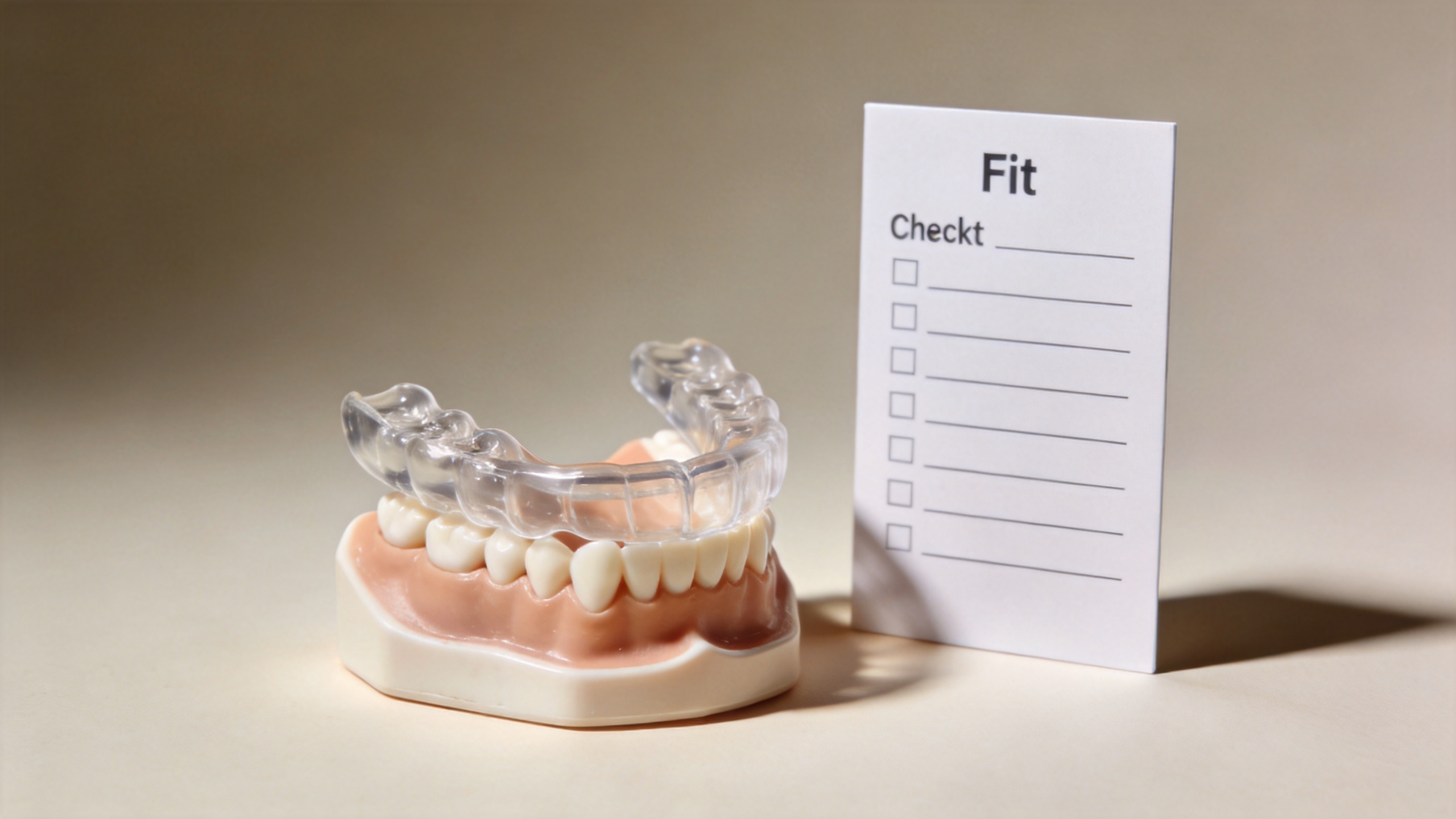
Fit is the foundation of a good custom night mouth guard. A guard should seat fully and stay secure on the teeth; one that rocks, slides, pinches, or falls out is not a good match. Secure retention matters because a loose appliance can be distracting and may not protect the intended surfaces consistently.
Custom guards are generally made from an impression or digital scan of your teeth. Before ordering, ask how the impression is captured, how you can report a fit issue, and what happens if the guard does not seat correctly. Those answers often matter more than marketing language about comfort.
- Ask which arch is covered. A provider may recommend an upper or lower appliance based on your bite and existing dental work.
- Check the edges. They should feel smooth enough for nightly wear and should not dig into the gums.
- Notice retention. A properly seated guard should not wiggle when you speak or open gently.
- Report changes promptly. New pressure points, soreness, or a change in how teeth meet deserve professional review.
Choose Material and Thickness for Your Actual Grinding Pattern
Materials are often described as soft, hard, or dual-layer. There is no single material choice for every wearer, so a custom night mouth guard should be chosen around your situation rather than a one-size-fits-all rule.
| Option | What to discuss | Why it matters |
|---|---|---|
| Soft material | Comfort, flexibility, and whether you clench or chew on soft appliances | Some people prefer the feel, but the choice should match the wearer and the recommended use. |
| Hard material | Grinding intensity, bite design, and existing restorations | A clinician can determine whether a firmer appliance is appropriate for the individual bite. |
| Dual-layer material | Need for a soft inner feel with a firmer outside | The combination may suit some users, but fit and bite adjustment still matter. |
Do not treat thickness as a simple “more is better” measurement. A thicker custom night mouth guard may feel bulky to one person, while a thinner option may not be the right recommendation for another. Ask what thickness is proposed, why it suits your case, and whether your dental work affects the recommendation.
Make Sure the Design Respects Your Bite and Dental Work
Your bite is the way the upper and lower teeth contact. That is why an over-the-counter guard and a custom night mouth guard are not interchangeable in every situation. Crowns, bridges, implants, orthodontic retainers, missing teeth, and recent dental treatment can all change what needs to be checked.
Before finalizing a guard, provide an accurate dental history. Ask whether the guard design accounts for restorations and whether you should return for an adjustment after delivery. A guard that feels acceptable on day one can still need review if your bite changes or wear patterns appear.
Compare the Service Process, Not Just the Guard
A reliable process makes it easier to choose a custom night mouth guard with confidence. Look for clear instructions, realistic turnaround information, a defined fit-adjustment path, and cleaning and storage guidance. If you are buying for a clinic, pharmacy, or online store, request the material description, intended-use statement, sizing or impression instructions, packaging details, and any claims that need verification before listing the item.
This is also where terms such as bulk mouth night guard, bulk night guard, and bulk wholesale mouth night guard need extra care. Bulk purchasing can make commercial sense, but it should not blur individual fit requirements. A channel buyer should confirm how impressions, remakes, labeling, and customer support will be handled for each end user.
Use This Short Selection Checklist
- Describe the symptoms or tooth-wear concern you want assessed.
- Confirm whether a dental professional should examine your teeth and bite first.
- Ask how the impression or digital scan will be taken and checked.
- Discuss material type, thickness, arch coverage, and your dental work.
- Verify that the guard will be secure, comfortable at the edges, and reviewed if it changes your bite.
- Understand cleaning, storage, replacement, and adjustment instructions before committing.
When To Seek Professional Advice Instead of Self-Selecting
A custom night mouth guard is product information, not a substitute for diagnosis. Arrange a dental evaluation if you have tooth pain, broken teeth or restorations, gum injury, a shifting bite, severe jaw pain, or symptoms that are worsening. It is also sensible to seek advice if a guard makes symptoms worse or you cannot wear it comfortably through the night.
The right choice is usually the one that begins with the right questions: what is happening to your teeth and jaw, how should the guard fit, what material and design suit your bite, and where can you obtain follow-up help? By using that process, you can evaluate a custom night mouth guard more carefully and avoid choosing based on a generic claim alone.


 Hot News
