 EN



How To Choose The Right Mouth Guard For Grinding Teeth For Teeth Grinding?
Waking with a tight jaw, a dull headache, or teeth that feel unusually sensitive can make shopping for a night guard feel urgent. A mouth guard for grinding teeth can create a protective barrier between the upper and lower teeth, but it is not a one-size-fits-all purchase. The right choice depends on how hard you grind, how your teeth meet, how the guard feels after a full night, and whether a dentist should first assess the problem.
Think of a night guard as protection, not a cure. It may support bruxism relief by reducing direct tooth-on-tooth contact, while the reasons you clench or grind still deserve attention. This guide focuses on the practical checks that matter before you compare materials or a tempting factory price.
Start with the problem you are trying to solve
A mouth guard for grinding teeth is usually considered when you notice flattened chewing surfaces, chipped edges, jaw fatigue, morning headaches, or a partner hears grinding overnight. Mild cases may not need extensive treatment, but severe bruxism can be associated with tooth damage, jaw pain, tired jaw muscles, and headaches. Those signs are a good reason to arrange a dental assessment rather than simply buying the thickest guard online.
Before choosing a mouth guard for grinding teeth, make a short note of when symptoms occur and what has changed: stress, sleep quality, new dental work, medications, or a change in your bite. A guard can protect enamel while you and your clinician investigate contributing factors. It should not be used to ignore a guard that causes pain, changes your bite, or makes symptoms worse.
Compare the three main fitting approaches
Stock or universal guards
Universal guards are preformed and inexpensive. They may be suitable as a short-term trial for very occasional, light clenching, but their fit can be bulky and unstable. If a universal mouth guard for grinding teeth shifts easily, makes it hard to close your lips, or triggers gagging, it is unlikely to be a comfortable long-term solution.
Boil-and-bite guards
Boil-and-bite products soften in hot water so you can shape them at home. They offer more adaptation than a stock guard, yet the outcome depends on careful molding and the material may thin unevenly. Follow the instructions exactly. If you repeatedly remold the guard, see deep tooth impressions, or cannot get even contact, move up to a professionally guided option instead of forcing the fit.
Custom-made guards
A custom mouth guard for grinding teeth is made from an impression or scan of your teeth. This option is often the most controlled fit when grinding is frequent, forceful, or associated with restorations, orthodontic work, or bite concerns. A dentist can also decide whether a softer, dual-laminate, or harder acrylic design is appropriate. Hard acrylic designs are commonly used for severe grinding because durability and controlled fit matter more than a low upfront cost.
Match thickness and material to grinding intensity
Do not choose thickness by appearance alone. A thin guard may feel easier to wear but can wear through quickly for a heavy grinder. A thicker guard can offer more material between the teeth, although an overly bulky design may interfere with sleep or speech. The goal is a stable, comfortable mouth guard for grinding teeth that covers the intended teeth and does not feel like it is changing your bite.
| Situation | What to prioritize | What to avoid |
|---|---|---|
| Occasional, light clenching | Comfort, secure retention, easy cleaning | Oversized universal guards that slip |
| Regular grinding with visible wear | Custom fit, durability, follow-up adjustments | Choosing only by factory price |
| Jaw pain, headaches, cracked teeth, or changing bite | Dental evaluation before selecting a design | Self-treating a worsening problem |
Material labels can be helpful, but fit is still the deciding factor. A soft guard may feel cushioned at first, while a hard guard may last longer under strong forces. A suitable mouth guard for grinding teeth is one recommended for your bite and symptoms, then adjusted until it seats evenly and stays comfortable through the night.
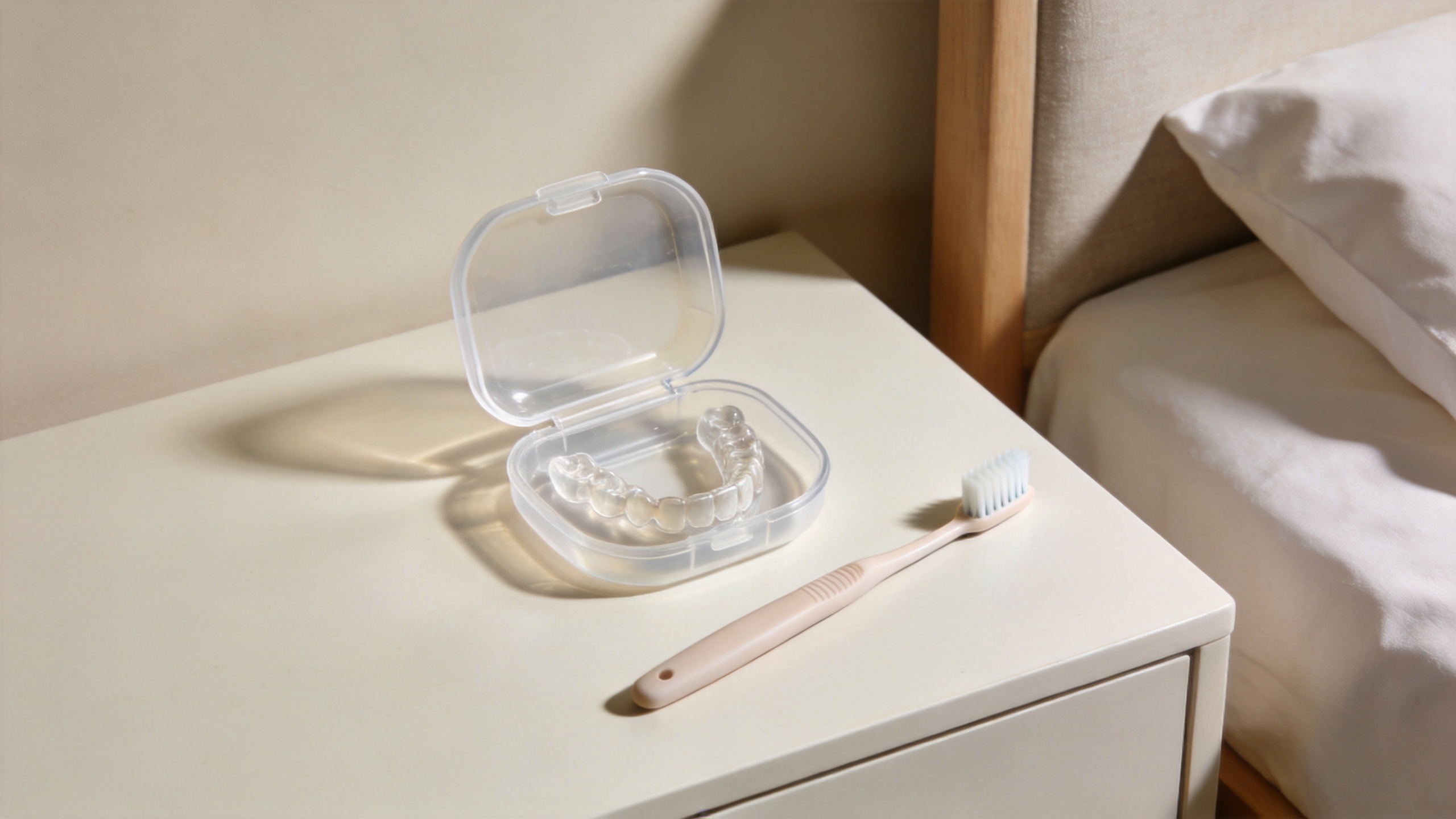
Use this fit checklist before committing
- Retention: The guard should stay in place without constant biting or suction.
- Even contact: It should not feel high on one side or push your jaw into a new position.
- Coverage: It should cover the teeth specified by the provider, with smooth edges that do not rub the gums.
- Breathing and sleep comfort: You should be able to relax your lips and breathe normally.
- Morning response: New soreness, jaw locking, or an altered bite after use is a stop sign, not an adjustment you should ignore.
A mouth guard for grinding teeth that feels awkward on the first night may improve slightly as you adapt, but sharp pressure or pain is a reason to stop using it. Ask the seller or dental provider about remakes, adjustments, and expected wear before you buy.
Look beyond factory price when comparing value
A low factory price can be attractive, especially when several guards look similar in photos. Compare the total decision instead: fitting method, material, thickness options, instructions, hygiene case, remake policy, and access to adjustments. A cheap guard that fails to fit is not a bargain if you stop wearing it after a few nights.
For a custom option, ask what is included in the quoted price. Does it include an impression kit or scan, professional review, follow-up adjustment, and a replacement policy? For an at-home option, check whether the retailer provides clear molding guidance and whether the product can be cleaned safely without warping. Price should be one criterion, not the reason you choose a mouth guard for grinding teeth.
Care for the guard so it remains usable
Rinse the guard with cool water after use, brush it gently with a soft toothbrush, and let it dry in a ventilated case. Avoid hot water unless the manufacturer specifically instructs you to use it for molding; heat can distort a fitted guard. Bring the guard to regular dental visits so wear patterns and fit can be reviewed. Replace it when it is cracked, deeply gouged, loose, rough, or no longer seats as intended.
When to see a dentist promptly
Seek professional advice if you have cracked or loose teeth, persistent jaw pain, facial swelling, severe headaches, locking, a sudden bite change, or a guard that repeatedly damages soft tissue. These symptoms may require more than a new mouth guard for grinding teeth. A clinician can assess tooth wear, gum health, restorations, sleep-related concerns, and the type of appliance that fits your situation.
Make a confident choice
Choose a mouth guard for grinding teeth by starting with severity and fit, then comparing material, durability, care requirements, and total value. A professionally fitted option is often the sensible next step for frequent or forceful grinding; a carefully molded at-home option may be reasonable for mild, occasional symptoms. Either way, use the guard consistently, keep it clean, and get help if pain or bite changes appear. That approach protects your teeth while keeping the larger goal—lasting bruxism relief—in view.


 Hot News
