 EN



How To Choose The Right Nighttime Mouth Guard For Clenching For Teeth Grinding?
Waking with a tired jaw, a sore temple, or a partner’s report of grinding can make a nighttime mouth guard for clenching feel like an urgent purchase. The sensible goal is simpler than “stop bruxism overnight”: choose an appliance that separates and protects your teeth comfortably enough to wear, then involve a dentist when symptoms or fit raise questions. A guard can protect tooth surfaces; it is not a diagnosis, a cure, or a substitute for evaluating persistent pain.
This guide uses the same checkpoints a careful dental shopper can use at home: confirm that a sleep guard—not a sports mouthguard—is needed, compare fit routes, choose material for your clenching pattern, and set a clear point for professional help.
Start With the Job a Sleep Guard Needs To Do
A nighttime mouth guard for clenching is worn while sleeping to create a barrier between upper and lower teeth. The National Institute of Dental and Craniofacial Research describes mouth guards as intraoral appliances that separate teeth to help prevent tooth damage and may reduce muscle activity related to clenching or grinding. That distinction matters: a guard is primarily a protective interface, not a promise that stress, sleep habits, or jaw-muscle activity will disappear.
Do not use a bulky athletic mouthguard as a default substitute. Sports guards are designed for impact protection. A sleep appliance should stay in place through the night, let you breathe and swallow normally, and avoid creating a distracting high spot when you close your teeth. If an option feels like you must bite down to keep it in, it is not solving the fit problem.
Choose the Fit Route Before Comparing Prices
The biggest decision is usually not color or packaging; it is how closely the guard follows your teeth. A dental night guard made from a professional impression or digital scan is the most appropriate route when you have significant wear, a changing bite, restorations, jaw pain, or an uncertain diagnosis. A dentist can examine tooth wear and symptoms and decide whether a hard, soft, or layered appliance makes sense.
At-home impression kits and boil-and-bite options can be practical for mild, occasional clenching when the product is clearly intended for sleep. They demand more self-checking. Follow the fitting instructions exactly, and judge the result after it cools: it should cover the intended teeth, have no sharp edge, and resist lifting off when you speak or gently open your mouth. A loose guard can become annoying; an overly tight one can make removal difficult or uncomfortable.
| Route | Best considered when | What to check |
|---|---|---|
| Dentist-provided | Symptoms are frequent, teeth are worn, or your bite needs evaluation | Professional fit, material recommendation, and follow-up adjustment |
| At-home impression | Clenching seems mild and your teeth and bite are stable | Clear instructions, full coverage, retention, and a return path for fit problems |
| Boil-and-bite | You need a short-term, budget-conscious option | Whether it stays put without constant biting and does not feel excessively bulky |
Match Material and Thickness to Your Clenching Pattern
There is no universal ideal thickness. Softer materials may feel easier to tolerate at first, while firmer materials can offer a more stable biting surface for some people who grind heavily. Dual-layer designs try to combine a softer tooth-facing surface with a more resilient exterior. The right choice is the one you can wear consistently without jaw discomfort, gagging, or a new sensation that your teeth meet unevenly.
Use the product description as a screening tool, not proof of medical suitability. Look for an intended use that explicitly mentions sleep, grinding, or clenching; a material description; the arch it fits; and fitting or care instructions. Be cautious of claims that a guard will “cure” TMJ problems, stop snoring, or permanently eliminate grinding. Those claims skip the individual assessment that symptoms can require.
How To Check Whether a Custom Night Guard Is Truly a Good Fit
A custom night guard should feel secure without pinching. After fitting, run this quick check in the evening rather than for the first time when you are exhausted:
- Insert it with clean hands. It should seat without forcing it over a single tooth.
- Close gently. You should not notice one tooth taking all the contact or a new sharp pressure point.
- Speak a short sentence and take a sip of water. The guard should remain seated without constant clenching.
- Remove it slowly. It should release without pain, rocking a tooth, or needing tools.
- Recheck in the morning. New sore spots, persistent jaw fatigue, or a bite that still feels altered after removal are reasons to stop using it and ask a dentist.
This is also why “one size fits all” deserves caution. Teeth are not arranged in a standard template. Retention and even contact matter more than a generic thickness label.
Read the Care Instructions as Part of the Purchase
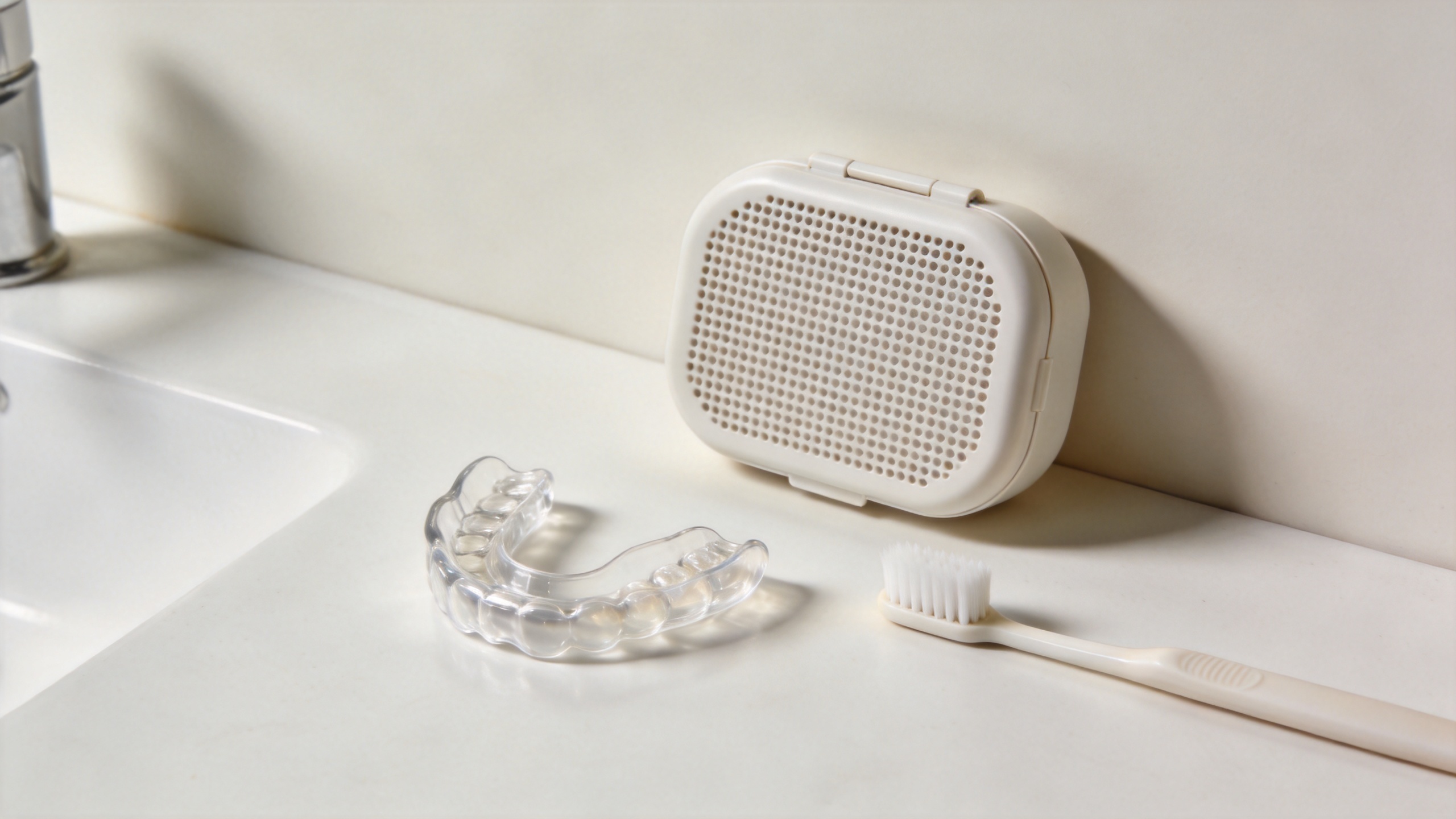
Cleaning is not an afterthought. Rinse the guard in cool water after use, use a soft toothbrush and a cleaner approved for the material, and let it dry in its ventilated case. Heat can distort many thermoplastic guards, so hot water, dishwashers, and a sunny car are poor storage choices. Inspect it regularly for cracks, rough edges, odor that does not clear with cleaning, or a change in how it seats.
If you are buying a dental night guard through an at-home route, check what support exists if the impression is rejected or the finished guard does not fit. A clear remake or adjustment policy is more valuable than a vague lifetime claim. Keep the original care instructions and note when you began using the appliance; that makes it easier to describe changes at a dental visit.
Know When Not To Self-Select a Guard
Arrange a dental assessment before relying on an over-the-counter option if you have a cracked or loose tooth, untreated dental pain, recent dental work, braces or removable appliances, substantial tooth wear, difficulty opening your mouth, locking, or persistent headaches and jaw pain. Seek prompt professional advice if the guard causes pain, gum irritation, a lasting bite change, or breathing difficulty.
According to oral-health guidance from the American Dental Association, a dentist may recommend a night guard to protect teeth while you sleep, alongside attention to factors such as stress management. NIDCR also notes that bruxism can occur while awake or asleep, so daytime habits and sleep-related concerns may deserve attention too. That broader view prevents a product purchase from becoming the only plan.
A Final Buying Checklist
- Choose a nighttime mouth guard for clenching that is explicitly designed for sleep—not impact sports.
- Prioritize retention, smooth edges, and balanced comfort over a marketing claim about thickness.
- Select a dentist-provided option when symptoms, tooth wear, dental work, or bite changes make self-fitting uncertain.
- For an at-home option, confirm the fitting method, material, cleaning instructions, and fit-support policy before ordering.
- Stop and seek dental advice if use creates pain, pressure, irritation, or a persistent change in your bite.
The right guard is the one that offers reliable tooth separation, fits your actual mouth, and sits within a sensible care plan. If you are unsure between a self-fit option and a professionally made appliance, the safer next step is a dental conversation—not simply choosing the thickest product on the shelf.


 Hot News
