 EN



Why Is A Custom Custom Made Football Mouthguards Essential For Impact Protection?
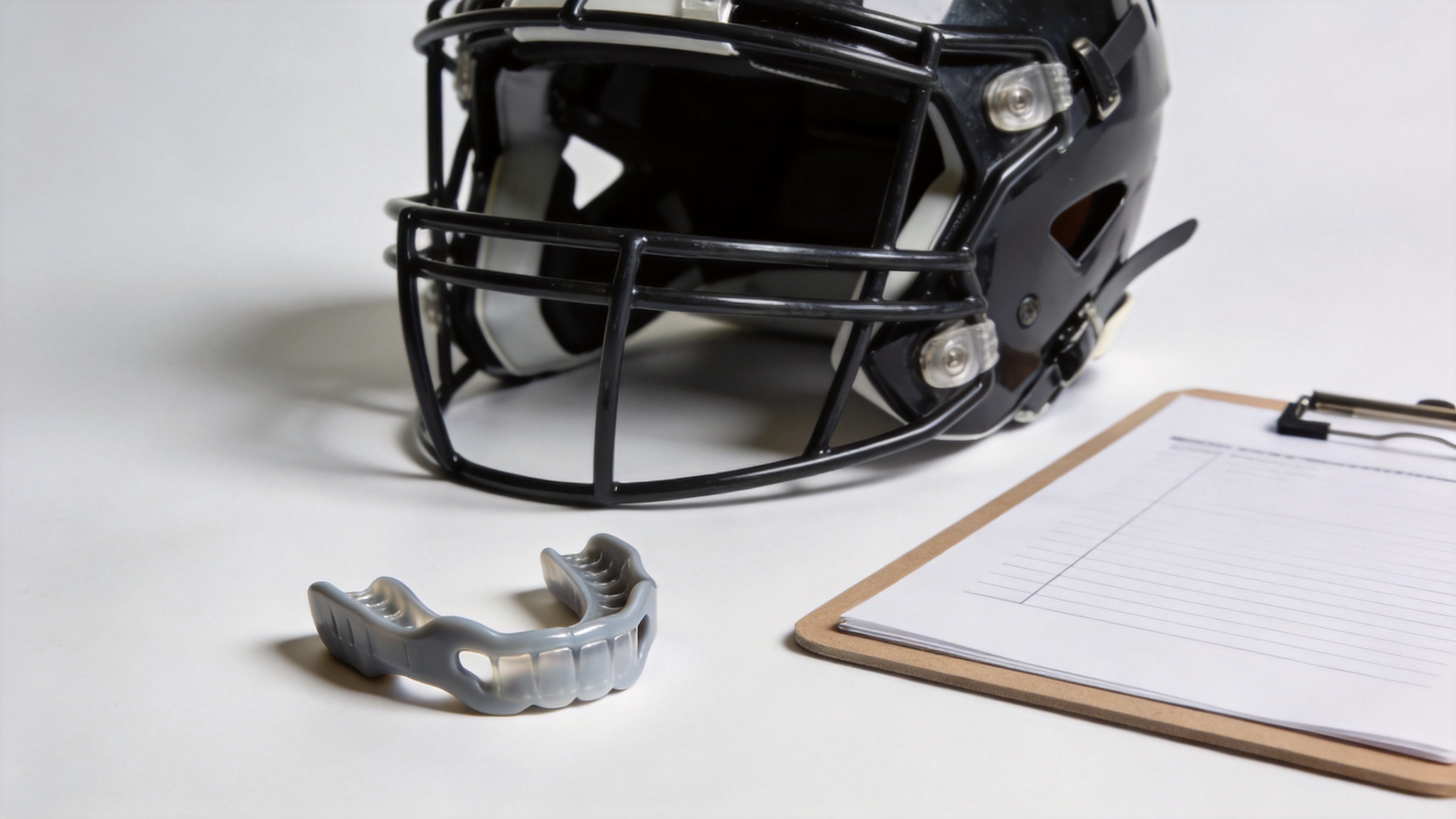
For a football buyer, the question is not whether a guard looks substantial in a catalog. It is whether the product can be specified, fitted, documented, and supplied consistently for the intended level of play. Custom made football mouthguards deserve that level of scrutiny because football combines repeated contact, changing player positions, and fast purchasing cycles across teams, retailers, clinics, and online channels.
From a channel buyer’s perspective, a mouthguard program succeeds when the product brief is clear before artwork, packaging, or price comparisons begin. A custom fit request should describe the fitting route and the wearer group, while a manufacturer discussion should establish what can actually be documented. That approach is more useful than treating every sports guard as interchangeable.
Impact protection starts with the right specification
Custom made football mouthguards are commonly evaluated for contact-sport use, but the phrase alone does not prove a particular thickness, material, test result, or level of protection. Those are product-specific facts a buyer should request in writing. The American Dental Association notes that custom mouthguards can be fully customized and that properly fabricated, consistently worn mouthguards can be effective. That is helpful context for a sourcing conversation, not a substitute for the supplier’s own verified product documentation.
In practice, a football brief should first identify who will wear the guard: youth, adult, recreational, academy, or a defined team roster. It should then identify the fitting method. A model designed around an impression, scan, or controlled molding process may call for different instructions and fulfillment steps than a stock guard. If the brief only says “custom,” the supplier and buyer may be referring to very different things.
That is why custom made football mouthguards work more reliably as a specification category rather than a marketing label. The most important questions are practical: How is fit established? What user instructions are included? How are replacement and hygiene guidance handled? Which details are confirmed, and which still require validation before a channel listing goes live?
Why fit affects the buyer’s whole program
Fit is not merely a comfort claim. A guard that a player is unwilling or unable to wear consistently cannot deliver the intended value of a protection program. A well-defined custom fit process can help a buyer align the product, instructions, and target user. However, fit expectations should be described carefully. Do not turn an unverified design feature into a universal performance promise.
For custom made football mouthguards, specify whether the buyer needs individual-player customization, team-level decoration, or a repeatable size-and-fit workflow. These requests may overlap, but they are not the same. Individual fit can involve a distinct workflow from logo printing, color selection, or retail-ready packaging. Separating them early prevents a quotation from hiding missing steps.
- Use case: football training, competition, school program, club program, or retail resale.
- Wearer details: age range, dentition or braces considerations where relevant, and the expected fitting route.
- Customization scope: name, number, team color, logo, packaging, or instruction insert.
- Evidence needed: material disclosure, dimensions or design range, care instructions, and any applicable testing or compliance records.
For distributors, this makes custom made football mouthguards easier to position honestly. Rather than promising that one design suits every athlete, sales teams can explain the available options and direct questions about individual oral conditions to an appropriate dental professional.
Use standards as a documentation prompt, not a shortcut
Buyers often ask whether a football mouthguard “meets a standard.” The right answer begins with scope. ASTM F697 is described by ASTM as a standard practice covering the care and use of intraoral athletic mouthguards as protective equipment for sports. It can help frame the care-and-use portion of a sourcing checklist. It does not automatically establish that every product offered by a manufacturer has a specific certification or test result.
When reviewing custom made football mouthguards, request the exact document name, version, product model, issuing party, and applicability. Ask whether the document addresses the finished product, a material component, a production process, or only a general product category. This small discipline reduces the risk of carrying a broad statement from a supplier presentation into an e-commerce listing as if it were model-specific proof.
What B2B buyers should confirm before ordering
A reliable supplier conversation for custom made football mouthguards combines product questions with operational questions. The goal is not to demand every possible document on day one. It is to reveal whether the supplier can respond clearly to the claims the buyer intends to make.
- Define the protection context. State the football use case and whether the product is intended for organized team supply, retail, promotional distribution, or another channel.
- Confirm the fit route. Ask how a custom fit is obtained, who performs each step, what instructions accompany the product, and what happens if a user reports a fit issue.
- Request material and product information. Ask for the available material description, construction details, dimensions or sizing information, and care guidance for the proposed model.
- Verify claims before publishing. If a seller plans to mention testing, compliance, medical language, or impact performance, obtain product-specific supporting records first.
- Separate decoration from function. Confirm which colors, marks, names, and packaging elements can be customized and what artwork approval process applies.
- Plan replenishment. Establish minimum order quantity, sample timing, production lead time, reorder identification, and packaging controls before a team campaign starts.
These steps make custom made football mouthguards more manageable for wholesale teams. They also create a cleaner handoff between the buyer, the manufacturer, brand reviewers, and downstream sellers.
Manufacturer questions that uncover useful differences
A capable manufacturer should be able to distinguish confirmed product information from choices that depend on artwork, volume, or the selected fit process. Ask for a quotation that breaks out the base product, individual customization, team branding, packaging, sample approval, and any tooling or setup requirements. If an answer is broad, ask for the proposed model and document set rather than inferring details from a category image.
For custom made football mouthguards, it is also sensible to ask how consistency is checked between approved sample, production batch, and final packaging. The answer may be a process description rather than a sweeping quality claim. That is still useful: it tells a buyer what records or checkpoints can be reviewed before release.
| Question area | What to request | Why it matters |
|---|---|---|
| Fit workflow | Step-by-step fitting instructions and wearer eligibility notes | Supports a realistic custom fit expectation |
| Product evidence | Model-specific material, care, and applicable documentation | Prevents unsupported listing claims |
| Customization | Artwork template, color limits, approval sample, and packaging options | Separates visual choices from functional claims |
| Supply continuity | MOQ, lead-time assumptions, reorder reference, and inspection checkpoints | Helps teams and distributors plan replenishment |
How to position the product without overpromising
Strong football product content explains decisions rather than using absolute language. You can say that custom made football mouthguards are being considered for a defined football use case and that the buyer is checking fit workflow, care instructions, product documentation, customization, and supply requirements. You should not claim that a guard prevents every injury, fits every athlete, or has a certification that has not been verified for the actual model.
This is especially important for a manufacturer supplying multiple channels. A distributor may need concise product-copy inputs; a clinic may need clearer care and wearer guidance; a retail platform may need packaging and traceability fields. One factual product record can serve all three when the confirmed facts are separated from pending verification items.
Final buying perspective
Custom made football mouthguards are essential to an impact-protection program because they give buyers a way to align football use, fitting workflow, product information, and customization choices around the actual player and channel. The value is not in using “custom” as a promise by itself. It is in making the request specific enough to verify.
Before placing a bulk order, use the checklist above to confirm the intended wearer group, the custom fit process, product-specific documentation, care information, decoration boundaries, packaging, and replenishment plan. With those details in place, a buyer can compare proposals on a meaningful basis and communicate the product responsibly to teams, resellers, and end users.

 Hot News
