 EN



Custom-Fit Dental Mouthguard For Teeth Grinding For Sleeping And Night Protection
If you wake with a tight jaw, worn biting surfaces, or a partner who hears nighttime clenching, a mouthguard for teeth grinding may be part of the conversation. These appliances are often called night guards because grinding and clenching frequently happen during sleep. The practical question is not simply whether a guard exists; it is whether its fit, material, and care routine suit your mouth and your situation.
This article explains how to evaluate a mouthguard for teeth grinding as product information. It does not diagnose bruxism, jaw conditions, or sleep concerns. Persistent pain, a change in bite, loose teeth, damaged dental work, or trouble sleeping deserves a conversation with a dentist or other qualified oral-health professional.
Why fit matters for nighttime wear
A guard sits between the upper and lower teeth, so small differences in shape can matter over several hours of sleep. A comfortable fit usually means the guard stays where it belongs without feeling bulky, pinching the gums, or making you constantly reposition it. That is why a custom-fit option is often considered separately from a one-size option: the starting point is the individual tooth shape, not a generic curve.
Fit is not a promise that every wearer will have the same experience. It is a starting condition to check. A mouthguard for teeth grinding should be reviewed if it rocks, falls out, creates localized pressure, interferes with closing your mouth naturally, or feels noticeably different after it has been used for a while. When a guard is supplied through a dental professional, the fit can be assessed in person; other custom processes should make their impression, adjustment, and replacement instructions equally clear.
Custom-fit, moldable, and professional pathways
It is easy to group every nighttime device under the word “mouthguard,” but the route to fit can be quite different. Comparing the pathways helps you ask better questions rather than making a choice based only on a headline price.
- Ready-to-wear options: These are immediately available, but their shape is not based on your teeth. Check how they are meant to stay in place and whether the stated use matches nighttime grinding.
- Moldable options: These use a home-shaping process. The instructions, thickness after molding, and ability to repeat the process matter because an uneven result may feel awkward.
- Custom-impression options: A dental impression or scan is used to make a guard around your dentition. Ask who reviews the impression, how fit concerns are handled, and which material information is available.
- Dentist-directed options: A dentist can assess teeth, gums, existing restorations, and bite-related concerns before recommending an approach. That assessment is particularly relevant when symptoms are ongoing or complex.
Here is the useful distinction: product choice and health assessment are related, but they are not the same task. A product page can explain a material or fitting process; it cannot determine why you are grinding or replace individualized care.
What “comfortable fit” should mean in practice
“Comfortable fit” is a useful phrase only when it is connected to checks you can make. During the first few uses, notice whether the guard seats consistently, whether its edges feel smooth, and whether you can breathe and relax your lips without fighting the appliance. Avoid trimming, heating, or reshaping a guard unless its instructions specifically allow that method.
Comfort also changes with context. A person with a crown, bridge, orthodontic appliance, sensitive gums, or a recent dental procedure may need guidance before using a mouthguard for teeth grinding. If a guard causes new soreness, makes jaw movement feel restricted, or no longer fits as it did initially, pause use and seek professional advice instead of forcing an adjustment.
A buying checklist beyond the factory price
A factory price can be relevant for wholesalers, clinics, pharmacies, or online sellers, but it does not describe the whole purchasing decision. Compare like with like. A lower quoted figure may reflect a different material, thickness, order quantity, packaging, fulfillment arrangement, or level of documentation. For an end user, the same principle applies: the listed price should be read alongside the fit process, care requirements, remake policy, and route for resolving concerns.
- Confirm the intended use: is the item described for nighttime grinding and clenching rather than sports impact protection?
- Request material and cleaning guidance in writing. Do not assume that every clear or soft-looking guard uses the same material or needs the same care.
- Ask how the fit is created, how long it is expected to be used before reassessment, and what to do if it feels wrong.
- For channel purchasing, compare samples, packaging details, labeling, minimum order quantities, and available product documentation before comparing factory price alone.
- Keep health claims separate from product facts. Claims about pain, sleep, or jaw conditions need a supportable basis and should not be written as universal outcomes.
Care habits that support a usable guard
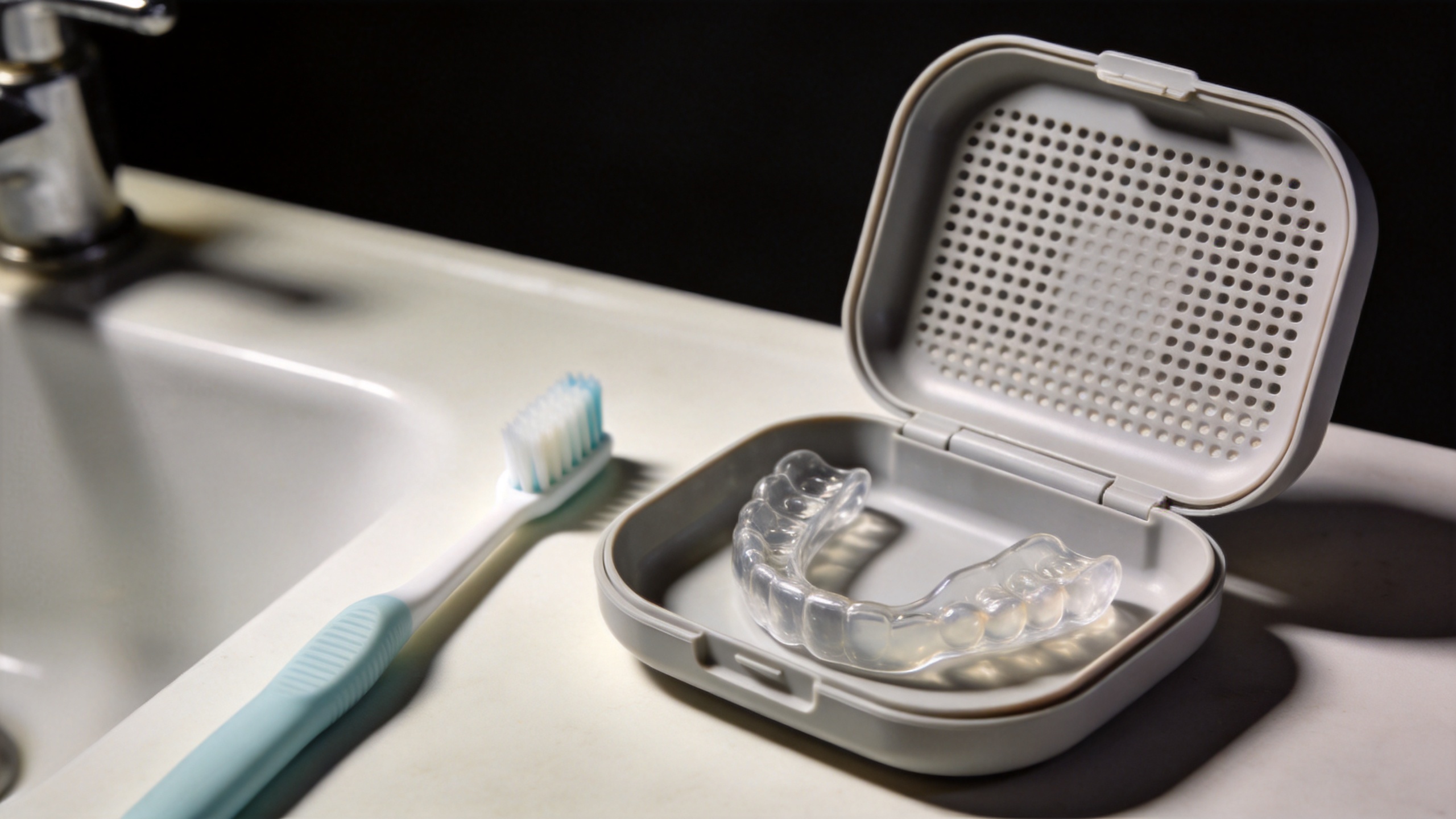
A clean storage routine helps keep a guard ready for use. Follow the maker’s instructions first. In general, rinse it after use, clean it with the method specified for its material, let it dry as directed, and store it in a ventilated case. Avoid leaving it where heat can distort it, and keep it out of reach of pets or children who might damage it.
Inspect the guard regularly for cracks, rough edges, discoloration, distortion, or a fit that has changed. Those observations are useful information for a dentist or supplier. They are not a reason to make assumptions about the underlying cause of grinding. A mouthguard for teeth grinding is an appliance that needs maintenance and occasional reassessment, not a set-and-forget accessory.
When to seek a dental assessment
General buying guidance has limits. Arrange professional advice if you have significant tooth pain, a broken tooth or restoration, gum bleeding, jaw locking, frequent headaches, a major bite change, or symptoms that are getting worse. It is also sensible to ask before choosing a nighttime guard if you are unsure whether your appliance should cover the upper or lower teeth, have active dental treatment, or have a history of jaw-joint concerns.
For many shoppers, the clearest next step is to make a short list: what happens at night, what feels uncomfortable in the morning, what dental work is present, and what you need to know about fit. That gives a dentist or supplier a more useful starting point than a request for “the strongest” option.
Final perspective
A mouthguard for teeth grinding should be chosen around fit, intended use, material information, and a realistic care plan. A custom route may support a closer fit because it starts with your teeth, but the right pathway depends on your dental situation and the information available. Compare factory price only after you have matched the product scope and documentation. Most importantly, treat persistent symptoms as a reason for professional assessment rather than relying on a general article to make a health decision for you.


 Hot News
