 EN



Custom-Fit Dental Custom Night Guard For Teeth For Sleeping And Night Protection
Shopping for a custom night guard for teeth often starts with one practical question: will it stay comfortable enough to wear while you sleep? That is a useful place to begin, but it is not the only question. A night guard is an oral appliance, and a sensible choice depends on your dental condition, the intended use, the fit process, and the product information available before you order.
From a dental-channel content perspective, the clearest approach is to separate general product information from individual dental guidance. This article explains how a custom night guard for teeth is commonly evaluated for sleeping and night protection. It does not diagnose tooth grinding, jaw concerns, or sleep conditions. If you wake with pain, have damaged teeth or restorations, or suspect a sleep-related breathing issue, speak with a dentist or other qualified healthcare professional.
Why fit matters in a custom night guard for teeth
A custom night guard for teeth is designed around the shape of a person’s teeth, usually from an impression or digital scan. The goal is a guard that sits securely on the selected arch and creates a consistent barrier between upper and lower teeth. In contrast, a general ready-made guard may need more adjustment and can feel bulky or loose for some wearers.
Comfort is not a vague luxury feature. For a guard intended for sleeping, a comfortable fit affects whether a person can keep it in place through the night, clean it properly, and notice when it no longer fits as expected. Still, comfort alone does not show that a particular design is right for every mouth. Existing dental work, bite changes, sensitivity, and the reason for using a guard all deserve professional consideration.
Bruxism is the term used for grinding, clenching, or gnashing teeth, and it may happen while awake or asleep. General oral-health information can help readers recognize why they want to ask questions, but it cannot replace an examination. A custom night guard for teeth should be discussed with a dental professional when symptoms, repeated damage, or uncertainty are present.
What a custom process should make clear
The word “custom” can mean different things across suppliers. Before choosing a custom night guard for teeth, ask how the teeth are captured, which arch the design covers, and how fit feedback is handled. A clear process makes it easier to compare options without relying on broad claims.
- Impression or scan method: Confirm whether the guard is based on an impression kit, a digital scan, or a dental-office record, and follow the supplied instructions carefully.
- Arch and intended use: Ask whether the guard is made for upper or lower teeth and whether the stated use is sleeping/night protection rather than sports impact protection.
- Material and thickness information: Request the available material description and any care instructions. Do not assume a material property that has not been documented.
- Fit review route: Find out what to do if the guard rocks, pinches, feels unusually tight, or changes your bite sensation after removal.
- Cleaning and storage: A product page should explain routine cleaning, drying, and storage rather than leaving users to guess.
This is a shift from looking for a single selling point to confirming the information that affects use. For buyers, clinics, pharmacies, and online sellers, the same principle helps: accurate product materials and boundaries are more useful than promising a universal result.
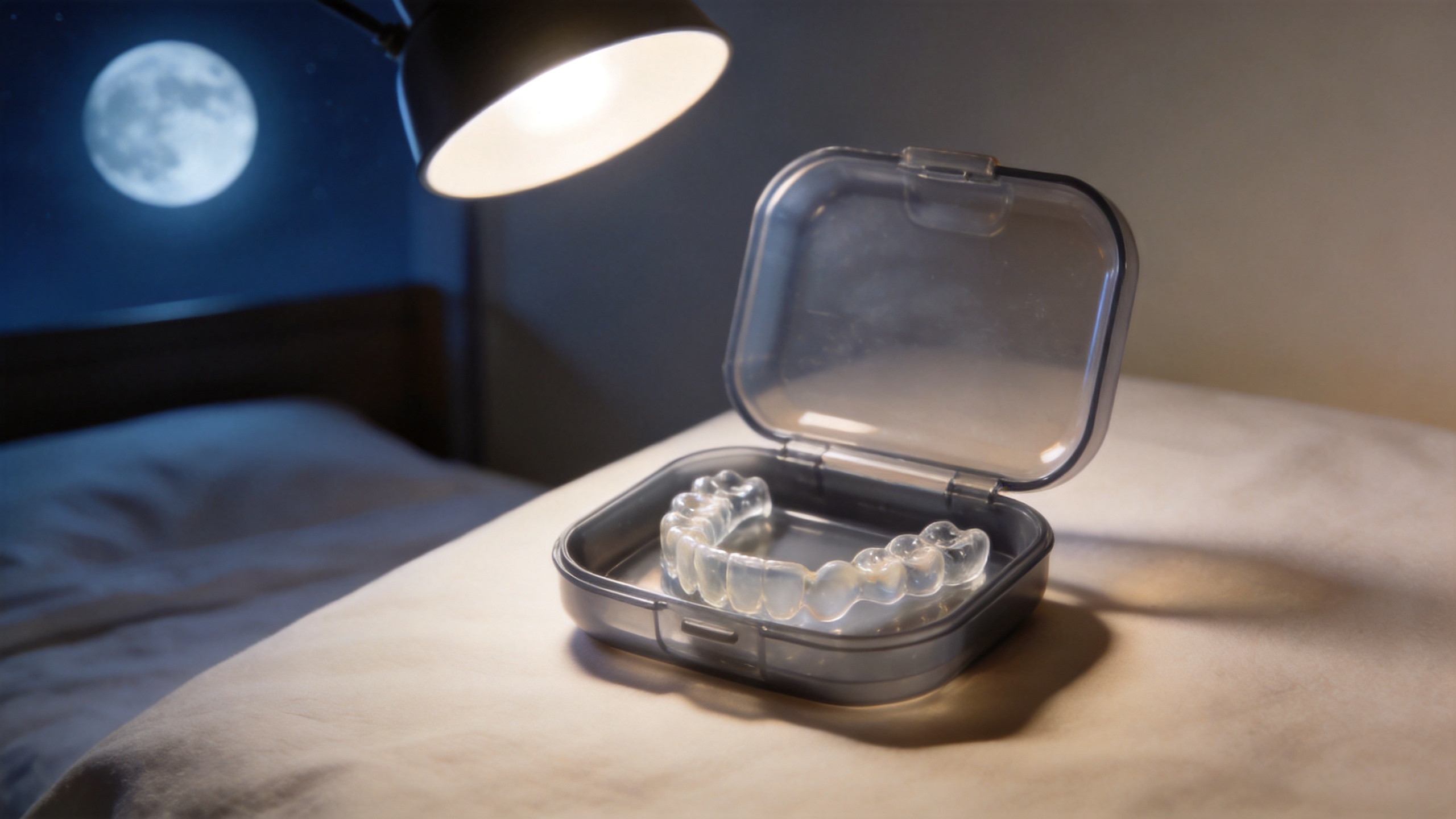
How to evaluate comfortable fit for night use
When people say they want a comfortable fit, they may mean several things. A well-seated guard should not move around easily during normal wear, yet it should not create localized pressure or force someone to ignore persistent discomfort. The right balance is individual, which is why fit instructions and access to dental advice matter.
Signs to pause and ask for advice
Do not rely on a general article to decide whether a problem is normal. Stop using a guard and contact a dentist or the appropriate provider if it causes pain, injures soft tissue, will not seat fully, cracks, changes suddenly, or feels incompatible with current dental work. The same caution applies if a person has untreated tooth pain, loose teeth, a new restoration, or concerns about sleep apnea. Night guards and oral appliances can look similar while serving different purposes.
Fit is also a communication issue
A custom night guard for teeth is easier to evaluate when the seller explains the next step in plain language: what records are needed, how the product should sit, and where the wearer can ask questions. A dental channel should not imply that a guard can diagnose, address or resolve a medical condition. It can provide clear product information and encourage professional assessment when the wearer’s situation calls for it.
Comparing value without relying on a factory price claim
“Factory price” can sound straightforward, but it is not enough information for a responsible comparison. A lower quoted amount may leave out the fit workflow, material documentation, packaging details, follow-up process, or support needed for a particular sales channel. Conversely, a higher price does not by itself demonstrate better suitability.
For a buyer comparing a custom night guard for teeth, use a like-for-like checklist. Put the quoted amount beside what is actually included: the impression or scan route, the stated material information, the scope of customization, the packaging, the instructions, and the route for fit questions. If an offer uses the phrase factory price, request the specification and order terms that make the comparison meaningful. This approach is more useful than treating price as a substitute for product information.
| Question to compare | Why it matters |
|---|---|
| How is the custom record collected? | It clarifies the starting point for the fit process. |
| What use is stated for the guard? | It helps distinguish night use from other oral-protection categories. |
| Which material and care details are documented? | It gives buyers information to review rather than assumptions to make. |
| What does the quoted factory price include? | It supports a fair comparison of the complete order scope. |
| What happens if fit concerns arise? | It shows whether the provider has a clear support path. |
A practical ordering checklist
- State the intended sleeping or night-protection use clearly.
- Share relevant dental constraints with a dental professional when appropriate; do not rely on an online questionnaire for diagnosis.
- Confirm the record-taking method and the arch to be covered.
- Review available material, care, packaging, and fit-support documentation.
- Compare quotations only after the included scope is clear, especially when a factory price is mentioned.
- Keep instructions with the product and seek advice if fit or oral comfort changes.
Choosing a responsible path forward
A custom night guard for teeth can be a useful category to explore when someone wants a more individualized fit for sleeping. The most helpful decision is not based on a broad promise. It is based on the intended use, a comfortable fit, complete product information, and appropriate professional input for the individual wearer.
For distributors, clinics, pharmacies, and ecommerce teams, product communication should make those boundaries visible. Describe the custom process, present the available specifications accurately, and invite buyers to verify what is included rather than assuming that a factory price or a generic comfort claim answers every question. That makes the discussion clearer for both the seller and the end user.


 Hot News
