 EN



How To Choose The Right mouth guard for teeth grinding at night For Teeth Grinding?
Choosing a mouth guard for teeth grinding at night starts with a useful distinction: a guard can create a protective barrier between teeth, but it does not identify why you clench or grind. If you wake with tooth sensitivity, jaw soreness, headaches, a cracked restoration, or a changing bite, arrange a dental assessment rather than relying on a retail product alone. For a first-time buyer, the practical goal is to find a guard you can wear consistently without treating comfort as a promise that every option will suit you.
Start with the problem you are trying to manage
A mouth guard for teeth grinding at night is generally intended to limit tooth-to-tooth contact during sleep. That makes it different from a sports guard, a whitening tray, or an appliance marketed for snoring. The American Dental Association’s consumer guidance notes that a dentist may recommend a night guard to help protect teeth while a person sleeps. It is a sensible boundary: protection is helpful, yet stress, medications, sleep quality, bite changes, and other factors may still deserve professional discussion.
Before comparing materials, write down what you notice. Is the concern occasional morning tension, frequent clenching, visible wear, a broken filling, or a partner hearing grinding? This short record makes the next conversation clearer. It also helps you avoid selecting a mouth guard for teeth grinding at night merely because its label sounds familiar.
Choose the fitting route before choosing the material
Fit is the first decision point. A dentist-made guard is produced from an impression or scan and is the option to discuss when symptoms are persistent, teeth are moving, dental work is extensive, or previous guards have been uncomfortable. A mail-in impression kit can be another custom-style route, but follow its instructions carefully and ask a dentist if you are unsure whether it suits your situation. Stock and boil-and-bite products are more accessible, yet their fit can vary widely.
For any mouth guard for teeth grinding at night, a comfortable fit means it stays in place without sharp pressure, gagging, or a need to bite down constantly to hold it. “Comfortable” is not the same as loose. It should cover the intended teeth evenly, feel smooth at the edges, and allow you to close your lips without strain. If it rocks, pinches one area, repeatedly falls out, or changes how your teeth meet after you remove it, stop using it and seek advice.
Match coverage and thickness to your needs
Not every nighttime grinding guard has the same coverage or thickness. Full-coverage designs generally cover all teeth on one arch. Partial designs may be used for specific clinical purposes, but they are not interchangeable with a full guard; get professional guidance before choosing one. Thickness is also a trade-off. A slim guard may feel easier to tolerate, while a thicker design may be selected for heavier wear. More thickness is not automatically better if it prevents consistent use or leaves you sore.
When comparing a guard for sleep grinding, look for plain, checkable information: which arch it is designed for, the fitting method, material care instructions, and whether a dental professional can review the fit. Be cautious with claims that a single device will cure grinding, realign teeth, or treat jaw disorders. Those claims reach beyond the basic protective role of a night guard.
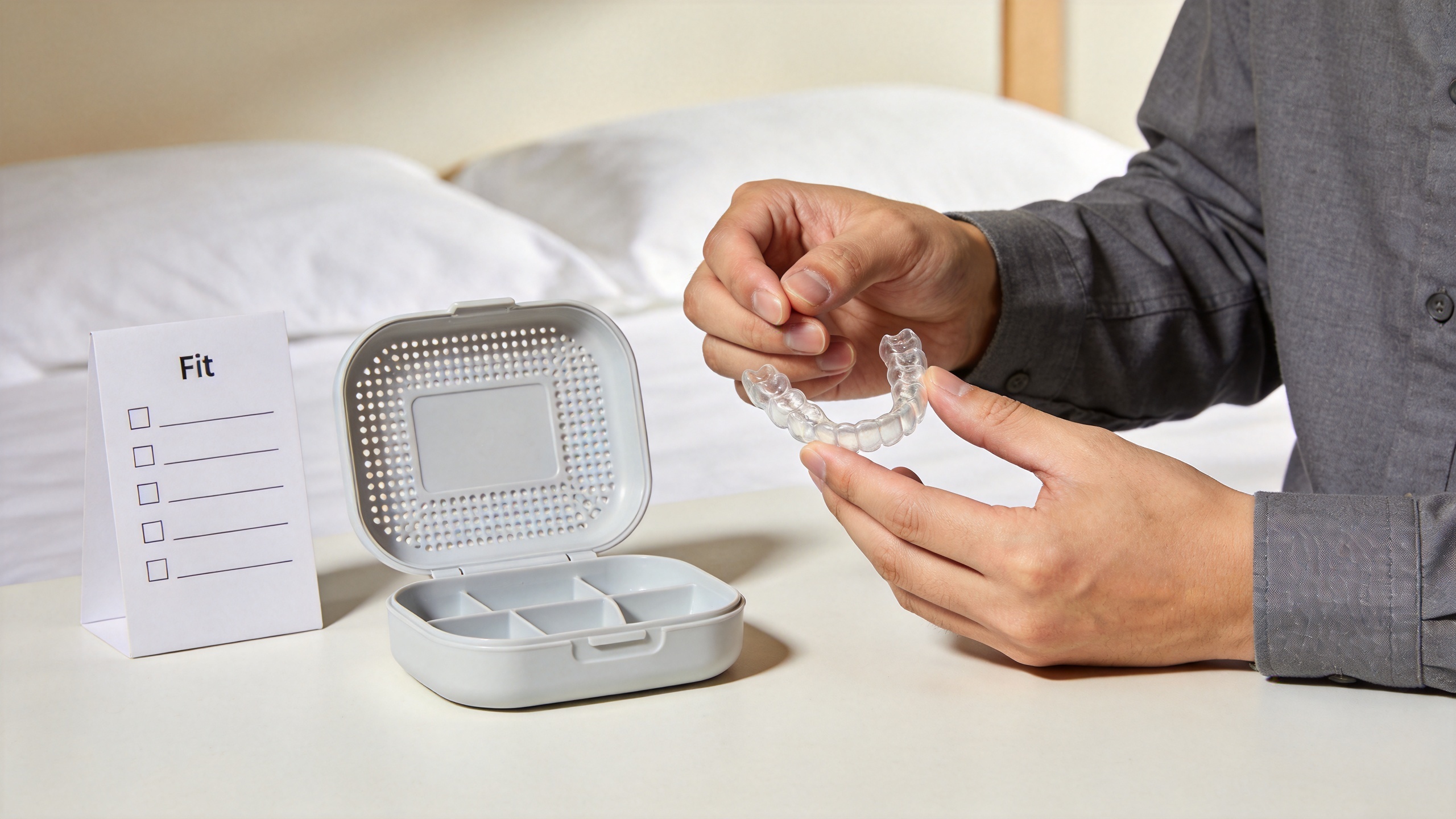
Use a simple fit-and-comfort checklist
- Retention: A nighttime teeth-grinding guard should remain seated when you gently open your mouth and speak a few words.
- Edges: Run your tongue around the rim. Rough edges, isolated pressure, or gum irritation are reasons to reassess the fit.
- Breathing: You should be able to breathe comfortably through your normal nighttime pattern. Do not force yourself to tolerate gagging.
- Bite awareness: It should not create a new sense that only one tooth is hitting first. Note any change and consult a dentist.
- Routine: A overnight dental guard only helps when it is clean, stored safely, and worn as directed.
Try a new guard during a calm evening before depending on it overnight. That gives you time to notice fit concerns without disrupting sleep. If you remove it in your sleep several nights in a row, do not assume you have failed; the design, fit, or underlying sleep issue may need another look.
Consider material and care without overreading marketing
Hard, soft, and dual-layer materials feel different, and a dentist may recommend one style based on your teeth, restorations, and grinding pattern. For an over-the-counter guard used during sleep, do not infer durability or safety from color, thickness, or a vague “professional” label. Read the care directions and ask what cleaning products are suitable. Hot water, aggressive brushing, and leaving a guard in direct heat can distort some materials.
After each use, rinse the sleep-grinding guard as directed, let it dry completely, and keep it in a ventilated case. Check it regularly for rough areas, cracks, odor that does not resolve with appropriate cleaning, or a changing fit. A damaged or warped night guard is not something to keep using simply because it was expensive.
Know when to pause shopping and call a dentist
A overnight protective guard is not a substitute for assessment when pain is significant, a tooth is loose or cracked, the jaw locks, swelling is present, or your bite changes. It is also worth raising snoring, gasping, daytime sleepiness, or sleep disruption with a clinician; a guard made for grinding is not automatically the right appliance for breathing-related sleep concerns.
Bring the guard, its package, and your symptom notes to an appointment. A clinician can check whether the dental sleep guard is contacting teeth evenly and whether another approach is appropriate. That is usually more useful than trying multiple poorly fitting guards in succession.
A practical buying decision
Choose a guard for nighttime clenching by working in order: clarify the symptoms, decide whether you need professional fitting, verify coverage and care information, test retention and a comfortable fit, then monitor the result. If your situation seems straightforward, that process helps you compare options without being pulled by exaggerated claims. If it does not feel straightforward, professional input is the right next step.
A suitable protective nighttime appliance is not determined only by softness, thickness, or price. It should fit its intended purpose, be tolerable enough to use consistently, and be supported by appropriate dental advice when symptoms or fit raise questions.



 Hot News
