 EN



Why Is A Custom-Fit Rubber Mouth Guard Crucial For Nighttime Protection?
When people say they need a rubber mouth guard for sleep, they are usually trying to solve a practical problem: keeping upper and lower teeth from meeting with full force through hours of clenching or grinding. That is a reasonable starting point, but the word “rubber” can be misleading. The important question is not simply whether a guard feels soft. It is whether it fits securely, covers the right surfaces, and remains tolerable enough to wear consistently through the night.
As an oral-health product selection adviser, I would separate product information from individual care. A night guard may help create a protective barrier between teeth; it does not diagnose why someone grinds, treat every jaw symptom, or replace an assessment by a dentist. For nighttime use, fit is the feature that turns a generic barrier into a device that can stay in place and do its intended job.
Nighttime use puts different demands on a guard
A sports mouthguard is designed around short, high-impact events. A nighttime guard has a different assignment: it may be worn for many uninterrupted hours while the wearer changes position, swallows, speaks briefly, and relaxes into sleep. That changes what “protection” means. Retention, smooth edges, stable coverage, and a bite relationship that does not feel intrusive all matter.
The National Institute of Dental and Craniofacial Research explains that an intraoral mouth guard can separate the teeth, which helps prevent tooth damage and may reduce muscle activity associated with grinding. That is the protective principle. It should not be overstated as a cure for bruxism, jaw pain, snoring, or sleep apnea. Those concerns can have different causes and may need professional evaluation.
A rubber mouth guard that shifts, presses on one area, or is removed during sleep cannot provide the same practical protection as one that stays seated. In other words, softness may support comfort, but fit determines whether the guard remains where it is meant to work.
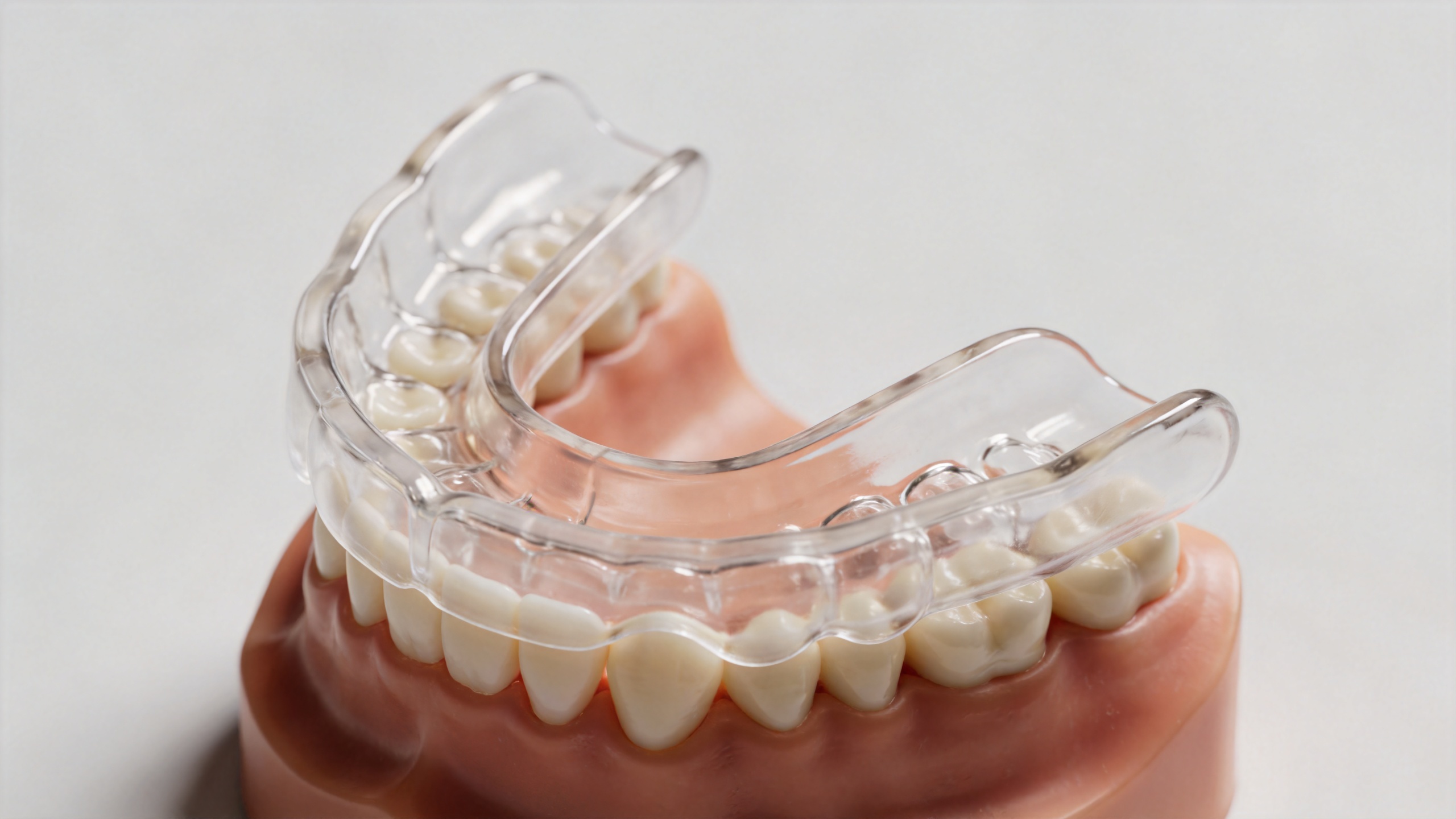
Why custom fit matters more overnight
1. Retention reduces the chance of mid-sleep movement
A custom-fit design follows the individual contours of the teeth and gumline more closely than a one-size product. That closer contact can help the guard resist sliding as the jaw moves. A loose guard may feel bulky, trigger gagging, collect saliva awkwardly, or end up on a bedside table before morning. None of those experiences proves a material is bad; they are signs that the fit or design may not suit the wearer.
2. Consistent coverage helps protect the intended surfaces
Teeth do not all contact in the same way. A properly planned guard is meant to cover the teeth and create a consistent separating surface for the intended arch. By contrast, a thin or poorly seated guard can leave edges exposed or concentrate pressure in a way that feels uneven. If a person wakes with new soreness, a changed bite sensation that persists, damaged material, or a guard that no longer seats properly, it is sensible to stop guessing and seek dental advice.
3. Comfort supports the habit that makes protection useful
Nighttime protection only works while the guard is worn. A custom mouth night guard is not automatically comfortable for every person, but accurate impressions or scans give a dental professional a better basis for controlling trim lines, thickness, and contact design. This is especially relevant for people who clench, have dental restorations, orthodontic work, gum sensitivity, or a history of jaw symptoms.
Material language: what “rubber” should and should not tell you
Many shoppers use “rubber mouth guard” as a broad search phrase for a soft or flexible dental appliance. The exact material may instead be a soft plastic, a thermoplastic, or a layered construction. Material alone does not establish safety, durability, clinical suitability, or performance. Ask what the guard is made of, how it is cleaned, who it is intended for, and whether its fit is reviewed after delivery.
This is a useful place to correct a common assumption: a softer guard is not necessarily a better nighttime guard. For some wearers, softness feels reassuring; for others, a dentist may consider a different design based on wear patterns, bite, restorations, or symptoms. Product choice and clinical judgment are related but not the same thing.
A fit-and-purpose review before nighttime use
Product labels should lead to a fitting question rather than a promise. A rubber mouth guard, a custom mouth night guard, dental mouth guards, and a protective night guard may all appear in the same search, yet their intended uses can differ.
| What to assess | Question for the wearer, provider, or supplier |
|---|---|
| Stable seating | Will the guard stay seated without rocking as the jaw moves? |
| Fit process | How is the appliance fitted, and is adjustment available if it feels uneven? |
| Care information | Are cleaning, storage, and inspection instructions clearly supplied? |
| Intended purpose | Is it meant for overnight grinding protection, sports impact, or another use? |
| Review signals | Will the wearer know to seek review for cracking, persistent irritation, or a changed bite? |
Here is the distinction that matters: a rubber mouth guard is a general product phrase, while a custom mouth night guard may be a fitted nighttime appliance. Dental mouth guards are not interchangeable merely because they cover teeth. A protective night guard that shifts, irritates tissue, cracks, or changes how the teeth meet needs review.
For clinics, pharmacies, e-commerce teams, and wholesale buyers, descriptions should distinguish a flexible protective appliance from treatment. Xiamen Yizhou Imp. & Exp. Co., Ltd. serves wholesalers, e-commerce platforms, clinics, and pharmacies; each channel benefits from clear fitting, care, and claims boundaries. If snoring, witnessed breathing pauses, daytime sleepiness, persistent jaw pain, or tooth damage are present, a guard should not be used as a substitute for professional assessment.
Frequently asked questions
Can I use a sports mouthguard as a night guard?
They are designed for different situations. Some people may try a sports guard temporarily, but a guard intended for sports impact is not automatically appropriate for regular nighttime grinding or clenching. Ask a dentist if you need a night-specific solution.
Does a custom mouth night guard stop grinding?
It may separate the teeth and help limit tooth-to-tooth wear from grinding, but it does not necessarily eliminate the underlying behavior or every related symptom. A dental professional can help evaluate persistent concerns.
How do I know my guard needs attention?
Have it checked if it cracks, loses its fit, develops rough edges, causes persistent discomfort, changes how your teeth meet, or no longer stays in place.
The bottom line
A custom-fit rubber mouth guard is crucial for nighttime protection because it is more likely to stay seated, cover the intended teeth, and be comfortable enough for regular use. Still, the right guard depends on the purpose and the person. Confirm the fitting process and care instructions, avoid promises that a simple appliance cannot support, and involve a dental professional when symptoms, tooth damage, or sleep-breathing concerns are present.


 Hot News
