 EN
EN


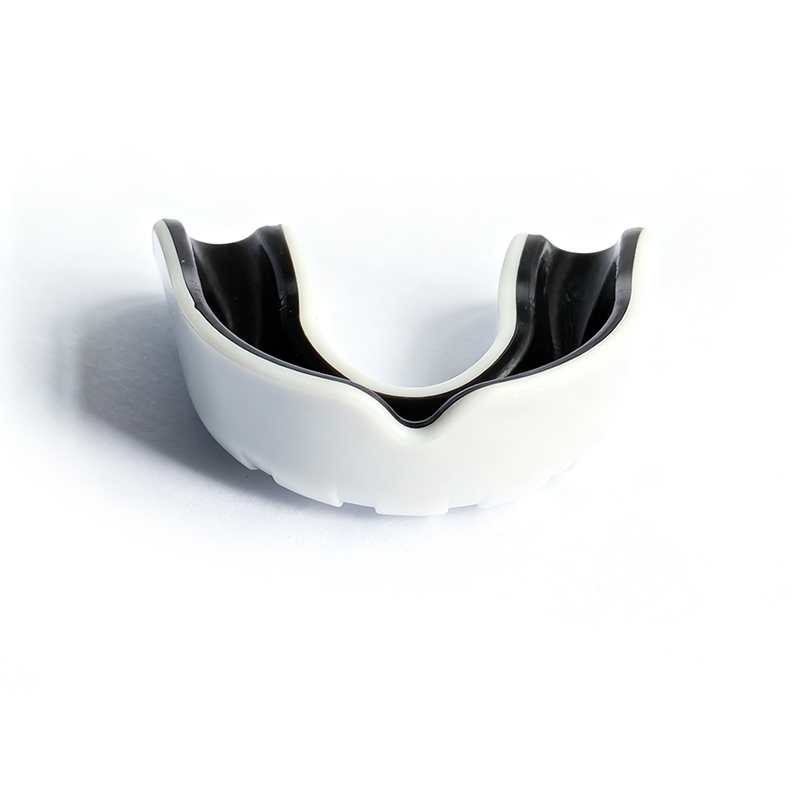
Examining the Role of a Custom-Fit Mouthguard in Mitigating Bruxism Harm
Reducing the Effect of Blunt Impacts in Teeth by Clenching with the Help of a Mouthguard
Custom fitted mouth guards defend against damage done by teeth grinding by acting as the explicit barrier against teeth contacts. They are soft and elastic, and compress as energy loads increase. They are able to dissipate energy that may cause harm, and prevent micro fractures of the organism.
Custom mouthguards also distribute and balance the grinding forces, especially the ones done by the molars. Enamel damage to the molars is one of the most alarming effects of teeth grinding, and leads to significant structure loss in the teeth. The average damage dispersion rate is at 0.2 - 0.3 mm loss a year. Mouth guards are able to return the energy deposits and pressure by providing a barrier of soft and elastic material. The effects of mouthguards in balancing the forces of bruxism is significant and clearly proven able to keep the integrity of the teeth structure and the bond material in the mouth.
Why Fit Determines Efficacy: Custom vs. OTC Mouthguard Performance
Custom-Fit Precision Reduces Asymmetric Loadings and TMJ Strain
Custom mouthguards eliminate unevenly distributed pressure during sleep bruxism. OTC mouthguards are one-size-fits-all. However, mouthguards fabricated in a dental lab address the occlusal surfaces and don’t allow concentrated bruxism force on specific teeth or jaw joints. Biomechanical studies show strain on the TMJ is reduced by 62%. Custom mouthguards use layered thermoplastic material that absorbs shear forces. In contrast, OTC mouthguards that rely on boil-and-bite also often warp due to sustained force from bruxism, and also do not provide a stable occlusion.
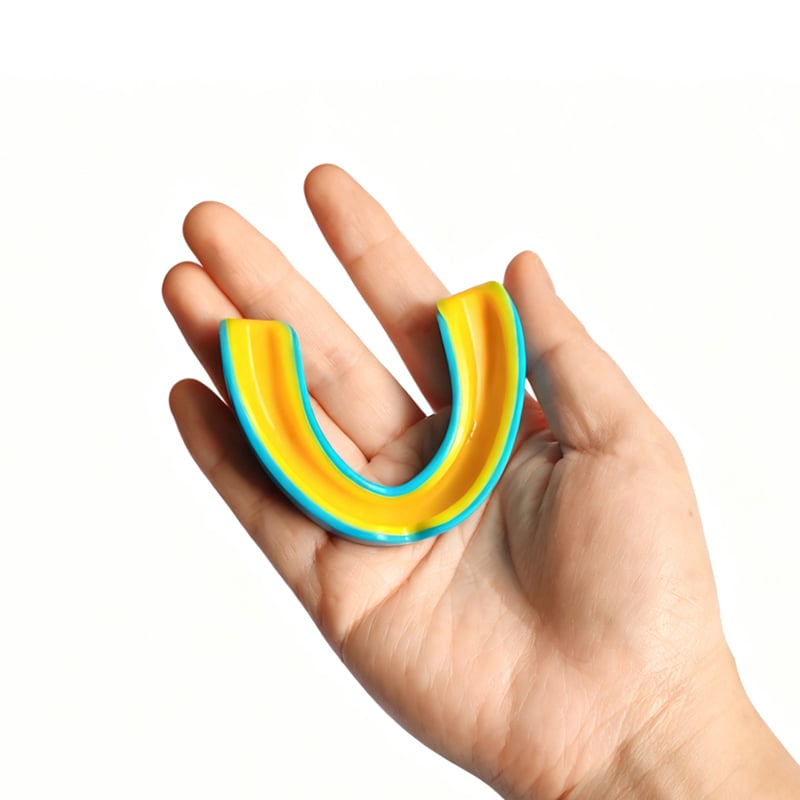
Evidence-based Comparison: Custom Mouthguard Superiority Regarding Bruxism
A 2023 Journal of the American Dental Association meta-analysis confirms the custom mouthguards’ clinical superiority: custom mouthguard users were found to have 74% fewer cracked teeth and 68% less jaw pain in comparison to the OTC mouthguard users after a 6-month period. The reviewed article cited 3 benefits. The first is that the material is grade medical which is less likely to wear out. The second, there is a more accurate fit, so there is less chance of it being displaced during sleep, and finally, the mouthguard encourages a more dental occlusion. Specifically, muscle activity is minimized at its maximum. For this type of fit, it is unlikely that the efficacy of the treatment is achieved.
Matching Mouthguard Design to Bruxism Severity: Thickness, Material, and Long-Term Protection
Optimal Mouthguard Thickness (1–3 mm) for Mild, Moderate, and Severe Night Grinding
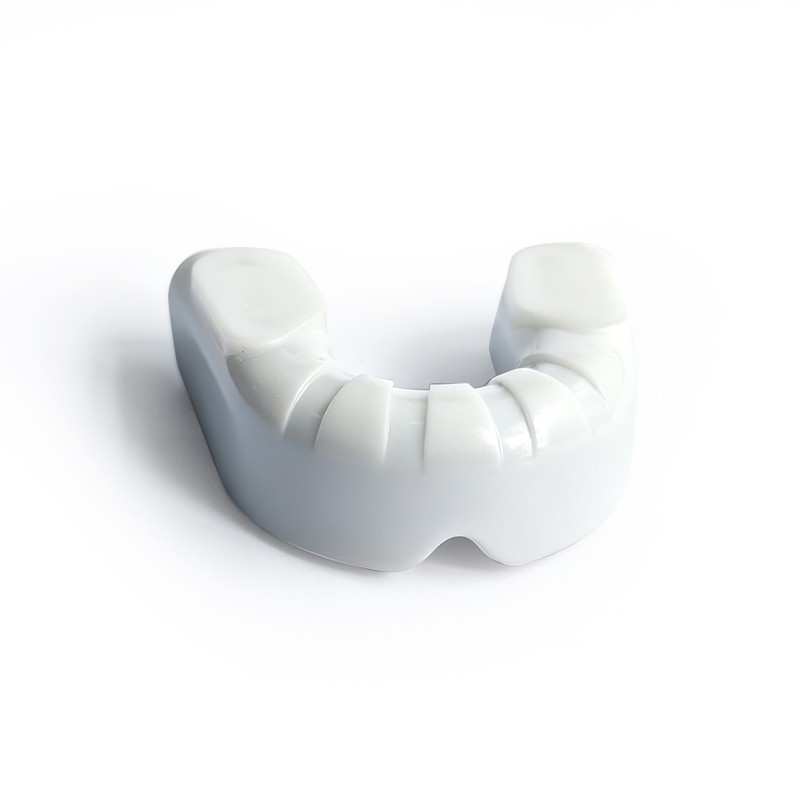
Balancing protection and comfort, mouthguard thickness varies with bruxism. Thinner mouthguards of 1 to 1.5 mm are effective for mild grinders, while a thickness of 1.5 to 2.5 mm is justified for absorbing painful forces in moderate grinding, without compromising sleeping comfort. Severe grinding requires 3 mm guards to distribute aggressive pressure and to guard against the bruxism-related cumulative enamel loss. Mouthguards made of thicker, more firm materials are more protective against cumulative bruxism damage. Softer, more flexible, and thinner materials are more supraplaque for the same reason.
Beyond Teeth: How a Proper Mouthguard Prevents Secondary Bruxism Complications
Reducing Cracked Teeth, Morning Jaw Pain, and Sleep Fragmentation in Long-Term Users
An effective mouthguard is able to redistribute occlusal forces to mitigate the effects of bruxism and not only corral against the effects of bruxism on teeth. These mouthguards can mitigate as much as 80% of the effects of bruxism on flexural strain of teeth, which is accomplished by direct force absorption. This is the primary reason, sleep medicine studies show a 78% reduction in pain when using mouthguards designed to absorb the bruxism impacts as they also alleviate the strain on the temporomandibular joint. Furthermore, mouthguards that are custom fit to sleep are proven to reduce sleep fragmentation by 31% and bruxism occurrences by 35% over a 2-3 month study when used longitudinally.
Protection Mechanism Clinical Benefit Long-Term Effect
Force redistribution 72% fewer cracked teeth incidents Preserved tooth integrity over 5+ years
TMJ decompression 68% reduction in morning pain severity Avoidance of chronic joint disorders
Grinding noise suppression 31% fewer sleep disruptions Improved sleep architecture consistency
Note: Data reflects 3-year outcomes from 470 bruxism patients in the 2024 Sleep Health Cohort Study
FAQ Section
What is bruxism?
Bruxism is defined by grinding and/or clenching of the teeth, often during the night, and, in some cases, occurring during the daytime.
How does a custom mouthguard help with bruxism?
A mouthguard that is custom made is specific to the bruxism patient, therefore, they are able to provide shock absorption, an even distribution of grinding forces, and a reduction in stress on the temporomandibular joint.
Can an over-the-counter mouthguard work for bruxism?
Over-the-counter mouthguards can offer some degree of protection, but they are not as effective as mouthguards that are custom made due to their generic fit, and consequently provide poor distribution of forces, poor absorption of shock, and poor stabilization.
How thick should a mouthguard be for severe bruxism?
A mouthguard for severe bruxism should be about 3 mm thick in order to ensure adequate protection and comfort.
What long-term benefits does a mouthguard provide?
A mouthguard that is custom and properly fit will help prevent teeth from cracking, offer a reduction in jaw pain in the morning, and an overall improvement in sleep quality caused by a reduction in bruxism-related disruptions.