 EN
EN


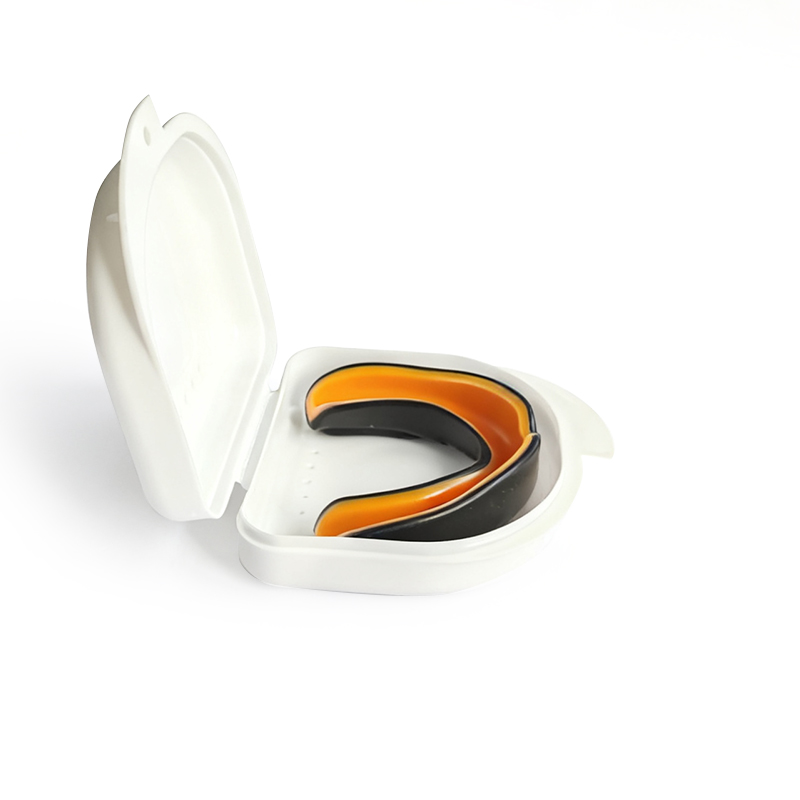
Multi-Layered Construction: Impact Absorption Optimization for Mouth Guard Boxing
First outer layer: Advanced polycarbonate and reinforced polyurethane provide structural integrity for repeated high-impact punches
Boxing mouth guards use polycarbonate reinforced with polyurethane for their outer protective layer. This coating can withstand over 1,200 Newtons as it laterally distributes the impact and avoids fist pointload. Polycarbonate, reinforced with polyurethane polymers, provides excellent toughness and impact resistance, preventing cracks after multiple punches during intense sparring sessions. Most manufacturers optimize the thickness with a range between 2 and 3 millimeters using computer models. If the design is too thin, the mouth guard is not protective, but too thick foam layers make fighters mouth and breathe them uncomfortable. The expected lifespan of composite materials used in mouthguards is much longer than the lifespan of cheaper single-layer mouth guards. The single layer mouth guards will develop micro fractures that will accumulate and lead to catastrophic failure.
Middle shock-absorbing layer: Specialized low-durometer EVA foam designed for energy dispersion in mouthguard applications for boxing
Foams in the range of Shore A 30-45, like EVA, dissipate punch energy by creating heat due to controlled compression, which is the basis for foam design. The unique open cell system allows for a lengthening of the impact time by 30-50 milliseconds, which reduces the energy impact to the jaw bone from direct energy transfers. The thickness of material in protective gear is also a design concept. Gear designed for molar regions has 4-5mm of protective material while front teeth regions have only 2-3mm. More recent designs include what’s known as graduated density foam. These have a firm bite zone followed by progressively softer foam near the edges. This clever design improves padded edge impact foam performance and prevents dental injuries by eliminating the phenomenon known as “bottoming out” which occurs in traditional mouthguards under high impact forces.
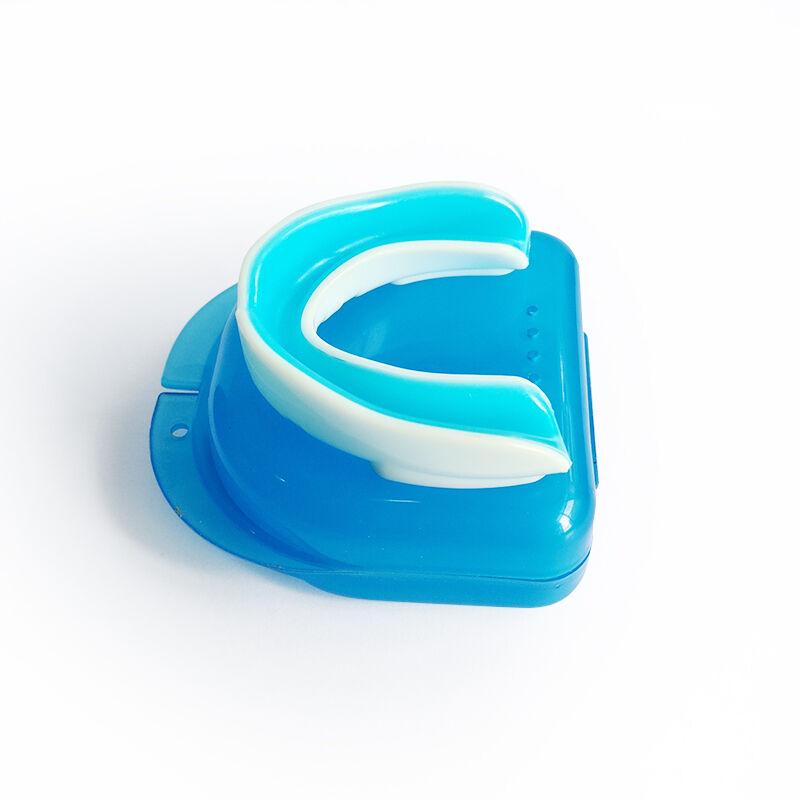
Custom fitting inner layer: thermoplastic elastomer with gum-adaptive compliance ensures retention during dynamic impacts
Thermoplastic elastomer (TPE) materials have unique viscoelastic properties that allow them to better mold to the user's body when vacuum forming is utilized. These materials become moldable at approximately 70 to 80 degrees Celsius and can obtain approximately 98% contour accuracy to the gum line and will fully set once cooled to below that temperature. Most TPEs are within the 35-45 Shore A hardness range and have tear resistance > 40 Newtons per millimeter. This minimizes material shifting during sudden head movements and/or teeth clenching. The ~ 1.5 to 2 mm layer creates a vacuum/suction fit that will not irritate sensitive structures or cause a gag reflex. Fixed/stable positioning of the lower jaw is particularly important to help reduce the risk of concussion from powerful uppercuts and twisting strikes that combat sports competitors may suffer from.
Multi-Density Zoning: The use of rigidity and absorption in mouth guard boxing
The design of high-performance mouth guards for boxing uses material zoning to address biomechanical issues. The zoning allows for different hardness levels for different anatomical areas. This design allows for a combination of focus and diffuse trauma protection which is necessary for the different types of impacts in boxing.
Dense Zone Bite Protection (Shore A 85–95): Impact Protection Dense Zone
The upper jaw and teeth are protected from injury from impact upper jaw injuries due to the upper jaw and teeth being protected from injuries due to occlusal loading from punching. Extreme rigidity is necessary in the upper jaw to protect against injury from the upper jaw being hit. Impact forces of 1000 psi are hit during boxing in the upper jaw/mandible. During independent biomechanical studies, the documented axial jaw displacement was 38% less than the displacement of the jaw with the impact of the lower jaw being hit by the upper jaw than the jaw impacts from the guard of equal density.
Soft gum-adaptive zones (Shore A 30–45): Impact Protection Dense Zone
Soft tissue injuries are reduced by 30% with the use of impact zones which use the impact protection of the guard, which allows for the impact protection to work by maintaining the guard while reducing the soft tissue injury.
A research study called "Double-Arch Coverange and Biomechanical Stabilizaion for Concussion Risk Reduction" suggests boxing mouth guards with a double-arch design provide protection for upper and lower teeth by:" acting as a single shield their protection is not spot specific". With a direct force impact to an athlete's mouth, there is flexing and force distribution to all teeth, which is supposed to dissipate the injury. It is suggested these types of mouth guards also protect the jaw by preventing the jaw from snapping closed during a punch by research proposed reduction of head movement, increase, or decrease. The mouth guard is designed to minimize jaw motion, protect from head impact, and minimize the potential for concussion head- injury causing jaw- impact. Additionally, the design and construction of a double-arch mouth guard creates an increased capacity for impact protection, in an active fighting scenario, where an athlete is likely to bite down.
Material Fatigue Resistance: Why Single-Density Designs Fail in Professional Mouth Guard Boxing Use
Generally monolithic EVA, single-density mouth guards suffer catastrophic failures when competing in professional boxing due to repeated high-impact demands. Contrarily, multi-layered, multi-density systems guard against these issues, as they redistribute and disrupt stress. Uniform materials, however, build up microfractures as a result of cyclic loading, well before any visually apparent damage occurs. This silently and progressively compromises protective capabilities.
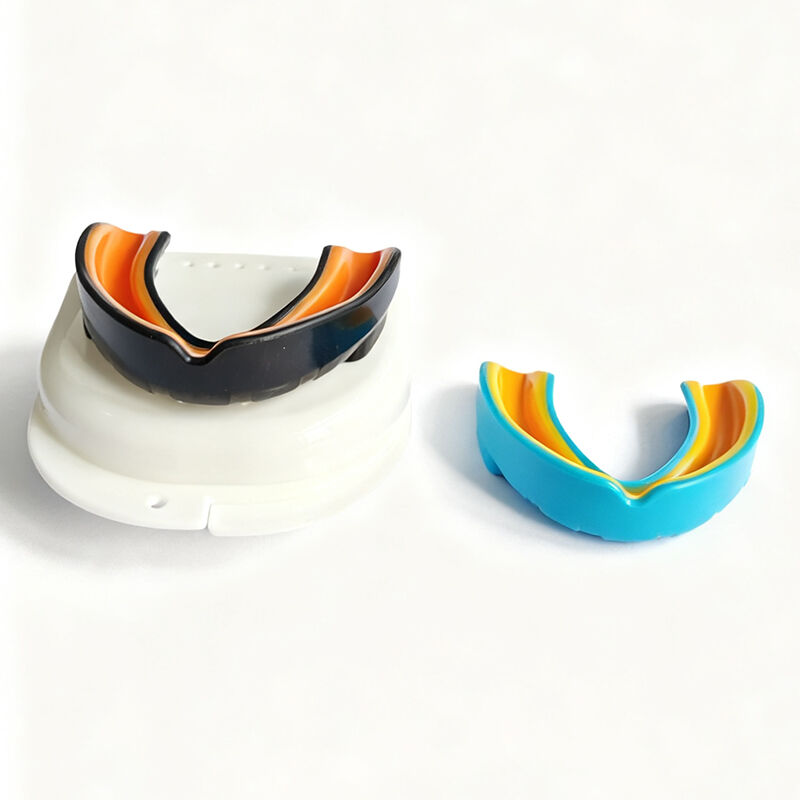
Microfracture development in monolithic EVA under cyclic loading: Assessing the ASTM F2993-22 standard
ASTM F2993-22 mouthguard impact testing shows the mouthguards' incremental breakdown over time. If we simulate 200 punches at 900 psi (standard force in the industry), micro fractures begin to develop across 3/4 of the biting surface area. In less than 15 rounds of testing, the guard can be expected to absorb 40% less impact energy than it originally did. Interestingly, the biting surface area most susceptible to damage is at the back due to the punch force being transmitted directly to the jaw bone. This aligns with damage reports from professional fighters, as approximately 90% of mouthguards have similar fractures. What's different about newer designs? Multi-density zones that prevent the material from becoming homogenous. This enhancement is now a requirement for elite fighting athletes.
Frequently Asked Questions
What materials are standard issue for boxing mouth guards?
Standard issue boxing mouth guards incorporate a combination of materials including polycarbonate, reinforced polyurethane, EVA foam, and thermoplastic elastomers in order to achieve a formal structure, shock absorption, and professional fit.
How does utilizing multiple layers provide better performance for mouth guards?
Different layers provide shifts in materials in order to provide better impact absorption, better dispersion across multiple layers, and better shock absorption, injury risk will also be lowered due to better fit.
Why is the coverage of both arches essential in boxing mouth guards?
Coverage of both arches is essential in order to protect both the superior and inferior teeth, injury to teeth is lessened due to the better distribution of force and the likelihood of head injuries due to jaw impact is lessened.
What is the zonal design of mouth guards and what are its advantages?
Zonal design integrates multiple layers with different densities so that some areas are rigid whilst others are able to absorb shocks and therefore provide protection against concentrated injuries and also provide better dispersion of high energy impacts.
Table of Contents
- Multi-Layered Construction: Impact Absorption Optimization for Mouth Guard Boxing
- Custom fitting inner layer: thermoplastic elastomer with gum-adaptive compliance ensures retention during dynamic impacts
- Soft gum-adaptive zones (Shore A 30–45): Impact Protection Dense Zone
- Frequently Asked Questions