 EN
EN


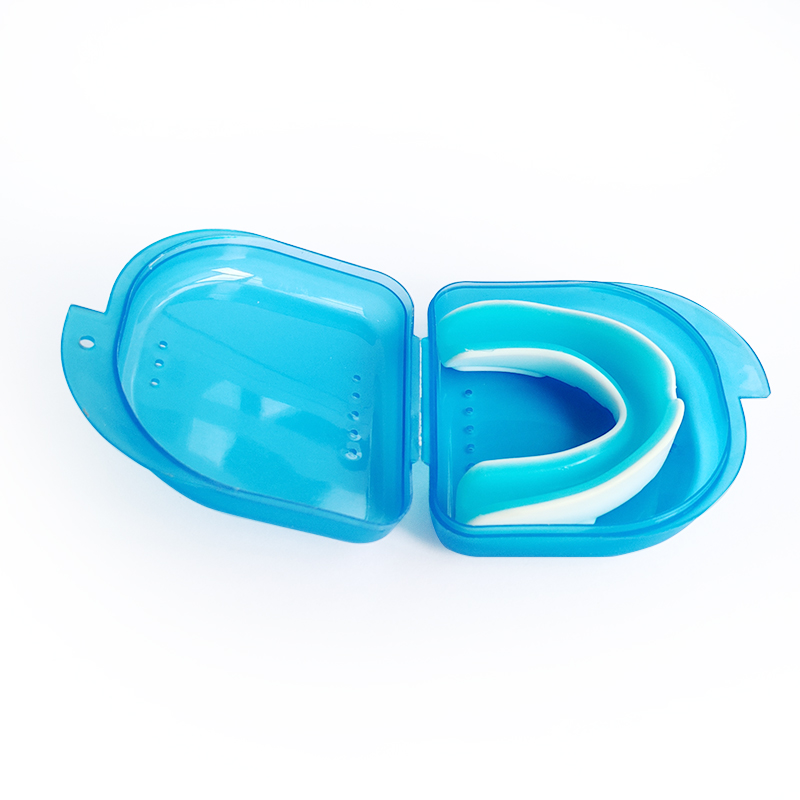
Regulatory Standards and Governing Body Requirements for Mouth Guard Boxing
WAKO, FDA, and CE Certification: How Compliance Shapes Mouth Guard Boxing Design
Regulatory standards for mouth guards significantly determine how safe, effective, and aesthetically pleasing these protective devices for the boxing mouth become. In the USA, the mouth guard is classified by the Food and Drug Administration as Category I medical equipment. This means, the manufacturer must ensure that the product will not, under any circumstances, cause injury when it comes into contact with the body, and that it can withstand the impact without falling to pieces. In Europe, the manufacturer must satisfy the Medical Devices Regulation and obtain the CE mark. This can create many challenges, mostly in terms of the materials that can be used, especially for things like bisphenol A which is used in many medical devices but can be very harmful. Finally, WAKO, which controls most professional boxing, mandates that there be a minimum of 4 millimeters of a material in any competition match on all aggressive contact surfaces. This is congruent with the scientific literature which indicates that increased thickness of material drastically reduces the incidence of broken teeth and eliminates head injuries. All of these enforceable rules create the framework for what a boxing mouth guard should be.
Layering techniques - Multi-density EVA foam systems designed to absorb shock impact in layers instead of passing it to the dentition or cranium.
Material selection - Medical-grade, non-toxic polymers (with silicone free thermoplastics per ISO 10993) avoiding allergens and leachables.
Retention design - Labial and lingual flanges are anatomically contoured to ensure adhesive-free, bulk-free retention
Amateur vs Professional Rulebooks: One of the Box Mouth Guard Safety Rules
In general, the regulations that apply to amateur and professional boxing differ in how they balance the controlling risk and encourage protective equipment enhanced standard specifications. For amateur divisions such as USA Boxing, some simplistic quality controls allow for the use of boil-and-bite-type mouthguards as long as they reach a minimum thickness of 3 millimeters, regardless of the actual quality of the materials. Pro boxing is much more stringent. Regulatory bodies, including the WBC, IBF, and WAKO's highest divisions, require mouthguards to be individually tailored by a dentist, 5mm thick, securely fitted to the teeth throughout the fight, and accompanied by certificates to prove compliance with some levels of non-allergenic materials. These two standards illustrate a number of important issues, including a distinctly different quality of components and materials that constitute a mouthguard.
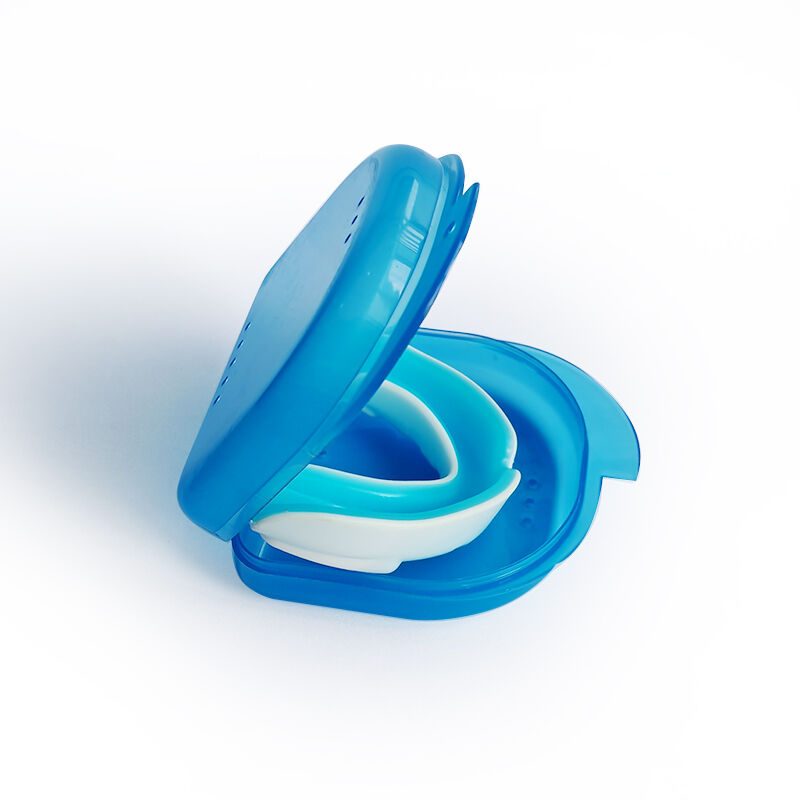
Requirement Amateur Standard Professional Standard
Fabrication Self-adapted Dental-impression custom
Impact Testing 150 PSI force dissipation 300+ PSI force dissipation
Mandatory Checks Pre-fight visual inspection Annual pressure mapping tests
Furthermore, professional standards require the use of thermoplastic nanolayers, which biomechanical studies have validated to absorb 40% more kinetic energy than standard EVA, in alignment with concussion mitigation objectives and the CDC’s Heads Up guidelines.
Mouth guard boxing Fit, Custom features, and Functional Performance
Professionals, Boil and Bite Mouth guards: Protection, Retention, and Speech
Boxers face the choice of boil and bite mouthguards and professional mouthguards and are choosing their protection, and functional abilities in the ring. Boil and bite mouth guards can be shaped by the consumer, but have a lot of fundamental flaws. They tend to have uneven thickness, poor impact absorption, inadequate coverage of the gingiva, and poor mouth anatomy fit. These flaws lead to the increased risk of tooth fractures, and injuries from small repetitive hits. Surveys found that most amateur fighters experience their mouth guards slipping during training were about the ring. Mouth guards also tend to have excessive material that causes speech to be muffled, making it harder for coaches to verbalize instructions during a training session.
When it comes to custom-made mouth guards, they start with either digital scans or fitting impressions of the customer's mouth. These guards are designed to not shift during intense combat and can stay in place 95% of the time. They have three layers. the outer covering has a hard material, then a shock-absorbing middle layer, and the inner layer has a soft premium material. Research has shown that the premium mouth guard design has been proven to reduce impact force concentration to the jaw by almost 50% compared to irregular design guards. This design has been proven through laboratory research. A unique design feature of the mouth guard is that while it protects teeth, it also allows the airway to remain open to enhance communication and increased work rate to improve overall competition.
Material Science and Impact Protection in Mouth Guard Boxing
EVA Density, Layering, and Thermoplastics: Designing Mouth Guard Boxing for Optimized Energy Absorption
EVA (Ethylene Vinyl Acetate) is still the standard for materials in the construction of boxing mouth guards today. Its protective performance relies heavily on correct construction and material density. Research on the impact of high density EVA materials (8 pounds per cubic foot and higher) compared to average density materials concluded that the high density EVA materials reduced impact forces by 60% under ASTM testing procedures from 2022. Manufacturers can achieve significant improvements in performance by utilizing multiple different EVA materials. For example, an outer protective layer that disperses lateral impact forces combined with an inner layer that is optimized for dissipating crash forces can result in 30 to 50% reductions in peak impact forces. Laboratory findings brought to light by Bochnig, et al., in 2017, confirmed the effects of the performance increases with multiple material layer tech in the Journal of Oral Rehabilitation.
New materials study shows that with the right combination of 3D printing techniques, one can combine thermoplastic elastomers with percolating lattices with air pockets, and create materials that Lightweight materials that can absorb 45% more energy. Since the microstructures can endure high velocity impacts during testing, the air permeability enables a greater range of mobility. For the discomfort most protective gear, the solution has come with added payment. During testing, the materials have better directional air permeability and a greater range of motion. They have added more high speed impacts during testing the material. For the sport of boxing, competitive bouts characterized by fast sequence punches can be performed with head gear and mouth guards that provide protective, yet breathable, and more comfortable layers than previously.
Use-Case Optimization Across Training, Sparring, and Competition in Mouth Guard Boxing
DTU has been developing mouthguards meant to optimize use-case scenarios across training, sparring and competition. This was in consideration that different training scenarios require different types of mouthguards. For example, during technical drills, a training mouthguard made of a breathable material would be most optimal in allowing the fighter to engage verbally with the coach and with other fighters throughout the training. Mouthguards that are thinner and lighter would be optimal during training scenarios that involve a lot of talking and moving, such as stamina-building training. During sparring, training scenarios are different. Mouthguards made of denser material that have increased thickness and are designed with reinforced protection of the frontal upper front teeth are most optimal. These mouthguards are meant to be used to absorb the blows and to protect the fighter’s jaws from the soreness of prolonged rounds of sparring. No coach wants a fighter to have a mouthguard that compromises itself and turns into a mushy piece of foam during the sparring rounds.
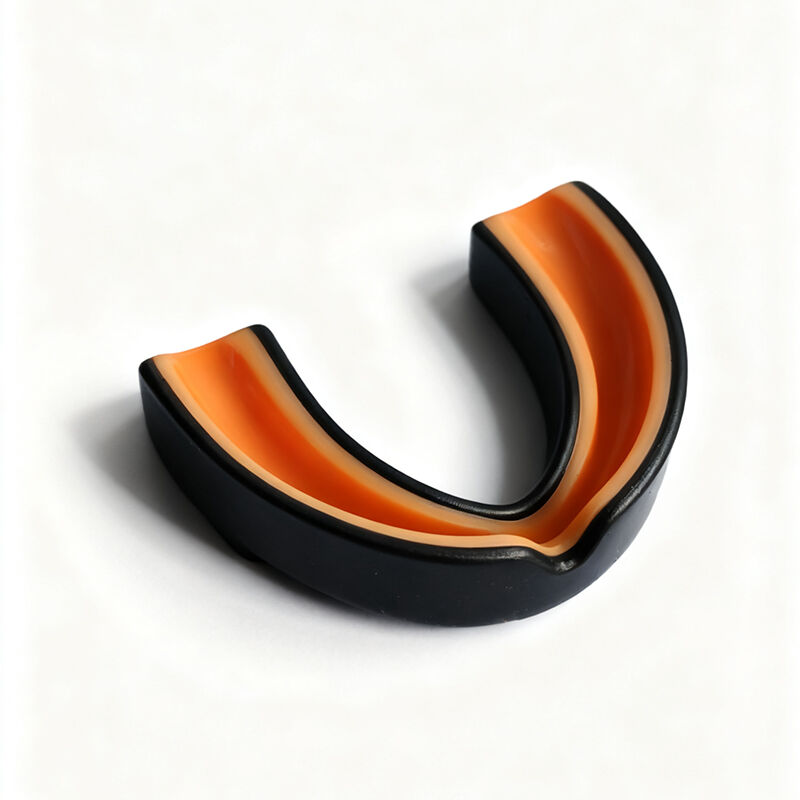
Rules and performance are the main consideration during competition. At WAKO, mouthguards are required to be a minimum of 3 to 4 mm thick, whereas elite competitors at WAKO, will spend hundreds of dollars to have customized mouthguards that meet the thickness requirements of WAKO without the jaw fatigue. Research suggests that as a fighter becomes more fatigued, their punching power and speed may lessen by as much as 12 percent, which is quite significant in a competitive fight. This is why a mouthguard that is light in design, and optimized for retention, is important for maintaining energy levels and reaction times during competitive rounds. A mouthguard designed for training must withstand heavy use and be adaptable to changes.
Actual competitions involve fighting gear with materials that have gone through laboratory tests and built to certain specifications for the even spread of impact force with minimal weight. Even selection of mouth guards depend on the level of impact of the activity. No one wants to be exposed to an attack because the guard is too flimsy. On the other hand, an overkill guard that is too dense and uncomfortable to wear should never also be the choice. Fighers need to have optimal protection and facilitate achievement of the highest level of competitiveness.
FAQ
What authorities regulate the safety of mouth guard boxing?
In mouth guard boxing, the authorities that regulate safety include the U.S. FDA which considers mouth guards as level 1 medical devices, the Medical Devices Regulations in Europe that require the CE mark, and the standards laid out by WAKO for professional boxing.
What is the professional standard versus the amateur standard for mouth guards?
The amateur standard is typically less stringent as it allows for boil-and-bite mouth guards and superficial checks. On the professional standard, WBC and IBF set guidelines that require better mouth guards that have been impact tested, are custom made, and have been documented to show that they are non-allergenic.
Why are boil-and-bite mouth guards not as preferred as custom made guards?
In terms of protection, comfort, and the fighting intensity, boil-and-bite mouth guards cannot compare to custom made mouth guards. In active fighting, custom guards retain better, allow communication, and air flow as well.
How does material science contribute to impact protection in mouth guards?
Impact protection and mouth guard safety are improved by innovations in material science including high-density EVA (ethylene vinyl acetate) and lattice and foam-based thermoplastic elastomers which improve impact force dissipation and energy absorption with minimal weight additions.