 EN
EN


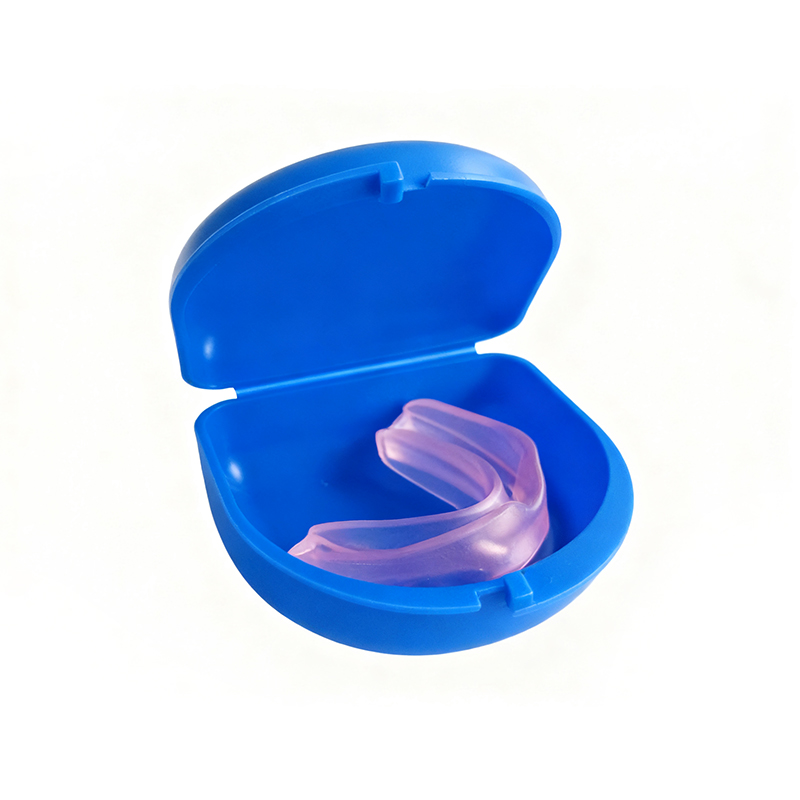
How Do Anti-Snoring Devices Work: Jaw Repositioning & Nasal Airway Expansion
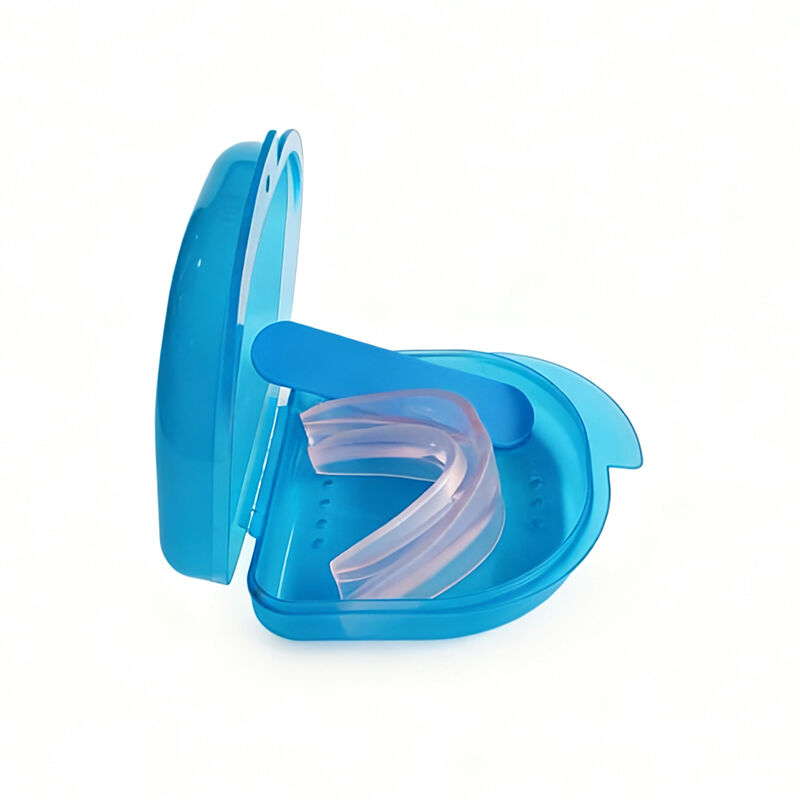
Mandibular advancement devices open up the upper airway by gently moving the jaw forward and keeping the tongue in a position that opens the airway.
These custom oral appliances reposition the jaw forward while sleeping by a documented average of 3–5 mm (it can be more). This adjustment maintains the base of the tongue from falling back in the throat and decreases the rapid soft palate movement which is the primary source of throat (or nose and throat) snoring.
These devices utilize the principles of orthodontics or dental surgery to apply a certain amount of pressure to the teeth to maintain the airway without damaging the teeth.
Nasal airway dilators decrease the amount of resistance to airflow and, in the case of external dilators, help open the nostrils. The internal (or nasal valve) ones support the nasal airway at the level of the nasal valve.
Nasal airway dilators utilize 2 different methods to help open the airway:
The external dilators (the ones that are like Band-Aids) help to lift the outer walls of the nose to reduce turbulence of the airway by 30–45% They essentially help to open the nose and the airflow is improved.
The internal or silicone valve stents like the first are considered to be a zone 1 obstacle eliminator (and in this case, the nasal valve) is opened to increase the cross-sectional area by 25% to help reduce the resistance of the nasal valve.
Both types help open the airway, but nasal dilators further back or down the throat and are just as ineffective.
The Correct Anti-Snoring Device and the Anatomy of the Origin of a Snore
The origin of the snoring is the first step in determining which anti-snoring device to use. This is documented in the clinical studies for nasal dilators and mouthguards.
With nasal dilators targeting primary nasal snoring, efficacy is 72%. They do little when it comes to oropharyngeal vibration, meaning rattles coming from the throat.
These devices work by either expanding nasal valve space or by lifting the nostrils to reduce airflow resistance. However, if someone suffers from nasal congestion or weak cartilage, these devices will not work. 2023 Sleep Medicine Reviews shows no improvement in cases of palatal flutter.
Mouthguards claim to provide 65% to 85% of reduction in throat-based snoring. But, when it comes to isolated nasal obstructions, no reduction is found.
Mandibular advancement devices (MADs) work by pulling the jaw forward and preventing the collapse of the tongue. This is an obstruction that directly addresses the oropharyngeal space as a snoring source. But, when it comes to nasal passages, MADs will not work. Research shows that when nasal blockage is more than 50%, MADs will fail to resolve snoring.
Finding the source of your snoring will determine the device you choose. Issues in the throat will not be fixed by nasal devices, and issues in the sinuses will not be fixed by jaw repositioning.
Clinical Suitability: Evaluating Anti-Snoring Devices
Mouthguards have the following contraindications: TMJ disorders, untreated periodontitis, or significant dental instability
In order for mandibular advancement devices (MADs) to work, patients need to have strong and healthy jaws and teeth. TMJ patients should not use these devices because they will increase the pressure on the jaw joints that are already compromised. Patients with unaddressed gum disease and loose teeth due to gingival recession, are not candidates for MADs. These devices can, and often do, worsen the state of the tissues and teeth shifts. While custom devices are better than stock devices off the shelf, they do not address the weak or compromised structures. Dentists will often warn patients about these issues when considering instituting jaw realignment.
Limitations of nasal dilators: Do not work on chronic turbinate hypertrophy or deviated septum problems
Nasal dilators include the small strips or cones that go inside a person's nose. These work best with nasal valves that collapse or when a person's nasal tissues vibrate excessively. However, dilators are not designed to treat people with structural problems like cleft septum or turbinate hypertrophy in which the turbinates will not shrink. These problems physically block the nasal passages at locations that dilators cannot treat, which is where surgical intervention is required. Structural problems in the nasal anatomy mark a stop point to treat a person's snoring problem, widely witnessed after using nasal dilators for a considerable time.
Real-World Use: Comfort, Compliance, and Long-Term Adherence to Anti-Snoring Devices
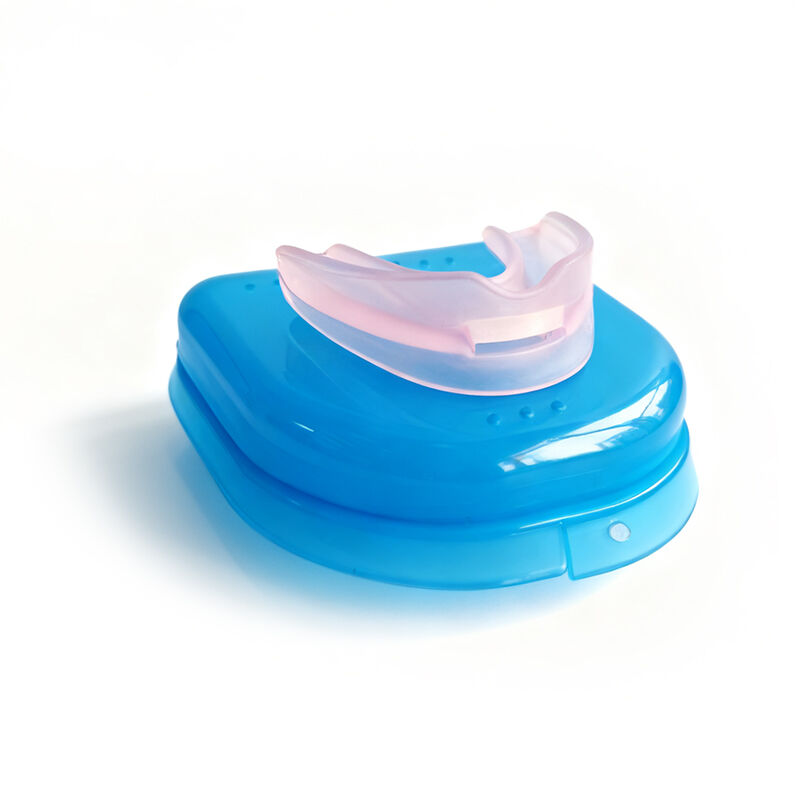
Compliance data shows inhalation devices (nasal dilators) have an abandonment rate of only 19% in 3 months, while Mandibular Advancement Devices (MAD) have an abandonment rate of 41% in 3 months.
Clinical studies have shown that Mandibular Advancement Devices (MAD) have an abandonment rate of 41% after 3 months of use, and nasal dilators have an abandonment rate that is much lower of about 19%. The reason for this is in large part due to comfort issues. People that use MADs complain about sore jaws, excess saliva, and pressure on their teeth. Nasal devices only create mild discomfort. Most people can get used to nasal devices in just 1 to 2 weeks, while MAD users take 3 to 6 weeks just to get used to the device enough to continue using it. That first discomfort is the biggest hurdle to get over in order to stick with the device.
Factor MADs Nasal Dilators
3 month discontinuation 41% 19%
Common discomfort issues Jaw pain, dental displacement Nostril discomfort
Average adjustment period 4 weeks 10 days
The 22% compliance gap illustrates how anatomical tolerance affects the practical impact of device use. Patients who focus on comfort and stick with the device tend to experience the greatest reduction of snoring through use of alternatives that are less likely to produce discomfort.
FAQ
Which anti-snoring device is suitable for someone with nasal and throat snoring?
For someone who has both nasal and throat snoring, adding a mandibular advancement device (MAD) for the throat component and a nasal dilator for the nasal component may provide the most benefit. However, it is important that a medical provider evaluate the situation to determine the most appropriate selection.
Are mandibular advancement devices (MADs) safe to use?
Yes, there are risks associated with using MADs. For example, these could include TMJ disorders, untreated periodontal disease, and unstable teeth. The MADs work by placing pressure on the jaws which may worsen these conditions. Therefore, it is important to discuss this with a dental professional prior to using an MAD.
What can be done about discomfort caused by nasal dilators?
If nasal dilators are uncomfortable for you, make sure you adjust them to fit better. If discomfort continues to be an issue, consider an external nasal dilator. If you are still uncomfortable after switching you should discuss other options with an ear, nose and throat specialist.
Table of Contents
- How Do Anti-Snoring Devices Work: Jaw Repositioning & Nasal Airway Expansion
- Nasal airway dilators utilize 2 different methods to help open the airway:
- Clinical Suitability: Evaluating Anti-Snoring Devices
- Limitations of nasal dilators: Do not work on chronic turbinate hypertrophy or deviated septum problems
- Factor MADs Nasal Dilators