 EN
EN


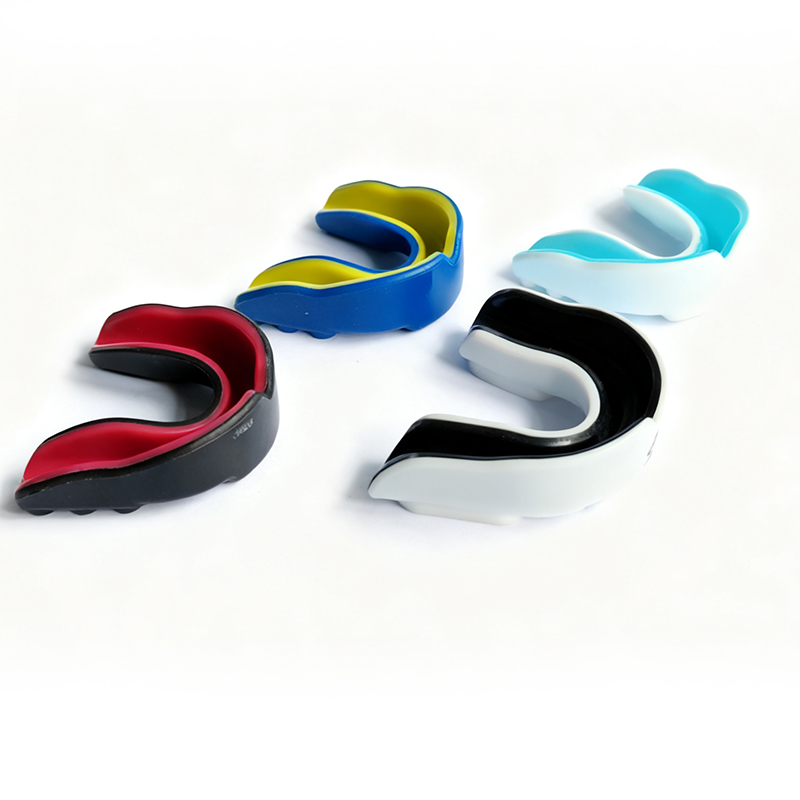
Mouth Guards and Impact Mechanics
The Effects of Mandibular Stabilization on Cranial Forces
Mandibular stabilization mouth guards operate to limit direct trauma from impacts to a player’s teeth and tissues during sport activities. Mouth guards’ effects on cranial force transmission are nearly nonexistent. Research has shown these mouth guards dissipate a mere 10 to 15% of impact linear contact. The remaining 85 to 90% of the impact is transmitted to the base of the skull through the temporomandibular joint. The mandible functions as a lever and does not absorb the impact, rather it transmits the impact to the cranial base. Coupled with the findings that the more advanced materials on the market only show a marginal effect on peak g-force impacts to the occipital bone, the conclusion must be that concussion risk cannot be mitigated by mandibular mouth guard systems.
Addressing the Problem of Rotational Acceleration
Outside of oblique impacts, which are the primary import of rotational forces, mouth guards, due to their positioning, are ineffective. In the Journal of Neurosurgery (2021), it was discovered that stabilization of the jaw resulted in a reduction of linear acceleration of approximately 17% but had almost no impact (< 3%) overall on rotational acceleration when exceeding 4,500 rad/s2. Concussions are most closely related to the rotational effects created by direct impact to the neck. Since mouth guards are positioned along the lower end of the kinetic chain, due to lack of leverage, they are ineffective in controlling the impact of direct to the neck.
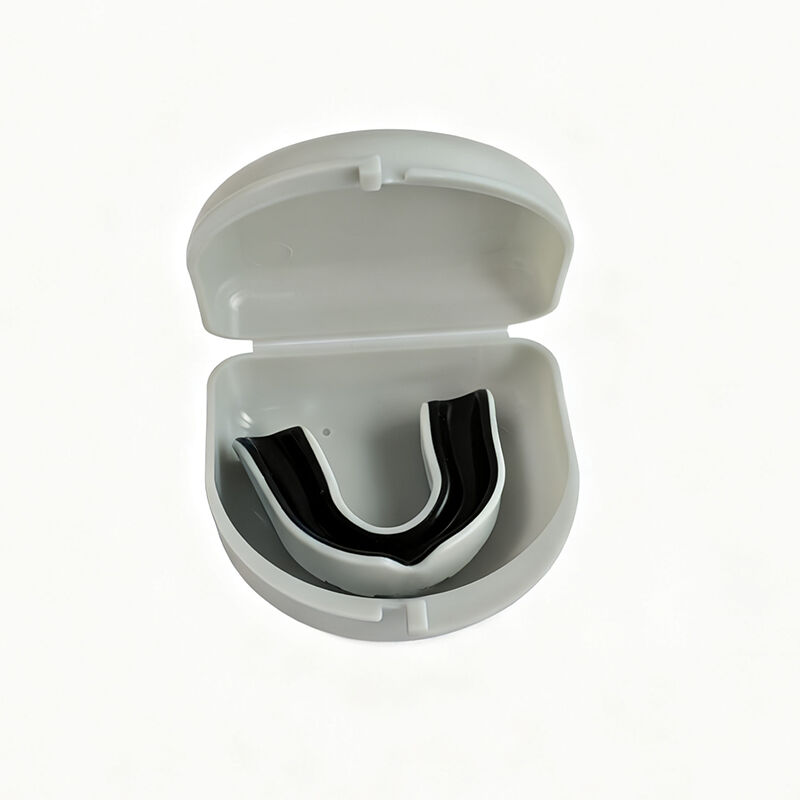
What Evidence Shows: Clinical Research on Sports Mouth Guards and Concussion Risk
Key Findings from the 2014 NCAA Football Study and Beyond
The 2014 NCAA Football Study is a pioneering investigation that followed more than 1,200 NCAA athletes over three years. The study found no statistically significant differences in the rates of concussion in players that used custom-fitted mouth guards and those that did not. A 2019 Journal of Athletic Training study provided similar findings, showing that while the use of mouth guards significantly reduced the incident of dental injury by 82%, the overall risk of sustaining a concussion was reduced by less than 5%. Studies show that mouth guards provide impact protection on the low-energy impacts to the jaw, mouth guards do not significantly reduce the rotational forces of the head that are the primary cause for concussions.
2022 BJSM Systematic Review: Synthesizing Two Decades of Evidence
In 2022, the British Journal of Sports Medicine published a systematic review of 17 randomized control trials from rugby, hockey, and American Football. Mouth guard design has not been shown to achieve clinically meaningful concussion prevention. The relative risk of concussion has been shown to be 0.93 (95% CI 0.82-1.07) with the use of mouth guards. The review noted that dental injuries and head injuries were not differentiated, control groups were not used, and studies relied on self-reported symptoms that were not clinically diagnosed.
Regulatory Framework vs Real-World Issues for Sports Mouth Guards
Classification of FDA, ASTM F2993-23 and Gaps in Concussion Testing
Sports mouth guards are made of materials and manufacturing standards which the FDA considers Class I medical devices. The ASTM F2993-23 Standard guides the performance testing of mouth guards, and the standard covers the absorption of mouth guard impacts and durability in case of injury to the mouth. The FDA and ASTM do not cover, nor test mouth guards for protection from traumatic impacts to the brain. This opens the door for mouth guard manufacturers to advertise for the protection of the head, and the brain, without any test to validate protection from brain impacts. The lack of evidence systemically exposes athletes to the protection of brain impacts, and it is a complete lack of protection.
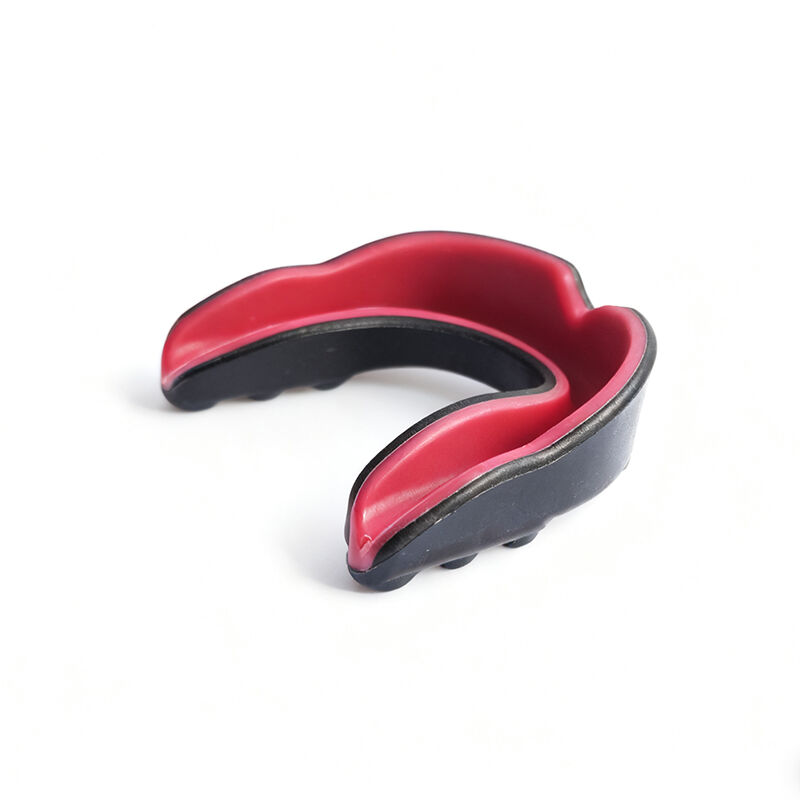
Where Sports Mouth Guards Fit in the Holistic Management of Concussion Risk
Prevention of Dental Injuries and Maintaining NeuroCognitive Baseline Integrity
While mouth guards are certainly not an answer to preventing concussions, mouth guards are critically protective in preventing traumatic dental injuries, including fractured or knocked-out teeth, and lacerations to the mouth. Mouth guards play an important role in sustaining dental integrity, which helps sustain the integrity and reliability of neurocognitive baseline measurements, as the presence of dental injury can result in pain which inflames the brain and then distorts the results of cognitive functional testing. It is for this reason that the use of mouth guards will limit the variability between measurements to ensure clinicians are able to evaluate athletes safely and determine if it is appropriate to return the athlete to play the sport. Mouth guards are not protective devices, but they are fundamental to the holistic management of protective devices for concussions.
FAQ
Are sports mouth guards helpful in preventing concussions?
Mouth guards are not helpful in protecting against concussions. They are intended to prevent oral injuries like broken teeth, lacerations, and other similar injuries.
Do mouth guards help lower the twisting forces that are associated with concussions?
No. Research demonstrates that mouth guards are pretty much ineffective against forces that cause concussions, known as rotational acceleration.
Why should someone use sports mouth guards?
Sports mouth guards provide an effective means of preventing dental injuries. They also help preserve the reliability of neurocognitive baseline so that concussions can be properly assessed and appropriately managed.
Do mouth guards help with concussion prevention regulations?
No. Sports mouth guards are designed to help with the prevention of dental injuries. The regulations do not require concussion-specific testing, nor do they require specific standards.
What has research shown about mouth guards and their effectiveness in concussion prevention?
Research has shown and many systematic reviews have demonstrated that mouth guards do little to nothing when it comes to the prevention of concussions. However, mouth guards are effective in preventing oral injuries.